What Secrets Lie Inside Egypt's Great Pyramids?
TL;DR
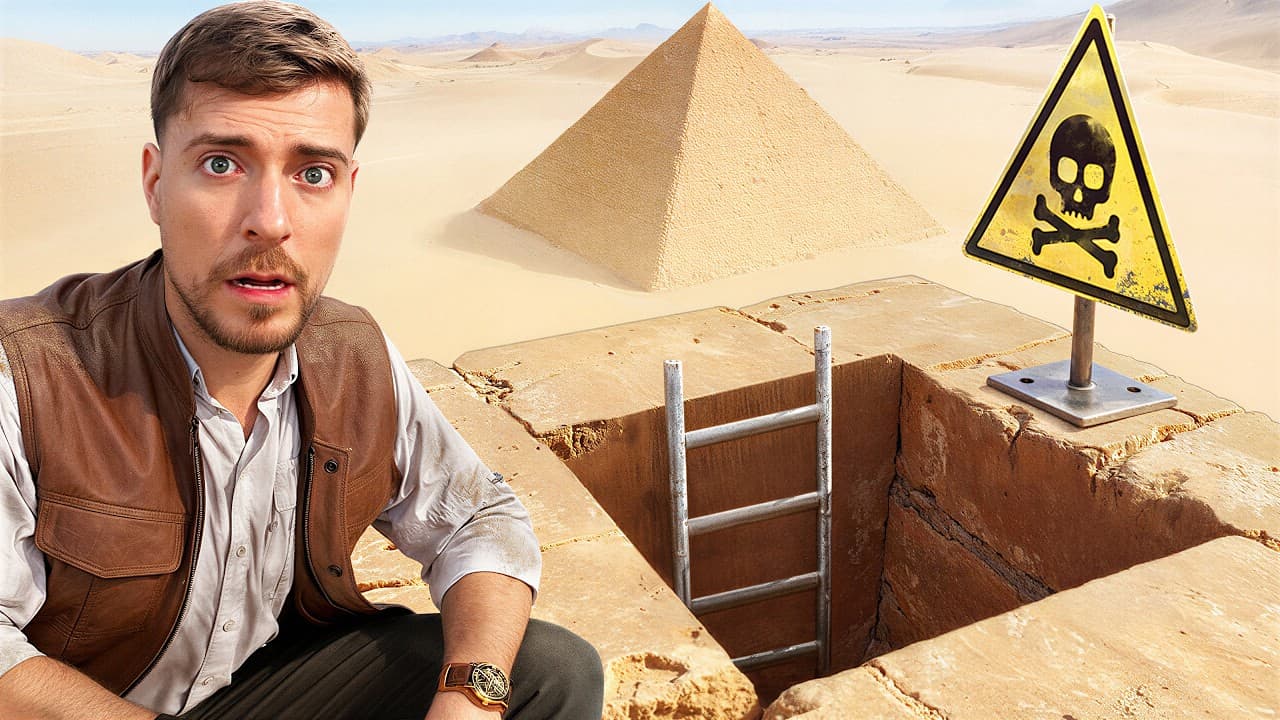
Exploring the Great Pyramids of Egypt reveals hidden chambers, ancient burial sites, and potential clues to the mysteries of their construction. The team ventures from the deepest tunnels to the highest points, uncovering evidence that supports the theory that Egyptians, not aliens, built these monumental structures as tombs for their pharaohs.
Transcript
I somehow have unrestricted access to all of the Great Pyramids of Egypt! No, this is the coolest thing I've ever seen. We'll be going into the tombs of ancient pharaohs, places that are literally ilegal to enter because they're incredibly dangerous. What if we fall? Oh, yeah, you'll definitely die. We’ll even be swimming to a secret underground to... Read More
Key Insights
- The Great Pyramids date back approximately 4,500 years and were built as tombs for Egyptian pharaohs.
- King Khufu's tomb is believed to be located within the largest pyramid, though the exact resting place remains uncertain.
- The Pyramid of Khafre features a burial chamber thought to have once held the king's body.
- The tomb of Osiris, located deep underground, is believed to be a gateway to the underworld.
- The Pyramid of Menkaure is notable for its complex passageways and decorative carvings.
- The Workman's tombs provide evidence that the pyramids were constructed by ancient Egyptians, not aliens.
- Graffiti inside the pyramids attributes construction to specific groups or gangs of workers.
- The exploration includes climbing to the highest point inside the Great Pyramid, a feat achieved by fewer than 50 people in modern history.
Install to Summarize YouTube Videos and Get Transcripts
Explore YouTube Video Summarizer or Get YouTube Transcript Extractor
Questions & Answers
Q: How old are the Great Pyramids of Egypt?
The Great Pyramids of Egypt are approximately 4,500 years old. These monumental structures were built during the reign of the pharaohs and serve as tombs for these ancient rulers. The precise construction dates are estimated based on historical and archaeological evidence, making them some of the oldest and most iconic man-made structures in the world.
Q: What is the purpose of the Great Pyramids?
The Great Pyramids were constructed as tombs for the pharaohs of ancient Egypt. They served as monumental burial sites intended to honor and protect the remains of the kings, ensuring their passage to the afterlife. The pyramids also symbolized the pharaohs' divine status and their connection to the gods, playing a crucial role in ancient Egyptian religious beliefs.
Q: Did aliens build the pyramids?
There is no credible evidence to support the theory that aliens built the pyramids. Archaeological findings, including the Workman's tombs and graffiti inside the pyramids, indicate that they were constructed by ancient Egyptians. These workers used advanced engineering techniques and manual labor to build the pyramids as tombs for their pharaohs, showcasing their skill and ingenuity.
Q: What is inside the Pyramid of Khafre?
The Pyramid of Khafre contains a burial chamber thought to have once held the body of King Khafre. This chamber is part of a complex network of passageways and chambers within the pyramid. The exploration of these areas provides insights into the burial practices and architectural achievements of ancient Egypt, highlighting the pyramid's significance as a royal tomb.
Q: What is the significance of the tomb of Osiris?
The tomb of Osiris, located deep underground, is believed to be the resting place of the god of the underworld. It is considered a gateway to the afterlife and holds significant religious importance in ancient Egyptian mythology. The tomb's location and design reflect the Egyptians' beliefs about death and the afterlife, emphasizing the spiritual significance of the pyramids and their surroundings.
Q: What evidence supports that Egyptians built the pyramids?
Evidence supporting the construction of the pyramids by Egyptians includes the Workman's tombs, which contain skeletons of laborers who built the pyramids. These skeletons show signs of manual labor, such as stress on their backs. Additionally, graffiti inside the pyramids attributes construction to specific groups or gangs of workers, further debunking theories of alien involvement.
Q: What are the three mini pyramids next to the Pyramid of Menkaure?
The three mini pyramids next to the Pyramid of Menkaure are believed to be tombs for the pharaoh's wives. These smaller structures served as burial sites for the queens, reflecting the importance of royal family members in ancient Egyptian society. The presence of these pyramids highlights the complex social and familial structures of the time, as well as the significance of the afterlife.
Q: What was discovered in the tomb of Iymery?
The tomb of Iymery, a high priest, contains well-preserved ancient Egyptian art and inscriptions that provide insights into daily life and religious practices. These decorations, which have survived for over 4,600 years, depict scenes of offerings and rituals. The tomb's significance lies in its ability to offer a glimpse into the culture and beliefs of ancient Egypt, beyond the construction of the pyramids.
Summary & Key Takeaways
-
Exploring the pyramids reveals ancient burial sites and chambers, supporting the theory that Egyptians built them as tombs. The team ventures from the deepest tunnels to the highest points, uncovering evidence of manual labor by ancient workers. Graffiti and burial sites further debunk alien construction theories.
-
The Pyramid of Khafre and the tomb of Osiris are explored, revealing burial chambers and underground passages. These sites, alongside the Workman's tomb, offer insights into the construction and purpose of the pyramids, emphasizing the skill and effort of ancient Egyptian builders.
-
The adventure concludes with a climb to the highest point inside the Great Pyramid, uncovering graffiti that attributes construction to specific worker groups. This evidence supports the conclusion that the pyramids were built by ancient Egyptians as royal tombs, not by aliens.
Read in Other Languages (beta)
Share This Summary 📚
Summarize YouTube Videos and Get Video Transcripts with 1-Click
Try YouTube Summary with ChatGPT & Claude or YouTube Transcript Generator
Explore More Summaries from MrBeast 📚






Summarize YouTube Videos and Get Video Transcripts with 1-Click
Try YouTube Summary with ChatGPT & Claude or YouTube Transcript Generator