Why Is Social Security Reform So Difficult?
TL;DR
Social Security reform requires bipartisan agreement on the size of the financing problem before lawmakers negotiate taxes or benefits. The program’s imbalance has been known for decades, yet political commitments to preserve every benefit without identifying sufficient tax increases have constrained action and left inadequate protection for poorer retirees alongside high payments to retirees who need less support.
Transcript
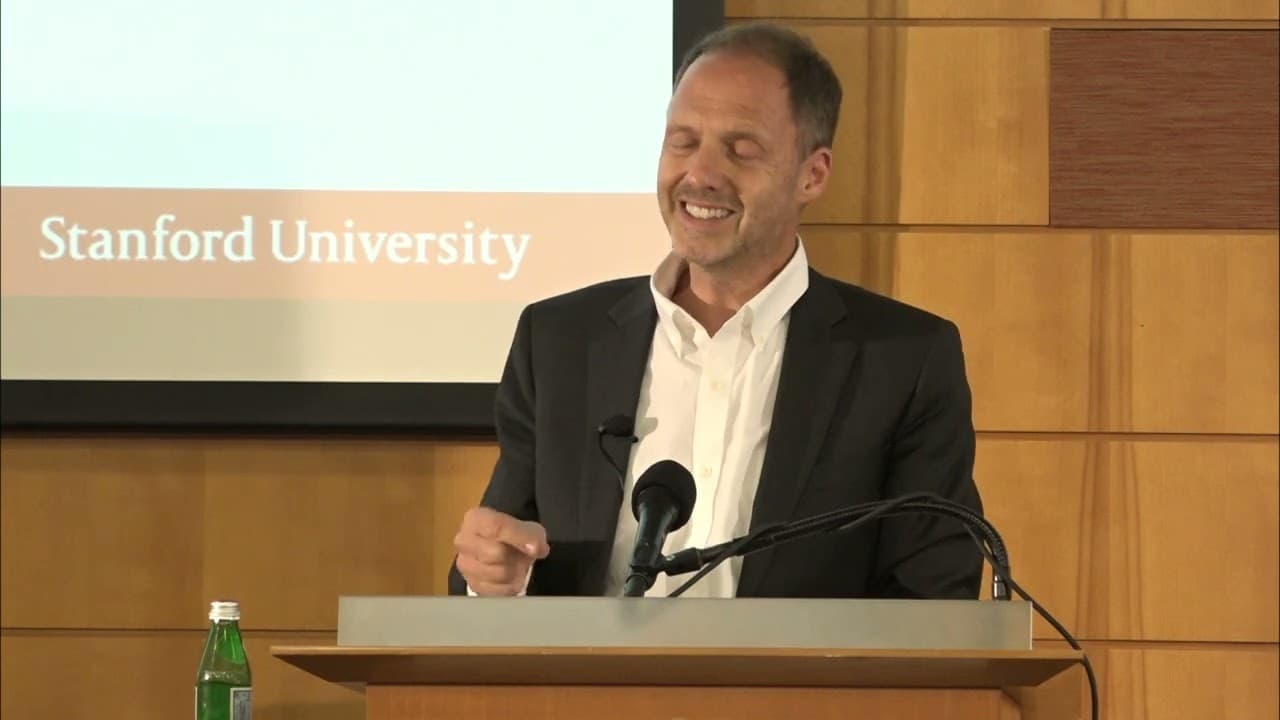
you know John Chauvin needs no introduction in this room but in the interest of fairness I'm going to give him one so John is the former trione director of seeper and was the Charles R Schwab professor of Economics before becoming Emeritus in 2019 but anyone who knows John knows that retirement takes on a very different meeting for him and ... Read More
Key Insights
- Social Security’s financing problem has been known for about 35 years, according to John Shoven, yet lawmakers have not enacted another comprehensive solution. The extended delay illustrates how advance warning alone does not produce reform when elected officials perceive substantial political risk.
- The 1983 Social Security reforms were enacted near an immediate deadline, with benefit checks reportedly at risk of delay within about three months. The episode suggests that lawmakers may tolerate a foreseeable imbalance until the practical consequences of inaction become extremely difficult to avoid.
- An early Reagan administration proposal included immediate cuts affecting early retirees and received only one favorable Senate vote against 99 opposing votes. The overwhelming rejection demonstrated that a plan perceived as politically one-sided could not provide a workable basis for reform.
- The 1983 commission’s bipartisan structure was reinforced when President Reagan appointed four Democrats and three Republicans among his seven selections. John Shoven argues that this choice placed pressure on Speaker Tip O’Neill to make similarly bipartisan appointments and contributed to the effort’s success.
- Agreement on the size of Social Security’s problem was a starting point for the 1983 negotiations. Republicans and Democrats had previously emphasized different remedies and assessments, but a shared diagnosis allowed them to move toward bargaining over benefits, taxes, and the program’s future.
- Social Security is described as the federal government’s largest program, the largest tax paid by most workers, and the greatest income source for most retirees. Those overlapping roles make changes politically sensitive because reform directly affects workers, taxpayers, current retirees, and future beneficiaries.
- Current political promises can constrain reform when leaders pledge not to reduce benefits but do not identify the tax increases needed to finance those commitments. Andrew Biggs presents this mismatch between promised benefits and unspecified revenue as a central obstacle to meaningful action.
- The existing system can simultaneously pay high benefits to retirees who need less assistance and provide inadequate protection to poor retirees who need more. Andrew Biggs argues that reconsidering the assumptions surrounding program design could improve both fiscal sustainability and protection against hardship.
Install to Summarize YouTube Videos and Get Transcripts
Explore YouTube Video Summarizer or Get YouTube Transcript Extractor
Questions & Answers
Q: Why has Social Security reform been delayed for decades?
Social Security reform has been delayed because recognizing a financing imbalance does not eliminate the political risks of changing taxes or benefits. John Shoven says the problem has been known for about 35 years. Andrew Biggs adds that political debate is constrained by promises to preserve benefits without specifying the tax increases required to finance those promises, leaving lawmakers with little room for compromise.
Q: How did the 1983 Social Security reforms become bipartisan?
The 1983 process became bipartisan after President Reagan’s earlier reform proposal suffered an overwhelming Senate defeat. Reagan then approached Speaker Tip O’Neill about forming a commission in which each would appoint seven members. Reagan selected four Democrats and three Republicans, which placed pressure on O’Neill to act with similar bipartisanship. The commission also developed a shared assessment of the financing problem.
Q: Why was agreement on the size of the funding problem important?
Agreement on the problem’s size gave negotiators a common factual starting point. Before that agreement, Republicans emphasized the need to cut benefits and warned of severe consequences, while Democrats maintained that benefits could remain intact but taxes might need to rise. Once both sides accepted a shared assessment, they could negotiate remedies instead of continuing to dispute whether a significant imbalance existed.
Q: How close was Social Security to disruption before the 1983 reforms?
John Shoven says the 1983 reforms were enacted when Social Security was roughly three months away from potentially delaying benefit checks. He notes that the danger could have been identified several years earlier, but lawmakers waited until the deadline was extremely close. The reforms nevertheless extended the system’s life for about 40 years, making the commission a major success despite the delayed response.
Q: Why did the Reagan administration’s early reform proposal fail?
The early Reagan administration proposal included immediate benefit cuts, particularly affecting people who retired early. When the proposal reached the Senate, it received one vote in favor and 99 against, with even Republican leader Senator Dole opposing it. That result showed that a unilateral proposal imposing visible near-term losses lacked political support and pushed Reagan toward pursuing a bipartisan commission and negotiated compromise.
Q: What political commitments make current reform more difficult?
Andrew Biggs identifies commitments by President Biden and former President Trump not to cut any Social Security benefits as a major constraint. Neither leader, according to his remarks, specified the tax increases required to fulfill that promise. Protecting every scheduled benefit while leaving the financing mechanism undefined narrows the available policy choices and postpones an explicit discussion of who should bear reform’s costs.
Q: How could Social Security better protect poorer retirees?
Andrew Biggs argues that reform should reconsider a structure that pays high benefits to retirees who do not need them while offering inadequate protection to poor retirees who do. His framing suggests directing stronger protection toward people with greater financial need rather than treating every existing benefit commitment as untouchable. The supplied transcript identifies this objective but does not provide a complete detailed policy formula.
Q: What does the 1983 reform experience suggest for future negotiations?
The 1983 experience suggests that successful negotiations need bipartisan participation, a shared measurement of the financing shortfall, and political leadership willing to abandon proposals that cannot attract broad support. It also warns against waiting for immediate disruption. Although lawmakers acted only when checks were reportedly within months of possible delay, their compromise extended the program’s life by roughly four decades.
Summary & Key Takeaways
-
John Shoven argues that Social Security’s financing imbalance has been understood for roughly 35 years, making continued inaction deeply disappointing. He recalls that the 1983 reforms arrived only about three months before benefit checks could have been delayed, showing how political leaders can postpone action even when a fiscal deadline is foreseeable.
-
The 1983 reform effort succeeded because it became genuinely bipartisan. After an earlier proposal involving immediate cuts for early retirees was rejected 99 to one in the Senate, President Reagan sought cooperation with Speaker Tip O’Neill. Their appointments and the commission’s agreement on the problem’s size helped establish conditions for negotiation.
-
Andrew Biggs argues that conventional debate places unnecessary constraints around Social Security’s purpose and possible design. The result, in his account, is an increasingly expensive system that gives high benefits to retirees who do not need them while providing inadequate protection to poor retirees who depend more heavily on the program.
Read in Other Languages (beta)
Share This Summary 📚
Summarize YouTube Videos and Get Video Transcripts with 1-Click
Try YouTube Summary with ChatGPT & Claude or YouTube Transcript Generator
Explore More Summaries from Stanford Institute for Economic Policy Research (SIEPR) 📚



Summarize YouTube Videos and Get Video Transcripts with 1-Click
Try YouTube Summary with ChatGPT & Claude or YouTube Transcript Generator