How to Boost Your Immune System Naturally
TL;DR
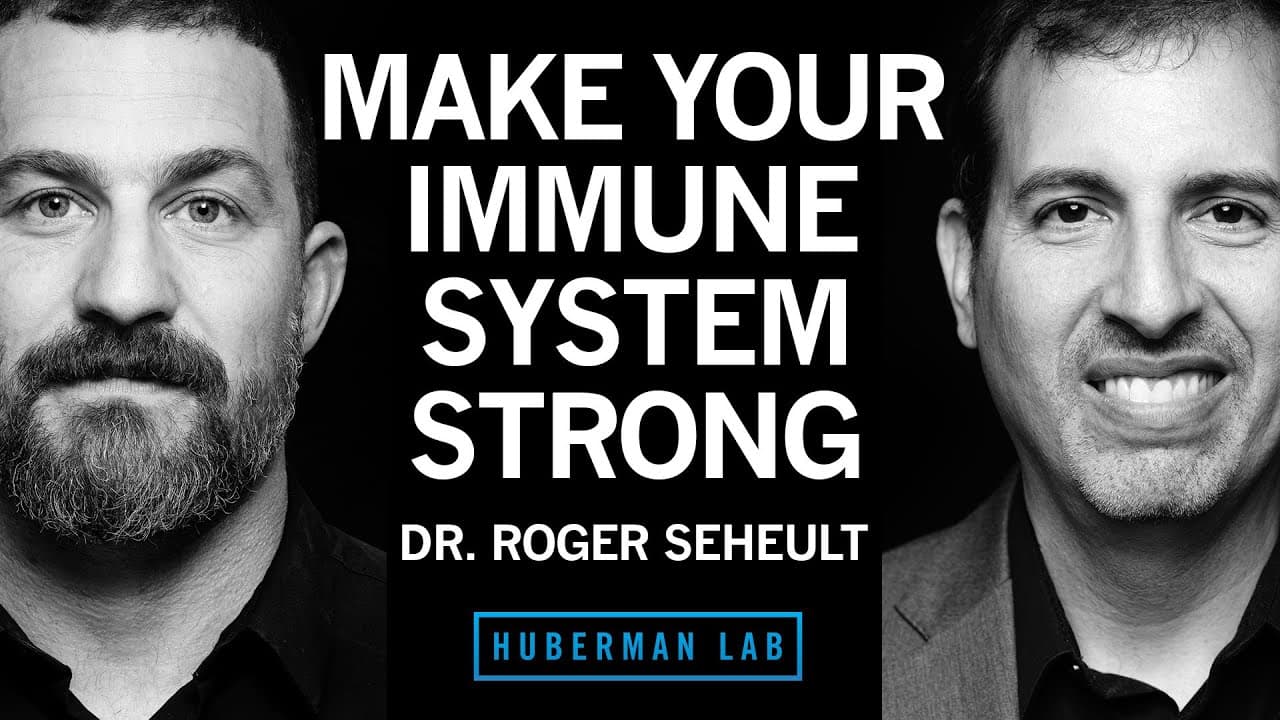
Sunlight exposure, especially infrared light, enhances mitochondrial function, boosting immune health. Dr. Roger Seheult emphasizes the importance of daily sunlight to prevent infections like colds and flu. He discusses the role of melatonin as an antioxidant and recommends lifestyle changes, including nutrition and exercise, for a robust immune system.
Transcript
welcome to the huberman Lab podcast where we discuss science and science-based tools for everyday life I'm Andrew huberman and I'm a professor of neurobiology and Opthalmology at Stanford School of Medicine my guest today is Dr Roger schwell Dr Roger schwell is a board-certified medical doctor in pulmonology which is the understanding and treatment... Read More
Key Insights
- Sunlight exposure, particularly infrared light, is crucial for mitochondrial health and immune function.
- Melatonin produced in mitochondria acts as a potent antioxidant, reducing oxidative stress.
- Daily sunlight exposure for 15-20 minutes can significantly improve metabolic and immune health.
- Flu shots are recommended for immunocompromised individuals but are a personal choice for healthy people.
- ICU psychosis can be mitigated by exposure to natural light, highlighting the importance of sunlight in recovery.
- Dark environments at night support melatonin production, crucial for restorative sleep.
- Exercise and proper nutrition are foundational pillars for maintaining a healthy immune system.
- Infrared and red light therapy can enhance mitochondrial efficiency, especially in winter months.
Install to Summarize YouTube Videos and Get Transcripts
Explore YouTube Video Summarizer or Get YouTube Transcript Extractor
Questions & Answers
Q: How can sunlight improve immune function?
Sunlight, especially its infrared component, penetrates the skin and enhances mitochondrial function by increasing melatonin production within cells. This melatonin acts as a potent antioxidant, reducing oxidative stress and supporting overall immune health. Regular exposure to sunlight can help prevent infections and improve metabolic processes.
Q: What is the role of melatonin in cellular health?
Melatonin produced within mitochondria serves as a powerful antioxidant, neutralizing reactive oxygen species (ROS) and reducing oxidative stress. This function is distinct from melatonin's role in regulating sleep-wake cycles, as it acts locally within cells to maintain mitochondrial health and efficiency.
Q: How much sunlight exposure is recommended for health benefits?
Dr. Roger Seheult recommends at least 15-20 minutes of sunlight exposure daily to reap health benefits. This duration is sufficient to enhance mitochondrial function and support immune health, particularly during winter months when natural light exposure tends to decrease.
Q: Are flu shots necessary for healthy individuals?
Flu shots are generally recommended for immunocompromised individuals and those frequently exposed to flu viruses. For healthy individuals, the decision to get a flu shot is personal and should weigh the benefits of potential protection against the risks and side effects associated with the vaccine.
Q: What are the benefits of light therapy in hospitals?
Light therapy, including exposure to natural sunlight, can significantly improve patient outcomes in hospitals. It helps reduce ICU psychosis, speeds up recovery, and shortens hospital stays by enhancing mitochondrial function and supporting overall health. Implementing light therapy can be a cost-effective way to improve patient care.
Q: Why is darkness important for sleep quality?
Darkness is crucial for maintaining high levels of melatonin, the hormone responsible for regulating sleep-wake cycles. Exposure to light at night, even in small amounts, can suppress melatonin production, disrupting sleep quality and impairing the body's natural restorative processes.
Q: What lifestyle factors support a strong immune system?
A robust immune system is supported by a combination of factors: adequate sunlight exposure, balanced nutrition, regular exercise, sufficient sleep, stress management, and avoiding harmful substances. Dr. Seheult's NEWSTART approach emphasizes these elements as pillars of health and disease prevention.
Q: How does infrared light therapy enhance mitochondrial function?
Infrared light therapy penetrates deeply into tissues, directly stimulating mitochondria to increase ATP production and improve efficiency. This process reduces oxidative stress and supports cellular health, making it particularly beneficial during winter months when natural sunlight exposure is limited.
Summary & Key Takeaways
-
Sunlight, particularly its infrared component, enhances mitochondrial function and overall immune health. Dr. Roger Seheult explains that this light increases melatonin production within cells, acting as a powerful antioxidant to reduce oxidative damage. Regular exposure to sunlight can help prevent infections like the flu and improve metabolic health.
-
Maintaining a strong immune system involves multiple lifestyle factors, including nutrition, exercise, and adequate sunlight exposure. Dr. Seheult discusses the NEWSTART approach, emphasizing the importance of a balanced diet, regular physical activity, and avoiding toxins to support immune function.
-
While flu shots can offer protection, especially for those with compromised immunity, lifestyle interventions like sunlight exposure and exercise are key preventive measures. Dr. Seheult also highlights the benefits of light therapy in hospital settings to aid recovery and reduce ICU psychosis.
Read in Other Languages (beta)
Share This Summary 📚
Summarize YouTube Videos and Get Video Transcripts with 1-Click
Try YouTube Summary with ChatGPT & Claude or YouTube Transcript Generator
Explore More Summaries from Andrew Huberman 📚

Summarize YouTube Videos and Get Video Transcripts with 1-Click
Try YouTube Summary with ChatGPT & Claude or YouTube Transcript Generator