What Are Some Alternatives to Saying I Don't Know?
TL;DR
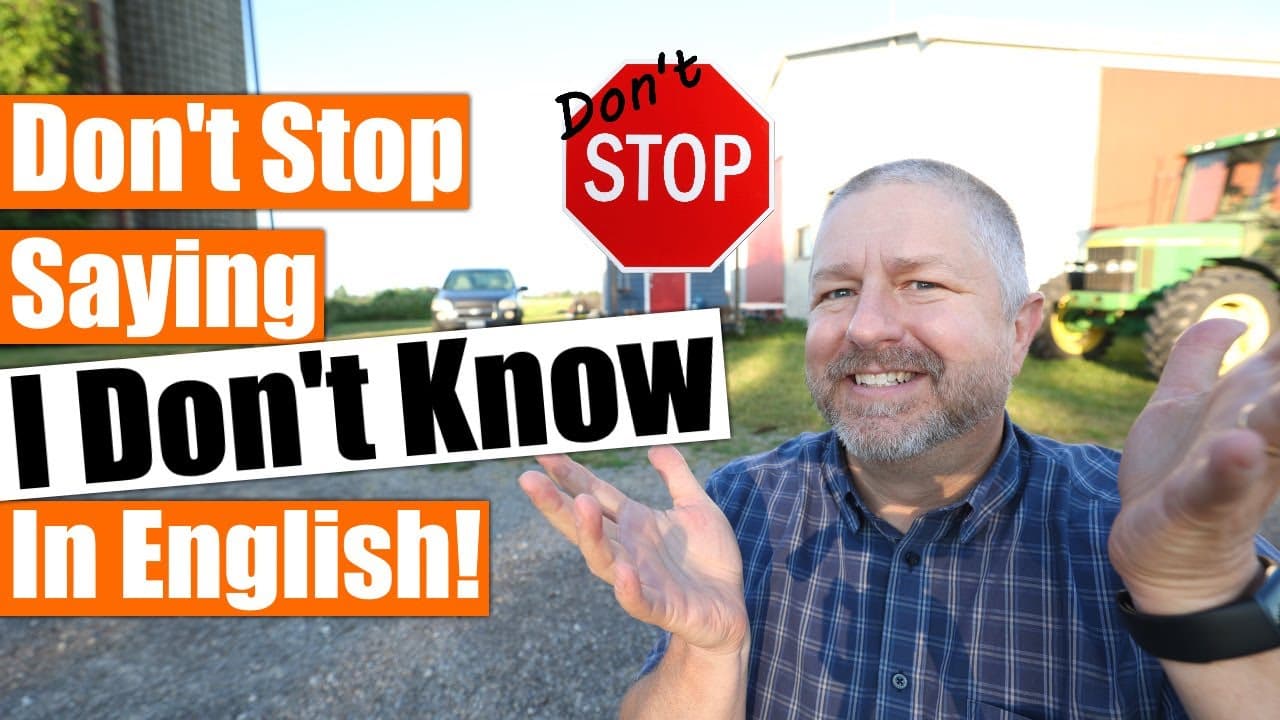
Instead of saying 'I don't know,' you can use phrases like 'I have no idea,' 'Beats me,' or 'Your guess is as good as mine' to enrich your English communication. These alternatives add variety and can express different levels of informality or uncertainty, making conversations more engaging.
Transcript
So I've been doing a little bit of research. I was curious, and I wanted to know what the most common response that people would give if they didn't know the answer to a question. So over the last few months I've kept track. And the most common response is the English phrase, I do not know. More precisely, people usually say, "I don't know." They u... Read More
Key Insights
- 🪜 People commonly say "I don't know" but using alternative phrases can add variety to conversations.
- 😑 Various expressions like "I have no idea" or "Your guess is as good as mine" can make responses more engaging and colorful.
- 😑 Expressing uncertainty in different ways can show different levels of formality or informality in communication.
- ❓ Using diverse phrases for "I don't know" can enhance language fluency and communication skills.
- 🔇 The speaker suggests using alternative responses to "I don't know" to make interactions more interesting and engaging.
- ❓ Phrases like "I'm drawing a blank" indicate temporary forgetfulness without completely saying "I don't know."
- 😑 Learning different ways to express uncertainty can enrich language usage and make conversations more dynamic.
Install to Summarize YouTube Videos and Get Transcripts
Explore YouTube Video Summarizer or Get YouTube Transcript Extractor
Questions & Answers
Q: Why did the speaker research different ways to say "I don't know"?
The speaker wanted to provide variety and alternatives for a common response in conversations to make language usage more interesting and engaging.
Q: How can using diverse ways to say "I don't know" enhance communication?
By using different expressions, speakers can convey their uncertainty in more creative and varied manners, making their language usage more expressive and engaging.
Q: How do phrases like "I don't have the faintest idea" or "Beats me" differ from the typical "I don't know"?
These phrases add flavor and nuance to the conversation, showing different levels of uncertainty or informality, making communication more colorful and dynamic.
Q: Why would someone use the response "How should I know?" instead of "I don't know"?
Using a question as a response may show disdain or impatience towards the question, adding a touch of humor or sarcasm to the conversation, though it can also come off as rude.
Summary & Key Takeaways
-
The speaker researched common ways people say "I don't know" and found alternatives.
-
Examples include phrases like "I don't have a clue," "No idea," "Your guess is as good as mine," and more.
-
Using varied expressions can make conversations more interesting and diverse.
Read in Other Languages (beta)
Share This Summary 📚
Summarize YouTube Videos and Get Video Transcripts with 1-Click
Try YouTube Summary with ChatGPT & Claude or YouTube Transcript Generator
Explore More Summaries from Learn English with Bob the Canadian 📚


Summarize YouTube Videos and Get Video Transcripts with 1-Click
Try YouTube Summary with ChatGPT & Claude or YouTube Transcript Generator