How Can We Extend Our Healthy Years Using AI and Prevention?
TL;DR
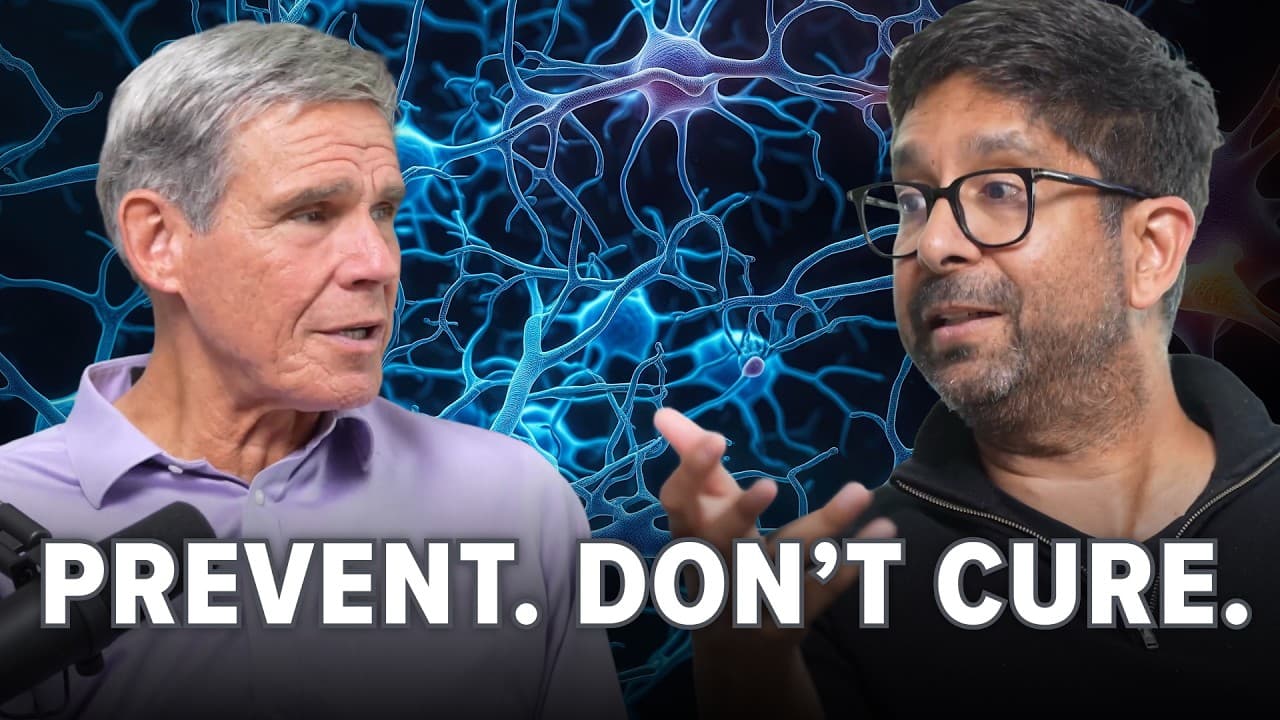
By leveraging AI and understanding the biology of aging, we can potentially extend our health span by seven years, primarily by preventing the Big Three age-related diseases: cancer, cardiovascular disease, and neurodegenerative conditions. Emphasizing lifestyle changes alongside medical advancements is crucial for this shift towards precision prevention in healthcare.
Transcript
american healthcare is in crisis we have a path to prevention it isn't reversing aging it's just preventing the age related morbidities of the big three it's been a fantasy for millennia there should be a reboot new standard of care based on intelligent partitioning of risk 7 years more of health span free of the major three diseases 7 years who wo... Read More
Key Insights
- The American healthcare system is in crisis, focusing more on treating diseases rather than preventing them, which is unsustainable in the long run.
- Understanding the biology of aging is crucial in preventing the Big Three diseases: cancer, cardiovascular disease, and neurodegenerative conditions.
- AI and technology play a pivotal role in predicting and preventing diseases by analyzing vast amounts of health data to identify risks early.
- Lifestyle factors like diet, exercise, and environmental conditions play a significant role in disease prevention but need to be complemented by advanced medical interventions.
- Organ clocks and polygenic risk scores are emerging tools that can provide personalized insights into one's health risks and potential preventive measures.
- GLP-1 drugs, initially used for diabetes, show promise in reducing cancer, heart disease, and neurodegenerative disease risks by addressing obesity.
- The shift from a sick care system to precision prevention requires cultural and economic changes, emphasizing the importance of personalized medicine.
- Countries adopting preventive healthcare strategies will likely see a gradual increase in the population's health span, reducing the prevalence of major diseases.
Install to Summarize YouTube Videos and Get Transcripts
Explore YouTube Video Summarizer or Get YouTube Transcript Extractor
Questions & Answers
Q: What is the current state of American healthcare?
American healthcare is currently in crisis, primarily focusing on treating diseases rather than preventing them. This approach is unsustainable and costly, leading to a system that reacts to illnesses instead of proactively maintaining health. The need for a shift towards preventive measures is urgent to improve health outcomes and reduce healthcare costs.
Q: How can understanding the biology of aging help in disease prevention?
Understanding the biology of aging is crucial because it allows for the identification of the underlying mechanisms that lead to age-related diseases. By targeting these mechanisms, it's possible to prevent the onset of diseases such as cancer, cardiovascular conditions, and neurodegenerative disorders, thereby extending the health span and improving quality of life.
Q: What role does AI play in preventive healthcare?
AI plays a pivotal role in preventive healthcare by analyzing large datasets to identify health risks early. It can predict the likelihood of developing certain diseases based on genetic and lifestyle factors, enabling personalized prevention strategies. AI also helps in monitoring health metrics over time to provide insights into necessary lifestyle or medical interventions.
Q: What are organ clocks and polygenic risk scores?
Organ clocks are tools that measure the biological age of different organs, providing insights into their health status relative to chronological age. Polygenic risk scores assess the genetic predisposition to certain diseases by analyzing multiple genetic variants. Both tools are integral in personalized medicine, helping to identify individuals at higher risk for specific conditions.
Q: How do GLP-1 drugs contribute to disease prevention?
GLP-1 drugs, initially developed for diabetes treatment, have shown effectiveness in promoting weight loss, which in turn reduces the risk of obesity-related diseases such as cancer, heart disease, and neurodegenerative disorders. Their ability to address obesity makes them a significant tool in preventive healthcare, potentially reducing the incidence of these major diseases.
Q: What is the significance of lifestyle factors in disease prevention?
Lifestyle factors such as diet, exercise, and environmental exposures significantly impact health and disease prevention. While they are crucial, they must be complemented by medical interventions and technologies to effectively prevent age-related diseases. A holistic approach combining lifestyle modifications and medical advancements is essential for optimal health outcomes.
Q: What changes are required to shift from a sick care to a preventive care system?
Shifting to a preventive care system requires cultural and economic changes, emphasizing personalized medicine and prevention over treatment. This involves integrating new technologies, such as AI and organ clocks, into healthcare practices and encouraging individuals to adopt healthier lifestyles. Economic incentives and policy changes may also be necessary to support this transition.
Q: What is the potential future impact of adopting preventive healthcare strategies?
Adopting preventive healthcare strategies could lead to a significant reduction in the prevalence of major age-related diseases, increasing the health span of populations. Countries implementing these strategies may see healthier, longer-living populations, reducing healthcare costs and improving quality of life. This gradual shift could transform healthcare systems worldwide, focusing on maintaining health rather than treating illness.
Summary & Key Takeaways
-
Dr. Eric Topol discusses the potential of preventive healthcare in extending the human health span by seven years through understanding aging biology. He emphasizes the role of AI and technology in predicting and preventing diseases before they manifest.
-
The conversation highlights the importance of lifestyle factors and medical advancements in preventing the Big Three age-related diseases. AI-powered tools and personalized medicine are key to this transformation.
-
Topol envisions a future where healthcare focuses on precision prevention, requiring cultural and economic shifts. The gradual implementation of these strategies could significantly reduce disease prevalence and improve population health.
Read in Other Languages (beta)
Share This Summary 📚
Summarize YouTube Videos and Get Video Transcripts with 1-Click
Try YouTube Summary with ChatGPT & Claude or YouTube Transcript Generator
Explore More Summaries from a16z 📚





Summarize YouTube Videos and Get Video Transcripts with 1-Click
Try YouTube Summary with ChatGPT & Claude or YouTube Transcript Generator