How to start an AI powered business while employed?
TL;DR
The key step is to treat AI disruption as an opportunity and test ideas quickly rather than wait for a perfect plan. Start by upskilling, exploring ideas with others, and validating demand before quitting. Use waiting lists and small bets to prove viability while keeping a safe financial cushion.
Transcript
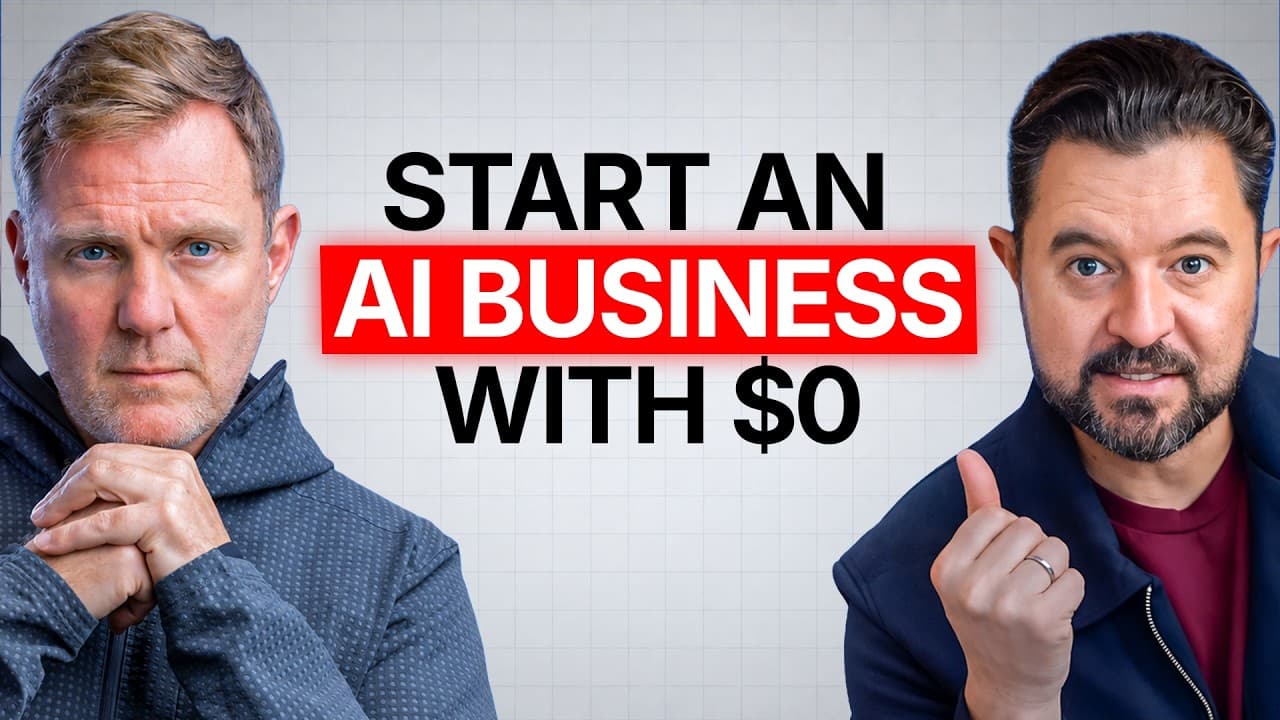
AI is going to destroy millions of jobs. But it could also create greatest opportunity to start a business we've ever seen. So I sat down with Daniel Priestley who's built multiple multi-million pound businesses to learn how to test an idea, find customers, and safely leave your job in an AI world. Because the people who learn to use AI won't just ... Read More
Key Insights
- AI disruption creates a new entrepreneurial framework and opportunity, replacing the old job-centric model.
- The path to success includes testing ideas, validating demand, and collaborating with others to share workload and risk.
- Waiting lists are a practical, low-risk method to gauge interest and validate a business idea before full launch.
- A six month savings cushion is advisable when transitioning from a job to entrepreneurship, to weather early uncertainties.
- Education systems are slow to adapt; individuals must self-educate and upskill to stay relevant.
- Entrepreneurship is increasingly necessary, not optional, for students and job seekers in the AI era.
- The proof of concept matters more than the concept itself; real customer interest determines viability.
- AI can amplify creativity and allow testing ideas at scale with relatively low initial costs.
Install to Summarize YouTube Videos and Get Transcripts
Explore YouTube Video Summarizer or Get YouTube Transcript Extractor
Questions & Answers
Q: What should someone do if they fear AI will disrupt their current job?
If you fear disruption, focus on upskilling and retooling for an AI-enabled economy. Start by learning through accessible resources, observe opportunities to apply AI to real problems, and test ideas with friends or colleagues. The goal is to move from a reactive mindset to proactively shaping your future by creating value with AI.
Q: How can a person test a business idea without quitting their job?
Test ideas while employed by running small experiments, gathering feedback, and validating demand before leaving. Use methods like waitlists to quantify interest, ask potential customers about their needs, and use the data to decide whether to invest more time and money. This approach minimizes risk while proving viability.
Q: What is the purpose of a waitlist in this strategy?
A waitlist measures demand before a full launch, providing concrete data on interest and willingness to pay. It helps validate the idea, calibrate product-market fit, and gives you a pool of potential customers to engage once you launch. It also reduces waste by showing whether the concept has traction.
Q: How many people joining a waitlist would justify launching a new business?
The strategy suggests setting a threshold, like a few hundred or more, to indicate demand. In practice, one example mentions 750 people on a waiting list as a signal to move forward with a new venture. The exact number depends on the business model and risk tolerance.
Q: What should someone include on a waiting list landing page?
The landing page should clearly state what you are launching and how it is different, present the value proposition, show a few proof points, and offer early access with incentives. This structure clarifies benefits, builds credibility, and motivates visitors to join the waitlist.
Q: What questions should you ask on a waitlist form?
Ask questions that identify the current situation, desired outcomes, past attempts, price sensitivity, and preferred options. For example, describe current use, desired outcome, and past attempts, then offer price points to gauge willingness to pay. This data informs product development and pricing strategy.
Q: Why is collaboration emphasized in starting a business now?
Collaboration reduces risk and accelerates progress by pooling skills and resources. Working in a small team allows brainstorming, research, and execution in a way that mirrors a startup environment. Team-based efforts can mimic a bank-robbery style sprint where ideas are rapidly tested and refined.
Q: What mindset shift is required when AI disrupts traditional paths?
The shift involves moving from relying on a fixed career path to actively shaping your own opportunities. Embrace entrepreneurship as a viable path, but do not rush recklessly. Instead, retool, test, and validate with customers, ensuring you have financial cushions and clear demand before making big changes.
Summary & Key Takeaways
-
A new system is emerging that lets people live and work from anywhere and start ventures with AI, replacing the old industrial age model.
-
Entrepreneurs should test ideas, validate demand with tools like waiting lists, and collaborate with others to reduce risk and accelerate momentum.
-
Disruption is coming, but prepared individuals who adapt by upskilling and launching small, data-driven experiments can thrive and create value.
Read in Other Languages (beta)
Share This Summary 📚
Summarize YouTube Videos and Get Video Transcripts with 1-Click
Try YouTube Summary with ChatGPT & Claude or YouTube Transcript Generator
Explore More Summaries from Simon Squibb 📚



Summarize YouTube Videos and Get Video Transcripts with 1-Click
Try YouTube Summary with ChatGPT & Claude or YouTube Transcript Generator