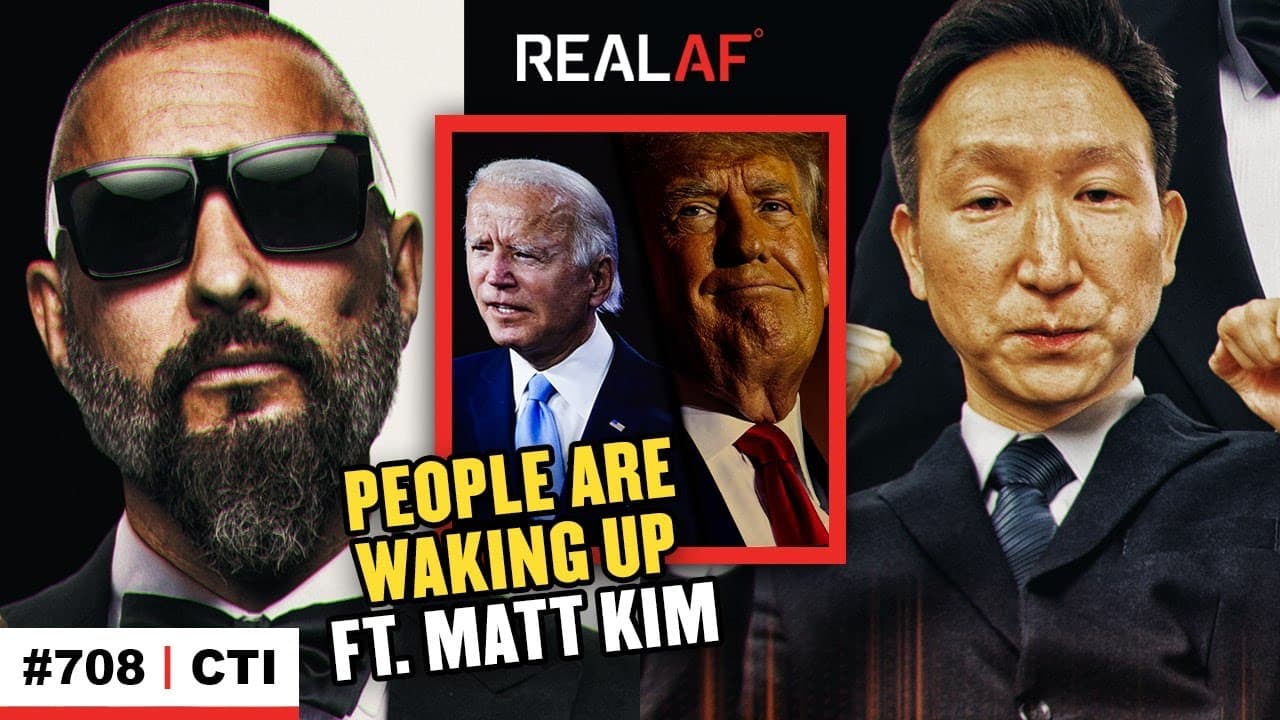
How Much of History Is a Lie? Matt Kim, Ep 708 CTI
TL;DR
Matt Kim and the CTI hosts argue that media narratives can reshape how recent history is remembered, pointing to competing portrayals of the 2016 to 2020 Trump presidency. They also explain how CTI examines topics, speculates about what is true, and asks listeners to help counter censorship by sharing the show. Read on for their specific claims about media, history, and independent content.
Transcript
one thing is that's super interesting to me is how they are already like painting his 2016 to 2020 presidency as the worst time ever like Jake Tapper just said what are you talking about statistically that is a complete lie and it's interesting how these people are trying to portray what happened in Co differently and what happened in these differe... Read More
Key Insights
- Media narratives can significantly alter public perception of historical events.
- Statistical data shows the 2016-2020 presidency as one of the best in U.S. history.
- Media portrayal often conflicts with statistical realities, suggesting bias.
- Public perception is heavily influenced by media's selective storytelling.
- Historical events may be rewritten by media to fit certain narratives.
- The division created by media narratives can mislead public understanding.
- Media's portrayal of events can lead to questioning historical accuracy.
- Understanding media bias is crucial for interpreting historical events.
- "Trump's presidency from 16 to 20 was statistically one of the best presidencies that the United States have has ever had okay" (0:35)
- "the media is what's created that disruptive time and Amplified it and I think people have woken up past that" (1:00)
- "we're going to put topics on the screen we're going to speculate on what's true and what's not true" (1:32)
- "I've been doing it about a year yeah and I try to do it in a way that is sharable" (5:37)
Install to Summarize YouTube Videos and Get Transcripts
Explore YouTube Video Summarizer or Get YouTube Transcript Extractor
Questions & Answers
Q: How much of history does Matt Kim think could be a lie?
Matt Kim and the hosts do not quantify how much history is false. They ask what may have been lied about, washed over, or made up after observing how the 2016 to 2020 Trump presidency was portrayed only a few years later.
Q: What do Matt Kim and the CTI hosts claim about the 2016 to 2020 Trump presidency?
They claim that Trump's presidency from 2016 to 2020 was statistically one of the best presidencies in United States history. The excerpt does not provide the statistics or explain the criteria behind that assessment.
Q: How do the hosts say the media portrayed Trump's presidency?
They say media figures portrayed the 2016 to 2020 presidency as the worst time ever and later encouraged audiences to remember it as a nightmare. The hosts reject that portrayal as inconsistent with their view of the period.
Q: What do the hosts identify as the nightmarish part of the Trump presidency?
They identify the constant assault on Trump, intolerance toward peaceful coexistence, and intentional division as the nightmarish elements. They attribute the creation and amplification of that disruptive atmosphere to the media.
Q: What does CTI stand for in Ep 708?
CTI stands for "cruise the internet." The hosts describe it as a format where they put topics on the screen, speculate about what is true or untrue, and discuss how people can solve problems.
Q: Who is Matt Kim and what kind of content does he create?
The host describes Matt Kim as a creator covering what is happening in the world through a common-sense, unemotional presentation. Matt says he had been creating this content for about a year and tries to make it shareable.
Q: Why does the show not run ads?
The host says he does not run ads because he does not want to be told what he can and cannot say. He also says he is fortunate enough to fund the show himself.
Q: What does "pay the fee" mean on the show?
It means sharing the show when it provides value, laughter, perspective, or useful skills. The host presents sharing as audience support amid censorship, traffic throttling, and shadow bans.
Summary & Key Takeaways
-
Media narratives often rewrite history, painting certain presidencies negatively despite statistical success. The 2016-2020 presidency, one of the best statistically, is portrayed as a nightmare due to media bias. This raises questions about the accuracy of historical narratives and the influence of media.
-
The media's portrayal of events can create division and mislead public perception. By altering narratives, media can influence how history is remembered and understood. This highlights the importance of questioning media bias and seeking factual information.
-
Understanding media bias is crucial for interpreting historical events accurately. The discrepancy between media narratives and statistical data suggests a need for critical thinking and skepticism towards media portrayals of history.
Read in Other Languages (beta)
Share This Summary 📚
Summarize YouTube Videos and Get Video Transcripts with 1-Click
Try YouTube Summary with ChatGPT & Claude or YouTube Transcript Generator
Explore More Summaries from Andy Frisella 📚

Summarize YouTube Videos and Get Video Transcripts with 1-Click
Try YouTube Summary with ChatGPT & Claude or YouTube Transcript Generator