Does Rapamycin Accelerate Biological Aging in Humans?
TL;DR
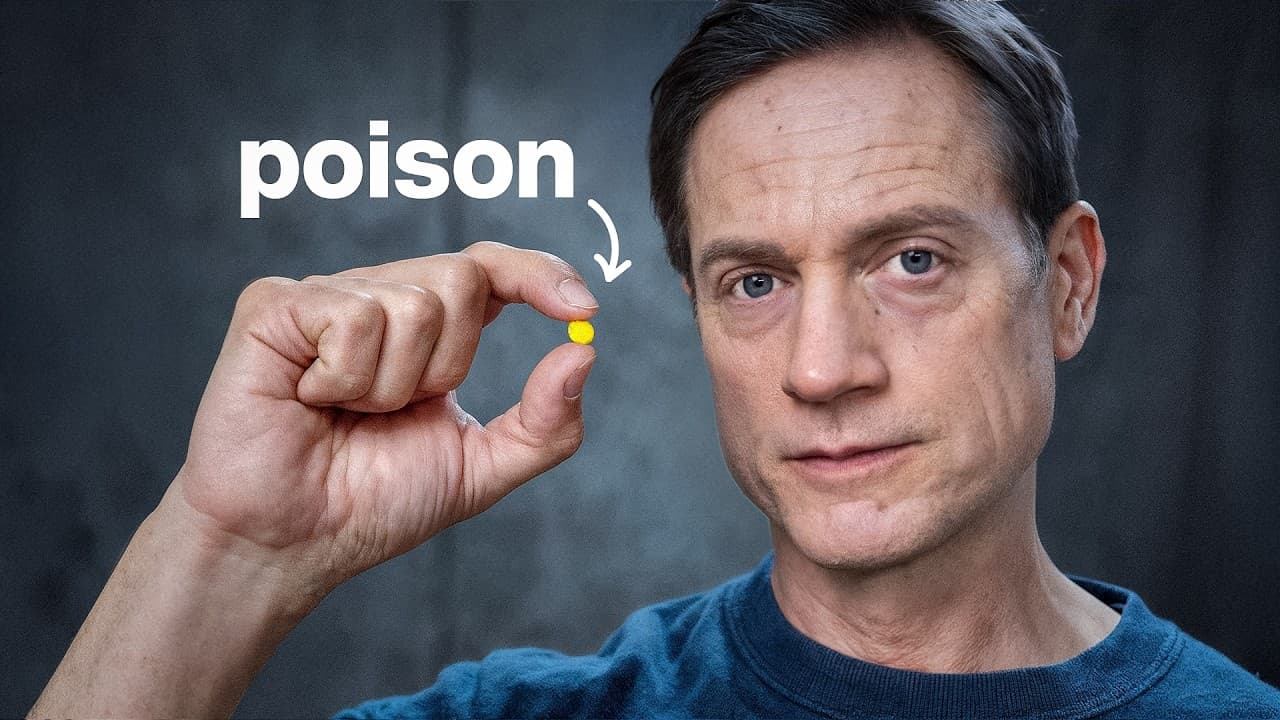
Rapamycin may accelerate biological aging in humans despite extending lifespan in animal studies. The speaker experienced higher resting heart rate, blood glucose and cholesterol disruptions, mouth cankers, and slow wound healing; these effects improved after discontinuation. A preprint also linked rapamycin to faster biological aging across 16 epigenetic clocks. Read on for the evidence, proposed mechanism, dosing experiments, and risks behind this conclusion.
Transcript
for the past four years I have been working with a team of medical professionals trying to build the world's best health protocol Now in doing this we were trying one of the world's most promising experimental drugs for slowing down my speed of aging Turns out I was actually accelerating my speed of aging The name of the drug rapamy Here's what hap... Read More
Key Insights
- Rapamycin was first discovered in the 1960s in a soil sample from Easter Island.
- It is a powerful immunosuppressant, approved by the FDA in 1999 for organ transplant patients.
- Studies showed Rapamycin increased lifespan in mice, sparking interest in its potential longevity benefits.
- Rapamycin inhibits mTORC1, a growth pathway linked to age-related diseases, but also mTORC2, causing side effects.
- Side effects of Rapamycin include metabolic disruptions, immune suppression, and increased resting heart rate.
- Discontinuing Rapamycin reversed its side effects, suggesting they were directly linked to the drug.
- A recent study indicated Rapamycin might accelerate biological aging in humans.
- The video emphasizes the importance of sharing scientific findings, whether positive or negative, for collective learning.
Install to Summarize YouTube Videos and Get Transcripts
Explore YouTube Video Summarizer or Get YouTube Transcript Extractor
Questions & Answers
Q: Does rapamycin accelerate biological aging in humans?
A preprint discussed in the transcript found that rapamycin accelerated biological aging in humans across 16 epigenetic clocks. The speaker therefore concluded that the experimental drug he took to slow aging may instead have increased his speed of aging.
Q: Why was rapamycin considered a promising longevity drug?
A 2009 study in older mice found that rapamycin increased lifespan by 14% in females and 9% in males. A combination with other drugs produced increases of 28% in females and 34% in males, and findings in other animals encouraged interest in human use.
Q: How is rapamycin supposed to affect aging?
Rapamycin inhibits mTORC1, a growth pathway whose overactivation plays a role in many age-related diseases. The hoped-for benefits included reducing biological age and aging speed, improving organ-specific age markers, and rejuvenating the immune system and skin.
Q: What side effects did the speaker experience while taking rapamycin?
The speaker reported mouth cankers, slower wound healing, cholesterol disruption, a small blood-glucose spike, and an increased resting heart rate. He said the higher resting heart rate was especially painful because it strongly affected his sleep quality.
Q: What happened after the speaker stopped taking rapamycin?
After discontinuation, his blood glucose dropped, cholesterol corrected, and soft-tissue infections went away. Based on this test, his team concluded that rapamycin had caused those side effects.
Q: Why can rapamycin be a double-edged sword?
Rapamycin inhibits mTORC1, which is the pathway associated with its potential longevity benefits, but it also inhibits mTORC2, which is linked to metabolic side effects. It also suppresses the immune system, including NK cells described in the transcript as cancer-fighting cells.
Q: What rapamycin dosing protocols did the speaker test?
The team tried five pills per week, six pills one week followed by 13 the next, and a 13-and-13 protocol. They measured blood levels 90 minutes after dosing and again at 24, 48, 72, and 96 hours to assess how quickly the drug declined toward zero.
Q: What is rapamycin, and how was it discovered?
Rapamycin was discovered in the 1960s after scientists collected a soil sample from a cave on Easter Island and found a bacterium with powerful antifungal properties. It was later identified as a powerful immunosuppressant, and the FDA approved its use for organ-transplant patients in 1999.
Summary & Key Takeaways
-
Rapamycin, initially promising for longevity, was found to potentially accelerate aging in humans. Despite its benefits in animal studies, side effects like immune suppression and metabolic disruptions were concerning. Discontinuing the drug reversed these effects, highlighting the need for cautious evaluation of such interventions.
-
The video discusses the discovery and development of Rapamycin, emphasizing its dual role as an immunosuppressant and a potential longevity drug. While it showed lifespan extension in mice, human studies revealed possible acceleration of aging, raising questions about its safety and efficacy.
-
The speaker shares personal experiences with Rapamycin, noting side effects like increased heart rate and metabolic issues. Upon discontinuation, these effects subsided, suggesting a direct link to the drug. A recent study further questioned Rapamycin's role in aging, underscoring the need for ongoing research.
Read in Other Languages (beta)
Share This Summary 📚
Summarize YouTube Videos and Get Video Transcripts with 1-Click
Try YouTube Summary with ChatGPT & Claude or YouTube Transcript Generator
Explore More Summaries from Bryan Johnson 📚

Summarize YouTube Videos and Get Video Transcripts with 1-Click
Try YouTube Summary with ChatGPT & Claude or YouTube Transcript Generator