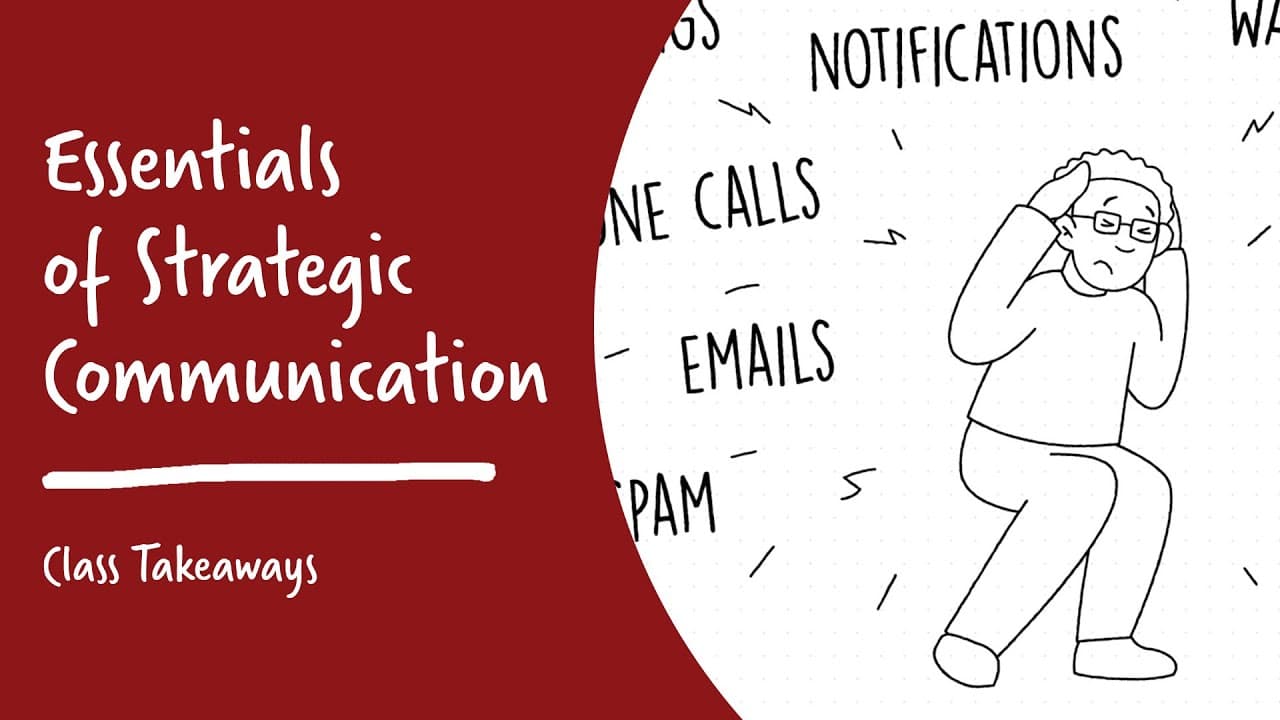
Class Takeaways — Essentials of Strategic Communication
TL;DR
Effective communication starts by understanding your audience's needs instead of solely focusing on your message. Aim for goal-driven communication that encompasses information, emotion, and action. Utilize structured frameworks and engagement techniques to maintain attention and cultivate a confident presence for better message delivery.
Transcript
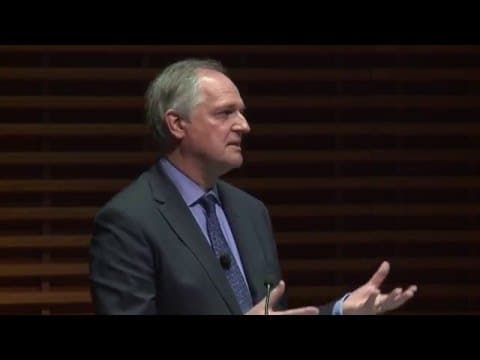
[MUSIC] Communication is critical for our professional and our personal lives. I'm Matt Abrahams, and I'm a lecturer at Stanford Graduate School of Business, and the host of the GSB's Think Fast, Talk Smart, The Podcast. I am so excited today to share with you five key takeaways from my class, essentials of strategic communication. [MUSIC] When it ... Read More
Key Insights
- 😥 The audience should be the starting point for communication, with a focus on understanding their knowledge level, attitudes, resistance points, expectations, and motivation.
- 👻 Goal-driven communication incorporates information, emotion, and action, allowing communicators to tailor their messages to specific audience needs.
- 💁 Structuring information using frameworks like the "What? So what? Now what?" model helps communicators convey their message more concisely and clearly.
- 🖐️ Engagement plays a crucial role in effective communication, with physical, cognitive, and linguistic techniques being essential for maintaining attention and improving audience retention.
- 🙊 Cultivating an authentic and confident presence in communication is vital for success, whether in writing or speaking.
- ❓ Improvement in communication requires dedication to repetition, reflection, and feedback to continually refine and enhance messaging.
- 💁 Attention is a valuable commodity in today's information-saturated world, and communicators must engage their audience to achieve their goals.
Install to Summarize YouTube Videos and Get Transcripts
Explore YouTube Video Summarizer or Get YouTube Transcript Extractor
Questions & Answers
Q: Why do many people start communication from the wrong place?
Many individuals prioritize their own message instead of considering their audience's needs and expectations. By starting with audience understanding, communicators can make sure their messages resonate and are more likely to be remembered and acted upon.
Q: How should communicators define their goals for strategic communication?
Goals should encompass information, emotion, and action. Communicators must determine what they want their audience to know, how they want them to feel, and the specific actions they desire the audience to take after receiving the message.
Q: What is the importance of structuring information in communication?
Structuring information makes it easier for the audience to follow and process. The "What? So what? Now what?" model provides a clear framework that helps communicators convey their idea or belief, demonstrate relevance to the audience, and define the next steps or actions.
Q: How can communicators engage their audience effectively?
Engagement techniques involve physical, cognitive, and linguistic elements. Getting the audience actively involved, prompting questions or analogies, and using relatable language and storytelling techniques help maintain attention and make the communication more memorable.
Summary
In this video, Matt Abrahams, a lecturer at Stanford Graduate School of Business, shares five key takeaways from his class on strategic communication. He emphasizes the importance of starting from the perspective of the audience, setting clear goals for communication, structuring information effectively, engaging the audience, and developing a strong presence. By following these principles, individuals can improve their communication skills and effectively get their points across.
Questions & Answers
Q: What is the fundamental mistake many people make when it comes to communication?
Many people start from the wrong place by focusing on what they want to say instead of considering what their audience needs to hear. It is crucial to understand the audience's knowledge level, attitudes, resistance points, expectations, and motivation. By doing so, messages can resonate with the audience and have a greater chance of being remembered and acted upon.
Q: How should communication be goal-driven?
Communication, especially strategic communication, should have clear goals that consist of three parts: information, emotion, and action. Communicators need to determine what they want their audience to know, how they want them to feel, and what actions they want them to take. Having a clear goal allows for a focused message that addresses the audience's needs and enables the evaluation of communication success.
Q: How can information be structured effectively for better audience understanding?
Structuring information is crucial to make it easier for the audience to follow. Our brains are wired to process structured information. One effective structure is based on three simple questions: What? So what? And, now what? This structure helps organize information by conveying the main idea or belief (What), highlighting the relevance for the audience (So what), and specifying what should come next (Now what). Leveraging structure helps the audience process information fluently and allows for more concise and clear messaging.
Q: How can engagement be achieved in communication?
Attention is a valuable commodity in today's information-saturated world. To achieve communication goals and help the audience engage with the content, communicators need to use engagement techniques. The three techniques to consider are physical engagement, where the audience actively participates by responding to polls or collaborating on a whiteboard; cognitive engagement, which involves asking questions or employing analogies; and linguistic engagement, achieved by using inclusive language such as "you" or by prompting the audience to visualize with phrases like "picture this" or "imagine." Using these techniques enlivens communication and helps the audience engage and remember.
Q: How important is having a strong presence in communication?
Having an authentic and confident presence in communication is crucial for success. Whether speaking or writing, individuals should record themselves, watch their presentations, and proofread their writing to ensure their presence is effective. Seeking feedback from others can also be invaluable in improving communication skills. Strengthening presence requires dedicated effort through repetition, reflection, and feedback. Doing so will help individuals effectively convey their points and improve their overall communication skills.
... 5 more questions and answers
Takeaways
Communication is essential for both professional and personal lives. To improve communication skills, individuals should start by understanding and addressing their audience's needs. Setting clear goals, structuring information effectively, engaging the audience, and developing a strong presence are key elements to focus on. Using these takeaways can help individuals improve their communication and effectively get their points across. Improvement requires dedicated time and effort through repetition, reflection, and feedback.
Summary & Key Takeaways
-
Many people make the mistake of starting communication by focusing on what they want to say, rather than considering their audience's needs and expectations.
-
Goal-driven communication should encompass information, emotion, and action, with a clear focus on what the audience should know, how they should feel, and what actions they should take.
-
Structuring information using frameworks like the "What? So what? Now what?" model helps the audience process the message more fluently, and utilizing engagement techniques such as physical, cognitive, and linguistic engagement helps to maintain attention and improve audience retention.
Read in Other Languages (beta)
Share This Summary 📚
Summarize YouTube Videos and Get Video Transcripts with 1-Click
Try YouTube Summary with ChatGPT & Claude or YouTube Transcript Generator
Explore More Summaries from Stanford Graduate School of Business 📚





Summarize YouTube Videos and Get Video Transcripts with 1-Click
Try YouTube Summary with ChatGPT & Claude or YouTube Transcript Generator