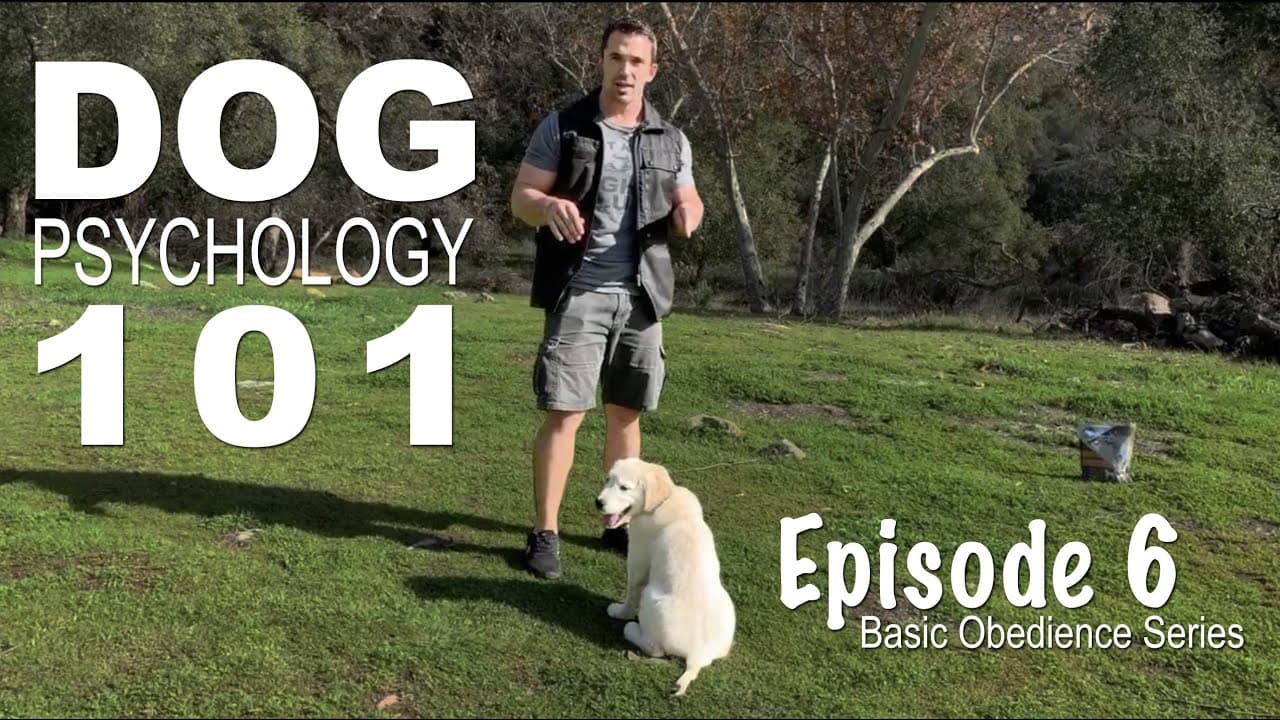
Dog psychology 101: The four quadrants of operant conditioning. Episode 6
TL;DR
Explains the four quadrants of operant conditioning for dog training.
Transcript
what are the four quadrants of operant conditioning and what is opera conditioning well it's just a fancy term that means a dog that understands that their behavior has an effect on their environment and they can make good things or bad things happen to themselves the four quadrants are going to be your positive reinforcement negative reinforcement... Read More
Key Insights
- Operant conditioning involves understanding that a dog's behavior affects its environment, leading to either positive or negative outcomes.
- The four quadrants of operant conditioning are positive reinforcement, negative reinforcement, positive punishment, and negative punishment.
- Positive reinforcement involves adding something of value to encourage a behavior, such as giving a treat for sitting.
- Negative reinforcement involves removing pressure once a desired behavior is performed, such as leash pressure work.
- Positive punishment involves adding a physical correction to decrease unwanted behavior, like a leash pop for nipping.
- Negative punishment involves taking away something the dog desires to discourage a behavior, like withholding a treat.
- Balanced training uses all four quadrants, while pure positive training focuses on positive reinforcement and negative punishment.
- Understanding the difference between positive (adding) and negative (taking away) is crucial for effective dog training.
Install to Summarize YouTube Videos and Get Transcripts
Explore YouTube Video Summarizer or Get YouTube Transcript Extractor
Questions & Answers
Q: What is operant conditioning in dog training?
Operant conditioning is a training method where a dog learns that its behavior can cause changes in its environment. It involves four quadrants: positive reinforcement, negative reinforcement, positive punishment, and negative punishment, each affecting behavior differently by either adding or removing stimuli to encourage or discourage behaviors.
Q: How does positive reinforcement work in dog training?
Positive reinforcement in dog training involves giving a reward, such as a treat, to a dog after it performs a desired behavior. This encourages the dog to repeat the behavior in the future, as it associates the action with a positive outcome, reinforcing the behavior you want to see more often.
Q: What is an example of negative reinforcement with dogs?
An example of negative reinforcement in dog training is leash pressure work. When a dog feels pressure on the leash and moves in the desired direction, the pressure is released. This removal of pressure encourages the dog to repeat the behavior that led to the relief, reinforcing the desired action.
Q: How is positive punishment used in dog training?
Positive punishment in dog training involves adding something unpleasant to decrease a behavior. For example, if a dog nips at a person, a trainer might use a physical correction, like a leash pop, to discourage the behavior. This addition of an unpleasant stimulus aims to prevent the behavior from reoccurring.
Q: Can you explain negative punishment in dog training?
Negative punishment in dog training involves taking away something the dog wants to decrease a behavior. For instance, if a dog does not sit when asked, it might not receive a treat. By removing the reward, the dog learns that not performing the behavior results in a loss of a desired outcome.
Q: What is the difference between positive and negative in operant conditioning?
In operant conditioning, 'positive' means adding something to the situation, while 'negative' means taking something away. Positive reinforcement and punishment add stimuli to increase or decrease behavior, respectively, while negative reinforcement and punishment involve removing stimuli to influence behavior outcomes.
Q: Why is balanced training important in dog training?
Balanced training is important because it utilizes all four quadrants of operant conditioning, providing a comprehensive approach to behavior modification. By using positive and negative reinforcement and punishment, trainers can address a wider range of behaviors and achieve more reliable obedience from dogs.
Q: How does operant conditioning apply to humans?
Operant conditioning applies to humans similarly to dogs, using rewards and consequences to influence behavior. For example, a child might receive money for chores (positive reinforcement), or privileges might be revoked for not completing tasks (negative punishment), guiding behavior through the addition or removal of stimuli.
Summary & Key Takeaways
-
Operant conditioning is a method where a dog learns that its behavior can influence its environment. This video explains the four quadrants: positive reinforcement, negative reinforcement, positive punishment, and negative punishment, and how they are used in dog training.
-
Positive reinforcement is giving a reward to encourage a behavior, while negative reinforcement involves removing pressure once the desired behavior is achieved. Positive punishment adds a correction to reduce behavior, and negative punishment removes a desired outcome to discourage behavior.
-
Balanced dog training incorporates all four quadrants of operant conditioning, unlike pure positive training, which uses only positive reinforcement and negative punishment. Understanding these concepts is vital for achieving reliable obedience in dogs.
Read in Other Languages (beta)
Share This Summary 📚
Summarize YouTube Videos and Get Video Transcripts with 1-Click
Try YouTube Summary with ChatGPT & Claude or YouTube Transcript Generator
Explore More Summaries from Nate Schoemer 📚





Summarize YouTube Videos and Get Video Transcripts with 1-Click
Try YouTube Summary with ChatGPT & Claude or YouTube Transcript Generator