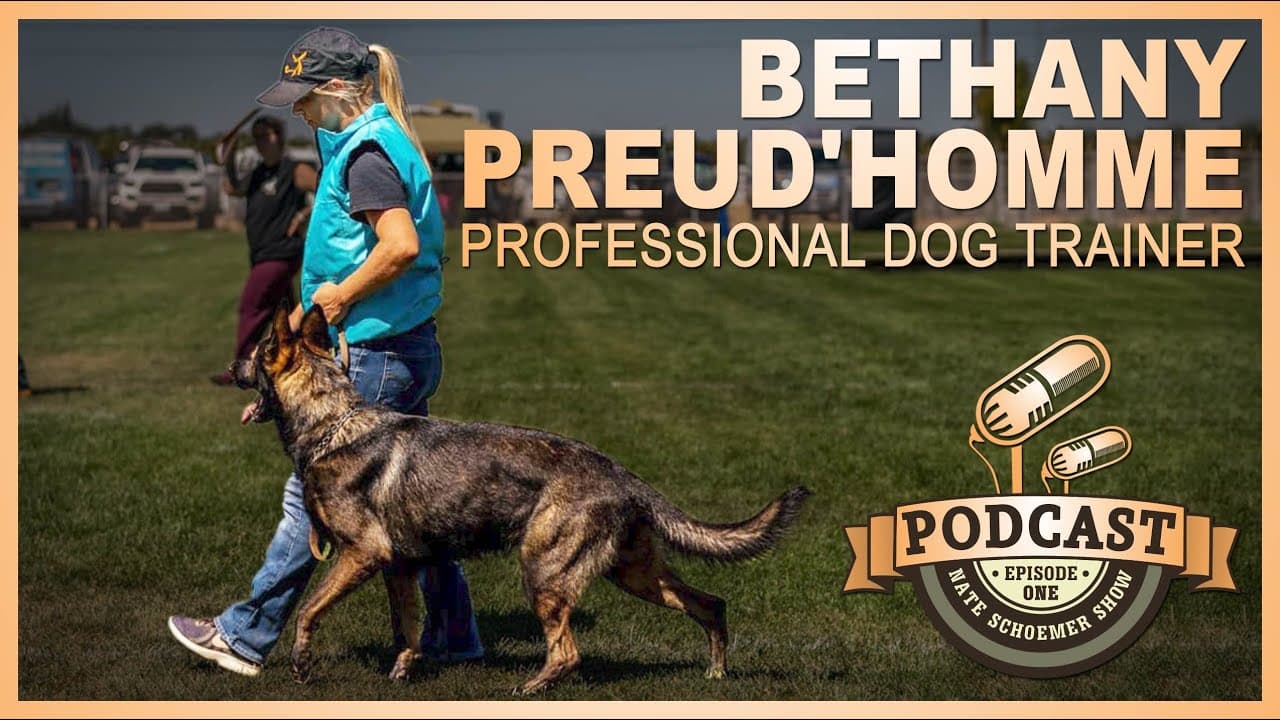
Mastering Dog Training with Expert Bethany Preud'homme: The Nate Schoemer Show - Episode 1
TL;DR
Bethany Preud'homme shares expert dog training tips and insights.
Transcript
alright perfect thank you so much everybody for joining us this is the first episode of the nate shomer show so I'm very excited about this and I'm here with Bethany Prudhomme I said that correctly so Bethany and I have we trained together she's a dog trainer that I've worked with in the past she is phenomenal so we're gonna be talking about dog tr... Read More
Key Insights
- Dog training requires a balance of science and art, understanding both operant and classical conditioning to effectively modify behavior.
- Finding a good dog trainer involves looking beyond certifications to actual results and the trainer's passion for dogs.
- Imprinting and early socialization are crucial for puppies to develop well-rounded behaviors and reduce future behavioral issues.
- Different dogs require different training methods; what works for one may not work for another, especially in terms of motivation and correction.
- The dog training industry lacks regulation, making it essential for dog owners to thoroughly research and choose trainers wisely.
- Proper nutrition and understanding canine dietary needs can significantly impact a dog's health and behavior.
- Rescue dogs and breeder dogs each have their own advantages, and the choice should be based on individual needs and circumstances.
- Effective dog training involves setting dogs up for success, using management tools like crates, and gradually increasing freedom as the dog learns.
Install to Summarize YouTube Videos and Get Transcripts
Explore YouTube Video Summarizer or Get YouTube Transcript Extractor
Questions & Answers
Q: What is the main challenge in finding a good dog trainer?
The main challenge in finding a good dog trainer is the lack of industry regulation, which means anyone can claim to be a trainer. It's important to look for trainers who have proven results, a passion for dogs, and participate in dog-related activities outside of pet training. Certifications can be helpful, but they are not the sole indicator of a trainer's capability.
Q: How does imprinting affect a puppy's development?
Imprinting is crucial in a puppy's development as it involves exposing them to various stimuli, people, and environments at a young age. This early socialization helps puppies become well-adjusted adults, reducing the likelihood of fear-based behaviors. Proper imprinting includes introducing puppies to different sounds, surfaces, and experiences, setting a foundation for future learning and adaptability.
Q: Why is nutrition important in dog training?
Nutrition plays a significant role in a dog's overall health and behavior. A balanced diet can affect a dog's energy levels, cognitive function, and ability to focus during training. Feeding high-quality food, whether kibble or raw, ensures that dogs receive the necessary nutrients. Poor nutrition can lead to health issues and negatively impact a dog's behavior and training progress.
Q: What are some common misconceptions about dog training?
Common misconceptions include the belief that all dogs can be trained using the same methods and that positive reinforcement alone is sufficient for every dog. In reality, training should be tailored to each dog's individual needs, and a mix of positive reinforcement and appropriate corrections may be necessary. Another misconception is that a dog's behavior is solely a result of their breed, ignoring environmental and training factors.
Q: How can dog owners prevent resource guarding?
To prevent resource guarding, owners should start training puppies early by practicing trades, where they exchange a high-value item for something even better, teaching the dog that giving up resources leads to positive outcomes. It's also important not to overly disturb dogs while they eat or have valuable items, as this can create anxiety and lead to guarding behaviors. Consistent and positive interactions help build trust and reduce guarding tendencies.
Q: What role do breeders play in the dog industry?
Good breeders play a crucial role in maintaining the integrity and health of dog breeds. They conduct health tests, socialize puppies, and match them with suitable homes. Responsible breeders also ensure that their dogs do not end up in shelters by microchipping and offering to take back dogs if necessary. They contribute to the preservation of breed standards and provide dogs with specific traits needed for various tasks and activities.
Q: Why is it important to set dogs up for success in training?
Setting dogs up for success involves creating an environment where they are more likely to make the right choices, which can be achieved through management tools like crates and controlled exposure to challenging situations. By gradually increasing the complexity of tasks and ensuring that dogs are not self-rewarding for unwanted behaviors, owners can guide their dogs towards desired behaviors, making training more effective and reducing frustration for both the dog and the owner.
Q: How does the concept of life rewards enhance dog training?
Life rewards involve using everyday activities and privileges as rewards for desired behaviors. For instance, allowing a dog to go for a walk or play after performing a command. This method reinforces training by integrating it into daily routines, making commands more meaningful and rewarding for the dog. It also reduces reliance on treats and encourages dogs to work for real-life benefits, enhancing their overall responsiveness and engagement in training.
Summary & Key Takeaways
-
Bethany Preud'homme discusses her journey and philosophy in dog training, emphasizing the importance of balancing science and art in the practice. She highlights the significance of finding a passionate and experienced trainer rather than relying solely on certifications.
-
The episode covers various aspects of dog training, including imprinting, resource guarding, and the importance of early socialization. Bethany shares insights on how different dogs require tailored methods and the role of motivation in training.
-
Bethany and Nate discuss the importance of proper nutrition and the benefits of raw feeding for dogs. They also touch on the challenges and responsibilities of being a dog breeder and the value of adopting rescue dogs.
Read in Other Languages (beta)
Share This Summary 📚
Summarize YouTube Videos and Get Video Transcripts with 1-Click
Try YouTube Summary with ChatGPT & Claude or YouTube Transcript Generator
Explore More Summaries from Nate Schoemer 📚



Summarize YouTube Videos and Get Video Transcripts with 1-Click
Try YouTube Summary with ChatGPT & Claude or YouTube Transcript Generator