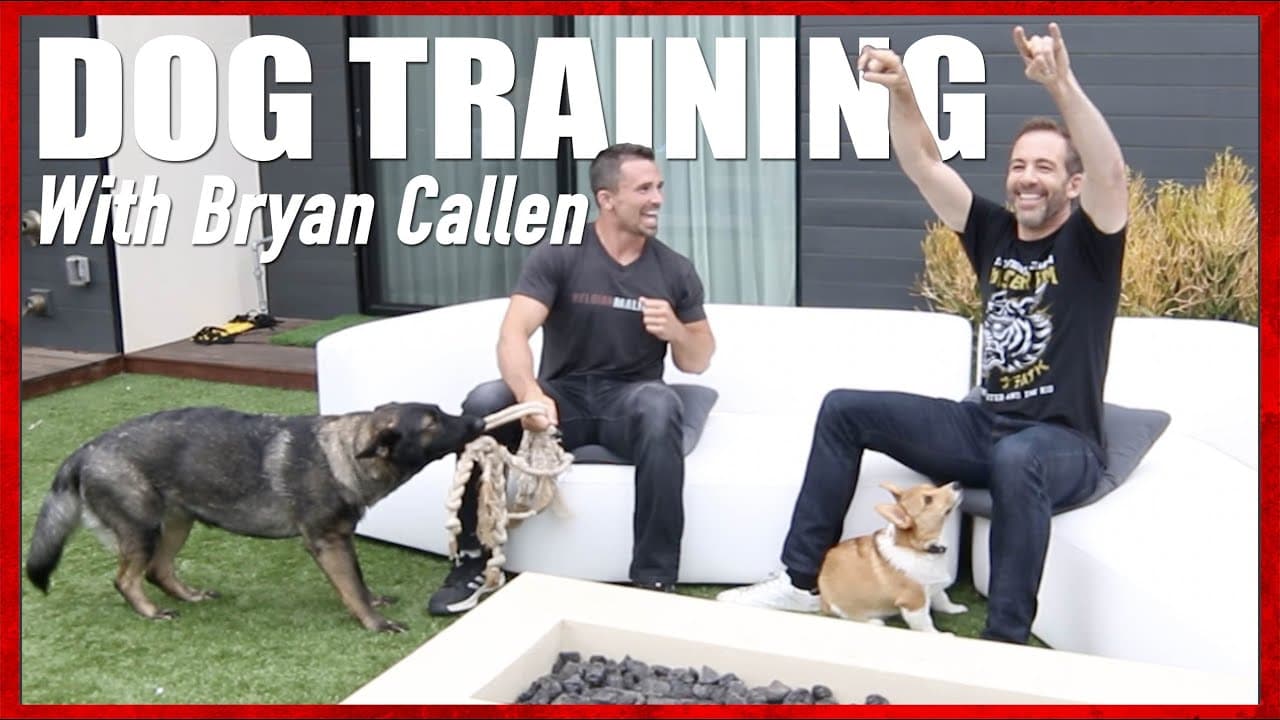
Dog Training with Bryan Callen and Nate Schoemer
TL;DR
Nate Schoemer helps Bryan Callen train his unruly dogs.
Transcript
most people that know me know that i've always been a massive fan of stand-up comedy and one of my all-time favorite comedians is brian callan back in 2017 when i was filming rescue dog the super dog for animal planet not only did brian callan help me with the show through mentorship but he also took the time to film this short video to help me gro... Read More
Key Insights
- Nate Schoemer collaborates with comedian Bryan Callen to address common dog training challenges, focusing on obedience and leash behavior.
- Bryan Callen's dogs exhibit typical issues like pulling on the leash, not responding to commands, and being easily distracted by other dogs.
- The training process involves assessing the dogs' current behavior, understanding the owner's goals, and formulating a tailored training plan.
- The concept of 'heel' is clarified as a specific position, not just walking alongside the owner, which helps in maintaining control.
- Nate emphasizes the importance of socialization to reduce the dogs' excitement when encountering other dogs, using play and structured activities.
- The 'climb' command, taught by the Tom Rose School, is highlighted as a useful tool for controlling the dogs' movement onto elevated surfaces.
- The video showcases the transformation process, aiming for distraction-proof obedience and a harmonious owner-dog relationship.
- Nate Schoemer offers additional resources such as online training sessions, instructional videos, and a training manual for continued learning.
Install to Summarize YouTube Videos and Get Transcripts
Explore YouTube Video Summarizer or Get YouTube Transcript Extractor
Questions & Answers
Q: What are the primary issues Bryan Callen faces with his dogs?
Bryan Callen's dogs primarily struggle with pulling on the leash, not responding consistently to commands, and being easily distracted by other dogs or stimuli. These issues lead to a lack of control during walks and interactions with other dogs, making the experience frustrating for Bryan.
Q: What is the 'heel' command, and how is it beneficial?
The 'heel' command is a specific position where the dog walks closely beside the owner. It is beneficial because it helps maintain control over the dog during walks, ensuring they do not pull on the leash or stray. Teaching a dog to heel promotes a disciplined and enjoyable walking experience.
Q: How does Nate plan to address the dogs' excitement around other dogs?
Nate plans to address the dogs' excitement by focusing on socialization and play. By exposing the dogs to various social situations and structured activities, they learn that meeting other dogs is not a big deal, reducing their excitement and improving their overall behavior.
Q: What is the 'climb' command, and how does it help in training?
The 'climb' command involves directing the dog to move onto an elevated surface. This command helps in training by providing a specific task that requires focus and discipline. It is useful for controlling the dog's movement and ensuring they stay in a designated area when needed.
Q: What additional resources does Nate offer for dog training?
Nate offers various resources for dog training enthusiasts, including online training sessions, over 150 instructional videos on his YouTube channel, and a dog training manual. These resources provide comprehensive guidance on different aspects of dog training, from beginner basics to advanced techniques.
Q: How does Nate assess the dogs' current behavior?
Nate assesses the dogs' current behavior by observing their response to basic commands and their behavior in different environments. He evaluates their level of obedience, how they react to distractions, and their general demeanor during interactions, which helps in formulating a tailored training plan.
Q: What is the ultimate goal of the training program?
The ultimate goal of the training program is to achieve distraction-proof obedience, ensuring the dogs respond consistently to commands regardless of external stimuli. This results in a harmonious relationship between the owner and dogs, where the dogs are well-behaved and the owner feels in control.
Q: Why is socialization important in dog training?
Socialization is important in dog training because it helps dogs become accustomed to various environments, people, and other animals. It reduces their excitement and anxiety in new situations, promoting calm and controlled behavior. Socialization is key to developing a well-rounded and confident dog.
Summary & Key Takeaways
-
Nate Schoemer collaborates with Bryan Callen to train his unruly dogs, addressing common issues like leash pulling and lack of obedience. The training focuses on structured commands and socialization to improve behavior. Nate offers additional resources for dog training enthusiasts.
-
The video demonstrates a comprehensive training approach, including assessing the dogs' current behavior, setting goals, and implementing a plan. Key techniques such as the 'heel' and 'climb' commands are introduced to enhance control and obedience.
-
Nate emphasizes the benefits of socialization and structured play to reduce dogs' excitement around others. The training process aims to achieve distraction-proof obedience, resulting in a harmonious relationship between the owner and dogs.
Read in Other Languages (beta)
Share This Summary 📚
Summarize YouTube Videos and Get Video Transcripts with 1-Click
Try YouTube Summary with ChatGPT & Claude or YouTube Transcript Generator
Explore More Summaries from Nate Schoemer 📚


Summarize YouTube Videos and Get Video Transcripts with 1-Click
Try YouTube Summary with ChatGPT & Claude or YouTube Transcript Generator