Saudi Aramco CEO: "We Have to Invest Wisely"
TL;DR
Saudi Aramco produces one out of every seven barrels of oil worldwide, about 10 million of roughly 72 million barrels daily, and holds more than half of global spare production capacity. The company carries no debt, funds its own operations, and defines its mission as engaging in the hydrocarbon industry on a commercial basis for profit.
Transcript
change liveses change organizations change organization change the world it's a truly a pleasure to be here of course being a good businessman I uh tried to size up the competition and checked on who's been here thank you uh three meetings ago you had the CEO of City group one of those institutions that are too big to fail but keep failing and you ... Read More
Key Insights
- Saudi Aramco produces more oil than any other company in the world, accounting for one out of every seven barrels produced globally, roughly 10 million of about 72 million barrels of oil produced each day.
- Saudi Aramco holds more than half of the global spare oil production capacity, meaning its production decisions and its ability to respond can affect not only the oil market but the wider global economy.
- The company carries no debt on its balance sheet and funds its own capital and operating expenditures, paying taxes, royalty, and dividends without ever borrowing money to run its operations.
- Saudi Aramco's mission is to engage in all activities related to the hydrocarbon industry on a commercial basis and for the purpose of profit, keeping profitability and commerciality first despite its geopolitical and macroeconomic weight.
- The company's roots trace to the Bay Area through a concession with Standard Oil of California, and its first operating name was the California Arabian Standard Oil Company, placing California ahead of Arabian in its origins.
- Max Steineke, Aramco's first chief geologist and a Stanford graduate, mapped the whole Kingdom where no maps existed and, after five years of frustration, defied a cable to stop drilling and instead drilled well number seven deeper to strike the first commercial oil.
- Dammam well number seven became lucky number seven and was named the Prosperity Well by the king, and since that discovery the company has produced more oil than any other in the world.
- Beyond oil and gas, Saudi Aramco runs unique support businesses including a fleet of fixed-wing aircraft and helicopters, hundreds of marine vessels, housing compounds for tens of thousands of employees, remote area camps, and a health care system serving hundreds of thousands of patients.
Install to Summarize YouTube Videos and Get Transcripts
Explore YouTube Video Summarizer or Get YouTube Transcript Extractor
Questions & Answers
Q: How much oil does Saudi Aramco produce compared to other companies?
Saudi Aramco produces more oil than any other company in the world. Al-Falih says you can count today that the company produces one out of every seven barrels of oil produced around the world, which is 10 million out of about 72 million barrels of oil produced globally each day. This dominant position in the Upstream is supported by unique operational, technical, financial, management, and leadership capabilities.
Q: What is Saudi Aramco's spare oil production capacity?
Saudi Aramco is the only company with any meaningful spare production capacity, holding more than half of the global spare oil production capacity. Because of this, its decisions on production, and its ability to respond or failure to respond, could have consequences not only for the oil market but for the global economy. This influence is not equaled or matched by any other company in the world.
Q: Does Saudi Aramco have debt on its balance sheet?
No. Al-Falih states that Saudi Aramco is probably the only company of its size and scale with no debt on its balance sheet. The company is so financially strong that it has been long in its cash flow for as long as he can remember. It pays taxes, royalty, and dividends, funds its own capital and operating expenditures, and has never had to borrow money to fund its operations.
Q: What is Saudi Aramco's mission statement?
Saudi Aramco's mission, as an integrated international company, is to engage in all activities related to the hydrocarbon industry on a commercial basis and for the purpose of profit. Al-Falih calls this a focused and smartly written statement that reminds the company that, despite its geopolitical and macroeconomic impact, it must operate with profitability and commerciality first and foremost, executing at best-in-class levels across all core operations.
Q: Who was Max Steineke and why is he important to Saudi Aramco?
Max Steineke was Saudi Aramco's first chief geologist and a Stanford graduate who came from humble beginnings. After trying to find oil in Indonesia and Alaska, he went to Saudi Arabia and mapped the whole Kingdom where no maps existed. After five years of frustration, headquarters in San Francisco cabled the field to stop working, but Steineke defied the order and drilled well number seven a little deeper, discovering the first commercial oil.
Q: What is the Prosperity Well?
The Prosperity Well is the name the king gave to Dammam well number seven, where Saudi Aramco discovered its first gusher and first commercial oil. The discovery came after Max Steineke defied an instruction to stop drilling and instead ordered his team to drill the seventh well a little deeper. The well became known as lucky number seven, and since that discovery the company has produced more oil than any other in the world.
Q: What connection does Saudi Aramco have to California and Stanford?
Saudi Aramco's roots are in the Bay Area. It began with a concession to Standard Oil of California, and its first operating name was the California Arabian Standard Oil Company. The company has 40 Stanford graduates among its employees, including the chairman and the minister of petroleum, who is a graduate of the School of Earth Sciences in geology. Aramco is also endowing a chair in Max Steineke's name.
Q: What support businesses does Saudi Aramco run beyond oil and gas?
Because of the breadth and complexity of its mandates, Saudi Aramco runs many support businesses unusual for a company of any kind. These include a significant fleet of fixed-wing aircraft and helicopters, hundreds of marine vessels managing offshore production and crude transportation, housing compounds for tens of thousands of employees and families, remote area camps supporting desert plants, and a health care system serving hundreds of thousands of patients.
Summary
This video features a speech by the CEO of Saudi Aramco, who discusses the company's history, its role in the global energy market, and its future plans for growth and transformation. He emphasizes the importance of education, both for personal development and for the company's success. The CEO also addresses challenges facing the industry, such as the rise of unconventional energy sources, and explains how Saudi Aramco is responding strategically.
Questions & Answers
Q: How has education played a role in shaping the CEO's thoughts about leadership?
The CEO believes that education has been instrumental in his personal and professional development. It has provided him with new perspectives, expanded his knowledge, and taught him humility. Education has also instilled in him a belief in the importance of lifelong learning and constant adaptation.
Q: How does Saudi Aramco plan to respond to changes in the industry, such as the rise of unconventional energy sources?
Saudi Aramco acknowledges the impact of unconventional energy sources, but does not see them as a threat. The company believes that the world's hydrocarbon resources are vast and will last for many years to come. Saudi Aramco welcomes the development of renewable energy sources and is investing in research and development to ensure it stays at the forefront of the energy sector.
Q: Saudi Arabia has been criticized for its high levels of internal energy consumption. What is Saudi Aramco doing to address this?
Saudi Aramco recognizes the importance of energy efficiency and the need to reduce domestic energy consumption. The company has implemented measures to promote efficiency and is actively involved in initiatives to bring renewable energy and nuclear power to the country. Saudi Aramco is committed to making a positive impact on the environment and utilizing resources responsibly.
Q: What are the thoughts on initiatives to promote local workforce and talent development?
Saudi Aramco has always prioritized hiring local talent whenever possible. The company sees it as a sound business decision that leads to better cost-effectiveness and higher reliability. While Saudi Aramco cannot solve the nation's employment challenges single-handedly, it aims to create job opportunities through partnerships with suppliers, contractors, and customers. The company also invests in training and development programs to nurture and enhance the skills of its workforce.
Q: What matters most to the CEO and why?
The CEO's first priority is his family. However, beyond that, what matters most to him is making a lasting impact. He is driven by the desire to lead Saudi Aramco to success and meet the expectations of stakeholders, including employees, the nation of Saudi Arabia, and the global community. The CEO believes in the purpose and responsibility of the company to provide reliable energy supplies and contribute to global stability.
Takeaways
The CEO of Saudi Aramco highlights the significance of education and lifelong learning for personal and professional growth. The company is focused on staying ahead of industry changes, including the rise of unconventional energy sources, while maintaining its position as a leader in the global energy market. Saudi Aramco is committed to energy efficiency and sustainability, and aims to create job opportunities and contribute to the development of the nation of Saudi Arabia. The CEO's key values include making a positive impact and ensuring the success and reputation of Saudi Aramco in the long term.
Summary & Key Takeaways
-
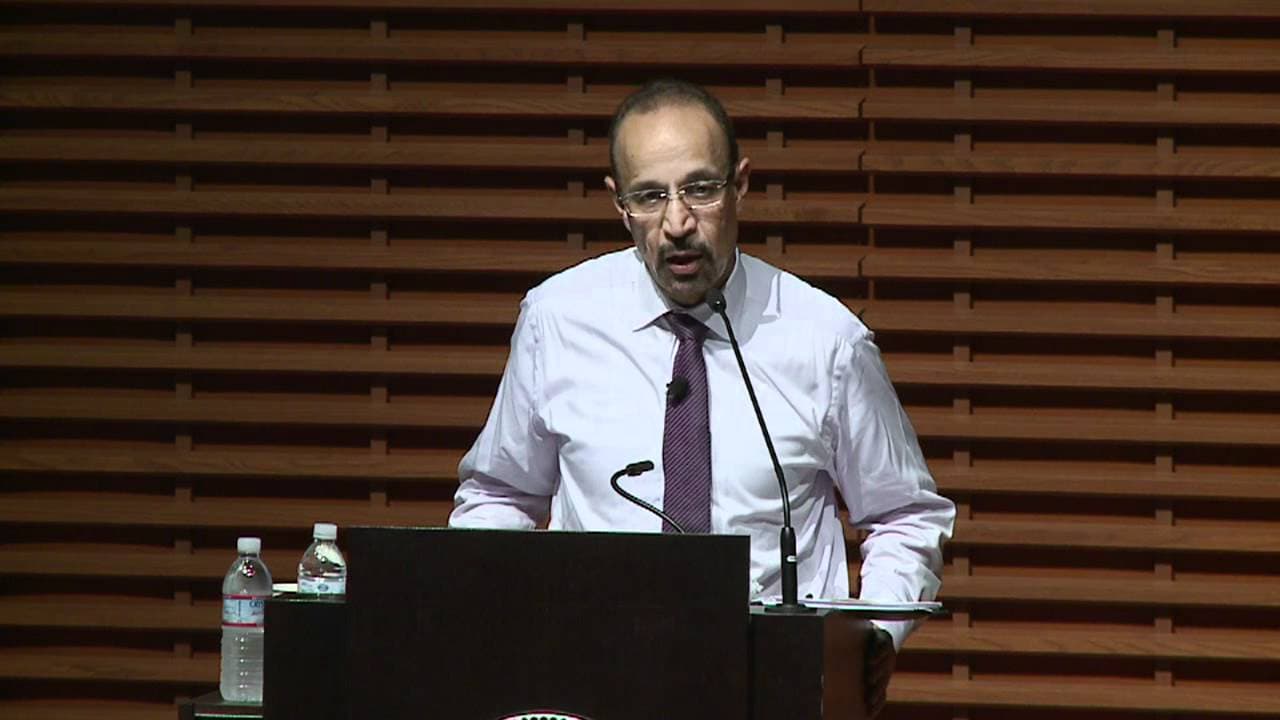
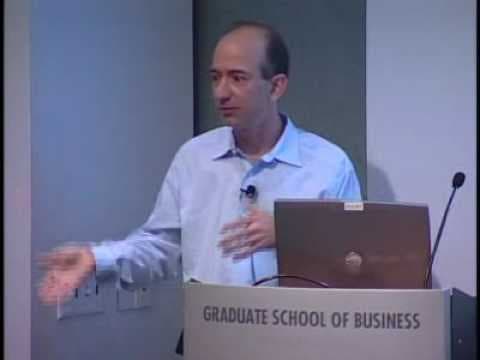
Speaking at Stanford Graduate School of Business, Saudi Aramco CEO Khalid Al-Falih framed his talk around Max Steineke, the company's first chief geologist, who defied an order to stop drilling and instead drilled well number seven deeper to discover the first commercial oil, the Prosperity Well.
-
Al-Falih detailed Aramco's scale: it produces one of every seven barrels of oil worldwide, about 10 million of roughly 72 million barrels daily, is a top global gas producer, and holds more than half of the world's spare oil production capacity, giving it economy-wide influence.
-
The company carries no debt, funds its own operations and dividends without borrowing, and defines its mission as engaging in the hydrocarbon industry for profit. It also runs unique support businesses including aircraft, marine vessels, housing compounds, remote camps, and a large health care system.
Read in Other Languages (beta)
Share This Summary 📚
Summarize YouTube Videos and Get Video Transcripts with 1-Click
Try YouTube Summary with ChatGPT & Claude or YouTube Transcript Generator
Explore More Summaries from Stanford Graduate School of Business 📚


Summarize YouTube Videos and Get Video Transcripts with 1-Click
Try YouTube Summary with ChatGPT & Claude or YouTube Transcript Generator