What Is Organocatalysis and Why Did It Win a Nobel Prize?
TL;DR
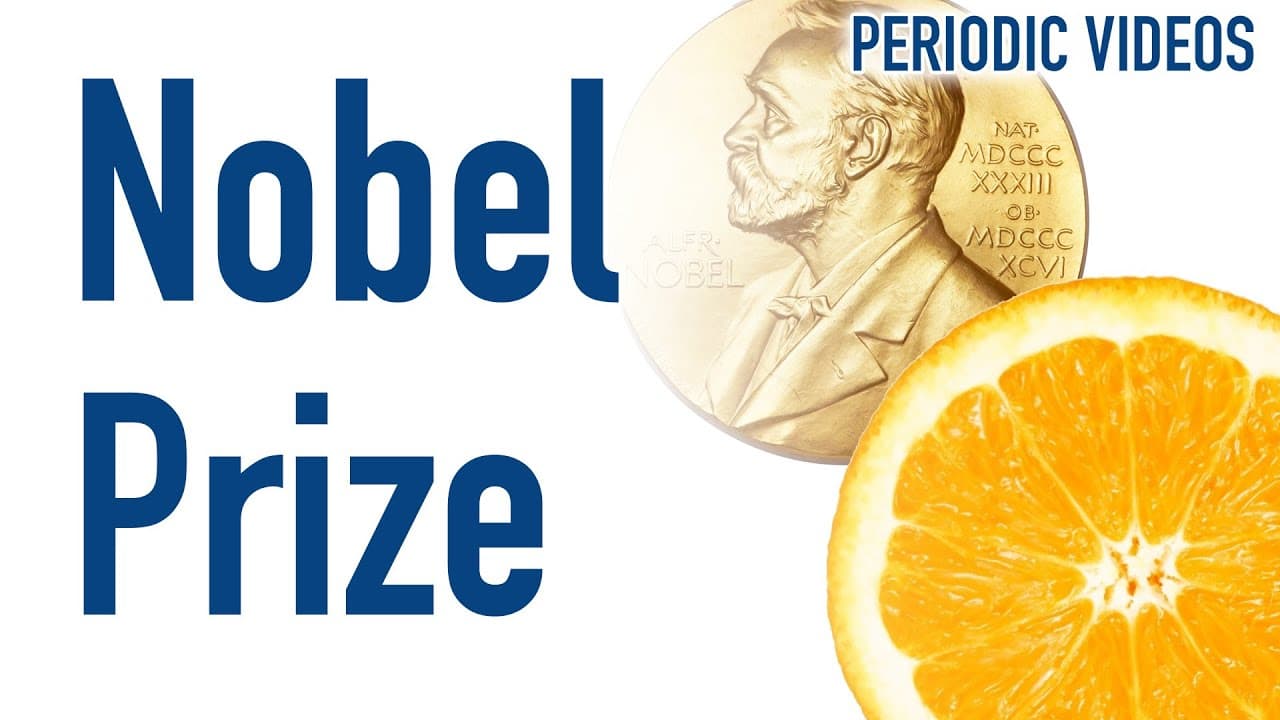
Organocatalysis, the use of organic molecules as catalysts, won the 2021 Nobel Prize for revolutionizing chemical synthesis by enabling the selective creation of specific molecular forms. This method reduces energy consumption and waste while increasing efficiency, significantly impacting sustainable chemistry. The breakthrough work by Benjamin List and David MacMillan has paved the way for more efficient catalytic processes in laboratories worldwide.
Transcript
this year's nobel prize was won by two chemists benjamin liszt from germany and david macmillan originally from scotland but whose scientific career has been in america and it is based on a field called organocatalysis using organic molecules as catalysts and using them very specifically for making molecules of one hand rather than the other becaus... Read More
Key Insights
- ❓ Organocatalysis utilizes organic molecules as catalysts, mimicking enzymatic processes in nature.
- 🖐️ Chirality plays a crucial role in creating molecules of specific handedness with unique properties.
- 🚱 Proline, an amino acid, is a non-toxic molecule commonly used in organocatalysis.
- 😉 The Nobel Prize-winning breakthrough has spurred research in developing efficient catalysts for chemical synthesis.
- 🗑️ Organocatalysis offers energy-efficient and waste-minimizing benefits compared to traditional catalysis methods.
- 🤗 Benjamin List and David MacMillan's work in organocatalysis has opened new avenues for sustainable and efficient chemical processes.
- 👨🔬 The impact of winning a Nobel Prize can lead to a shift in scientists' focus from research to public engagement.
Install to Summarize YouTube Videos and Get Transcripts
Explore YouTube Video Summarizer or Get YouTube Transcript Extractor
Questions & Answers
Q: What does organocatalysis involve?
Organocatalysis uses organic molecules as catalysts to selectively create molecules of specific handedness, addressing challenges in chemical synthesis.
Q: How do enzymes inside our bodies influence handedness in molecules?
Enzymes act as catalysts to create molecules of specific handedness in biological processes, showcasing the importance of chirality in chemistry.
Q: What was the breakthrough by Benjamin List in organocatalysis?
Benjamin List discovered that simple molecules like proline, found in enzymes, could catalyze reactions to produce one molecular form over the other, revolutionizing chemical synthesis.
Q: How has organocatalysis impacted sustainable chemistry?
Organocatalysis reduces energy consumption, increases atom efficiency, and minimizes waste, making it a promising approach for sustainable chemical processes.
Summary & Key Takeaways
-
Two chemists, Benjamin List and David MacMillan, won the Nobel Prize for their breakthrough in organocatalysis.
-
Organocatalysis involves using organic molecules as catalysts to create molecules of specific handedness.
-
This method reduces energy consumption, increases atom efficiency, and minimizes waste in chemical processes.
Read in Other Languages (beta)
Share This Summary 📚
Summarize YouTube Videos and Get Video Transcripts with 1-Click
Try YouTube Summary with ChatGPT & Claude or YouTube Transcript Generator
Explore More Summaries from Periodic Videos 📚



Summarize YouTube Videos and Get Video Transcripts with 1-Click
Try YouTube Summary with ChatGPT & Claude or YouTube Transcript Generator