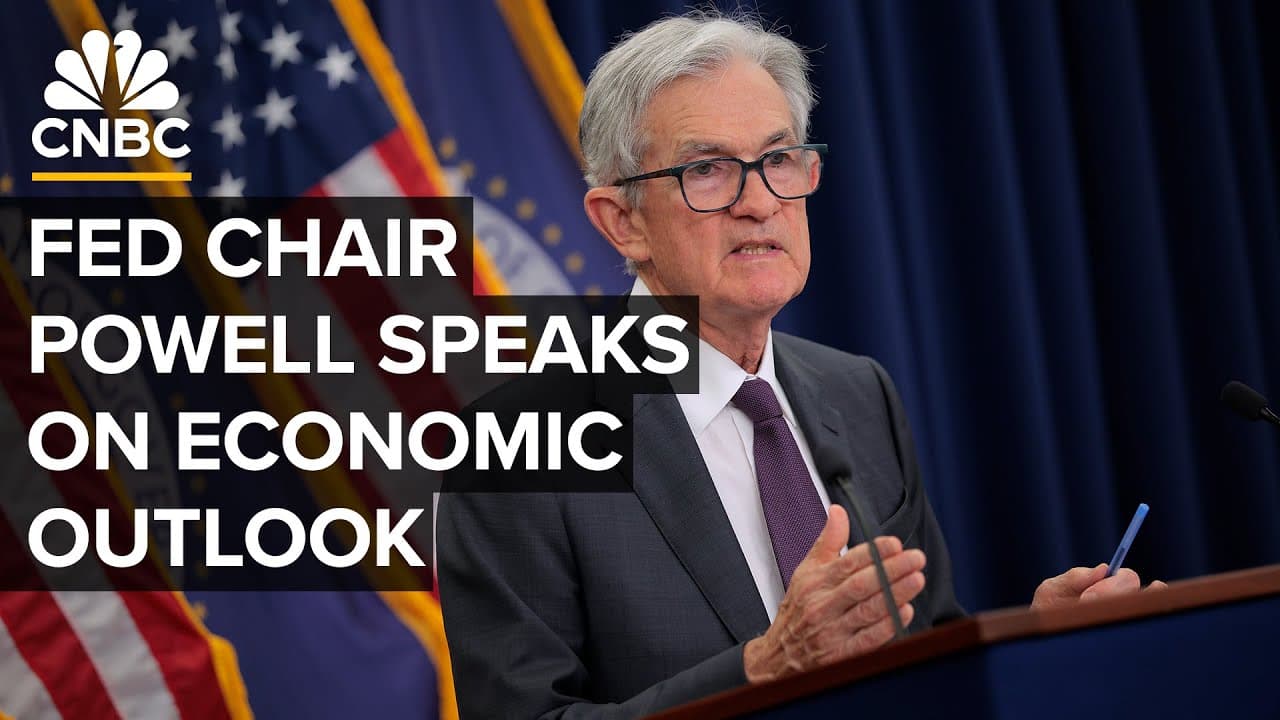
How Will Federal Reserve Chair Jerome Powell Balance Inflation and Jobs? Jackson Hole Speech, 8/22/25
TL;DR
Federal Reserve Chair Jerome Powell may support adjusting restrictive monetary policy as downside risks to employment rise while tariffs create upward inflation risks. Payroll growth averaged only 35,000 per month over the three months through July, yet unemployment remained historically low at 4.2%. Future decisions will depend on incoming data, the economic outlook, and the balance of risks. Read on to understand the indicators shaping that judgment.
Transcript
labor market remains near maximum employment and inflation though still somewhat elevated has come down a great deal from its post-pandemic highs. At the same time, the balance of risks appears to be shifting. In my remarks today, I will first address the current economic situation and the near-term outlook for monetary policy. I will then turn to ... Read More
Key Insights
- The labor market is near maximum employment, but its apparent balance reflects marked slowdowns in both worker supply and worker demand. Average payroll growth fell to 35,000 per month over the three months through July, while unemployment remained historically low at 4.2%.
- Employment risks are increasingly tilted downward because weak job creation could develop rapidly into higher layoffs and unemployment. Quits, layoffs, vacancies relative to unemployment, and nominal wage growth had changed little or softened only modestly, providing no evidence of a large existing margin of labor-market slack.
- Economic growth slowed notably during the first half of the year, reaching a 1.2% pace compared with 2.5% in 2024. The slowdown largely reflected weaker consumer spending, although some weakness may also have resulted from slower growth in supply or potential output.
- Tariffs are visibly raising prices in some goods categories, with total PCE prices increasing 2.6% and core PCE prices increasing 2.9% over the 12 months ending in July. Core goods prices rose 1.1%, reversing the modest decline recorded during 2024.
- Tariff inflation may be a temporary shift in the price level, but its effects will not necessarily occur simultaneously. Price changes require time to pass through supply chains and distribution networks, while evolving tariff rates could extend the adjustment and increase uncertainty about timing and magnitude.
- Longer-term inflation expectations appear anchored and consistent with the Federal Reserve's 2% objective, despite inflation remaining above target for more than four years. Powell warned that stability cannot be assumed and pledged to prevent a temporary price increase from developing into continuing inflation.
- Monetary policy faces conflicting risks because inflation risks are tilted upward while employment risks are tilted downward. The policy rate remains restrictive but is 100 basis points closer to neutral than a year earlier, allowing officials to proceed carefully while considering a possible adjustment.
- The revised monetary policy framework preserves the congressional mandate of maximum employment and stable prices while seeking effectiveness across varied conditions. Its public review included Federal Reserve listening events, a research conference, staff analysis, and policymaker deliberations conducted through a series of FOMC meetings.
Install to Summarize YouTube Videos and Get Transcripts
Explore YouTube Video Summarizer or Get YouTube Transcript Extractor
Questions & Answers
Q: How will the Federal Reserve balance inflation and jobs?
The Federal Reserve will weigh rising downside risks to employment against upward inflation risks from tariffs. Powell said monetary policy is not on a preset course, so decisions will depend on incoming data, the economic outlook, and the changing balance of risks.
Q: Why might the Federal Reserve adjust its restrictive policy stance?
The balance of risks appears to be shifting as payroll growth, labor-force growth, and GDP growth slow. Although inflation remains somewhat elevated and tariffs are raising some goods prices, increasing employment risks may justify adjusting the current stance.
Q: What does the slowdown in payroll growth indicate?
Payroll growth averaged only 35,000 jobs per month over the three months through July, down from 168,000 per month during 2024. The slowdown has not created a large margin of labor-market slack, but it suggests that downside employment risks are rising and could materialize quickly through higher layoffs and unemployment.
Q: Why has unemployment stayed low despite weaker hiring?
The unemployment rate remained historically low at 4.2% because labor supply weakened alongside labor demand. Lower immigration, slower labor-force growth, and a recent decline in labor-force participation reduced the job-creation pace needed to keep unemployment stable.
Q: How are tariffs affecting inflation and consumer prices?
Higher tariffs have begun raising prices in some goods categories, and their effects on consumer prices are clearly visible. Core goods prices increased 1.1% over the 12 months ending in July, and further effects are expected as tariff increases move through supply chains and distribution networks.
Q: Could tariff price increases cause persistent inflation?
Powell described a relatively short-lived, one-time shift in the price level as a reasonable base case, though the adjustment may occur gradually. Persistent inflation could develop through adverse wage-price dynamics or rising inflation expectations, so the Federal Reserve intends to assess and manage those risks.
Q: What inflation indicators did Jerome Powell highlight?
Total PCE prices rose 2.6% over the 12 months ending in July, while core PCE prices rose 2.9%. Housing services inflation remained on a downward trend, but non-housing services inflation was still somewhat above a level historically consistent with 2% inflation.
Q: What changed in the Federal Reserve's revised monetary policy framework?
The revised framework continues to prioritize the congressional mandate of maximum employment and stable prices. It is designed to work across varied economic conditions, reflect structural changes and evolving knowledge, and strengthen transparency and accountability.
Summary & Key Takeaways
-
Economic growth and hiring weakened during the first half of 2025, but unemployment remained historically low at 4.2%. Powell characterized the labor market as an unusual balance created by simultaneous slowdowns in worker demand and labor supply, warning that employment risks could materialize quickly through higher layoffs and rising unemployment if conditions deteriorate further.
-
Tariffs have begun raising goods prices, while housing services inflation continues to decline and non-housing services inflation remains somewhat elevated. Powell presented a temporary price-level increase as a reasonable base case but emphasized the possibility of persistent inflation through wage-price dynamics or unanchored expectations, risks the Federal Reserve intends to monitor carefully.
-
The Federal Reserve remains committed to maximum employment and stable prices while considering whether its restrictive policy stance should change. Its revised framework seeks to work across diverse economic conditions, reflect evolving knowledge, and improve transparency and accountability. Future rate decisions will depend on data, the economic outlook, and competing mandate risks.
Read in Other Languages (beta)
Share This Summary 📚
Summarize YouTube Videos and Get Video Transcripts with 1-Click
Try YouTube Summary with ChatGPT & Claude or YouTube Transcript Generator
Explore More Summaries from CNBC Television 📚

Summarize YouTube Videos and Get Video Transcripts with 1-Click
Try YouTube Summary with ChatGPT & Claude or YouTube Transcript Generator