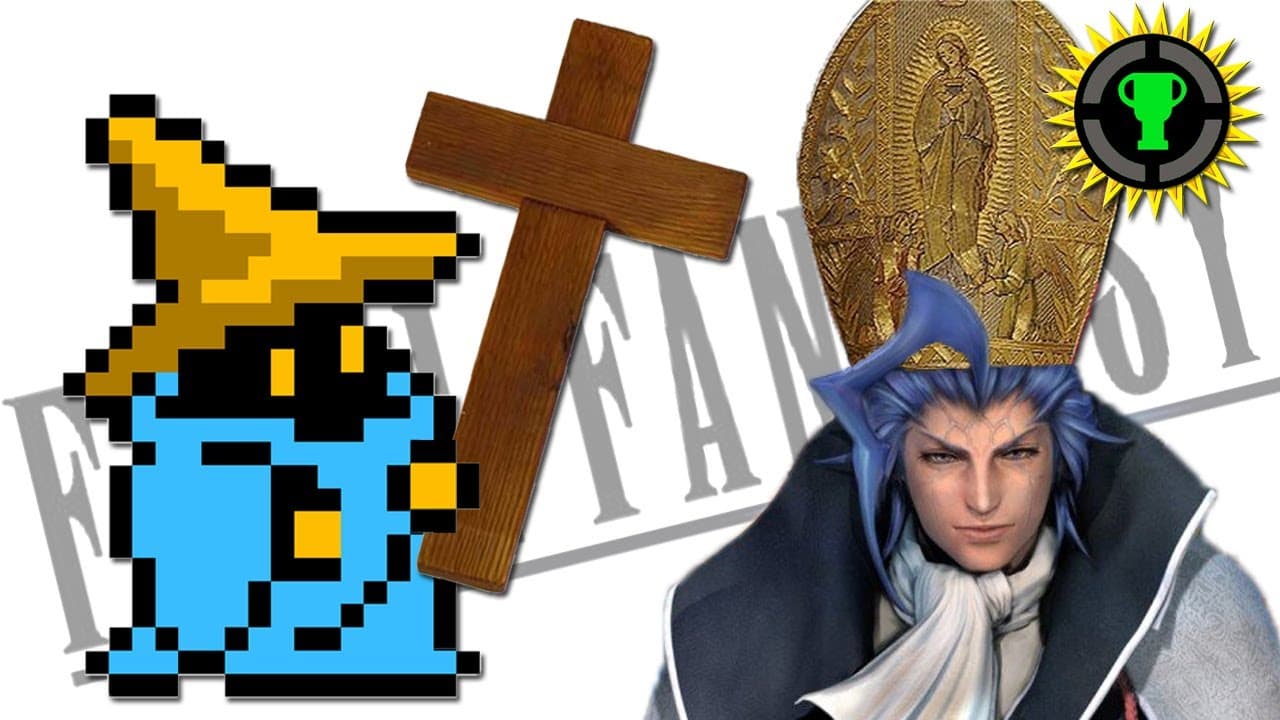
Game Theory: Why Final Fantasy is Anti-Religion
TL;DR
Final Fantasy games critique organized religion and the concept of God through symbolic gameplay elements.
Transcript
MatPat uploads video. Final Fantasy fan becomes defensive. MatPat uses disclaimer. Final Fantasy fan pauses the video to read it. Final Fantasy fan uses rage comment. MatPat puts up flame shield. Rage comment has no effect. MatPat uses evidence. Doubt is terminated. Hello Internet. Welcome to Game Theory, the show that, to put it bluntly, takes you... Read More
Key Insights
- ⛪ Final Fantasy X criticizes organized religion through the corrupt church of Yevon.
- ✊ Final Fantasy Tactics explores religious corruption through manipulating ancient legends for power.
- 😒 Final Fantasy VI uses Christian imagery in the final battle to symbolize Kefka's ascent to godhood.
- 👹 Japanese cultural views on religion influence the portrayal of organized religion in Final Fantasy games.
- ❓ Final Fantasy Legend introduces themes of Hinduism and Buddhism with the character of Ashura.
- 🎮 Through gameplay, Final Fantasy games educate players on diverse religious concepts.
- 🎮 The exploration of themes like corruption and deification in Final Fantasy games adds depth to gameplay.
Install to Summarize YouTube Videos and Get Transcripts
Explore YouTube Video Summarizer or Get YouTube Transcript Extractor
Questions & Answers
Q: How does Final Fantasy X critique organized religion?
Final Fantasy X criticizes organized religion through the corrupt church of Yevon, which restrains technological progress and deceives its followers by sacrificing them for power.
Q: What is the central theme of Final Fantasy Tactics related to religious corruption?
Final Fantasy Tactics depicts the Glabados Church using ancient legends to fuel a war for power while hiding their true goal of resurrecting their savior, St. Ajora, leading to heresy and manipulation.
Q: How does Final Fantasy VI address the concept of God in its gameplay?
Final Fantasy VI portrays the main villain, Kefka, as a god-like figure with destructive power, incorporating Christian imagery in the final battle to symbolize his ascent to divine status.
Q: Why do Final Fantasy games often critique organized religion and religious figures?
Final Fantasy games reflect Japanese cultural views on religion, with Christianity historically outlawed in Japan and Eastern religions focusing on self-improvement rather than sin, influencing the portrayal of religion in the games.
Summary & Key Takeaways
-
MatPat analyzes Final Fantasy games for their anti-religious themes and symbolism.
-
Final Fantasy X critiques organized religion through a corrupt church that hinders progress.
-
Other games in the series, like Final Fantasy Tactics and Final Fantasy VI, also explore themes of religious corruption and deification.
Read in Other Languages (beta)
Share This Summary 📚
Summarize YouTube Videos and Get Video Transcripts with 1-Click
Try YouTube Summary with ChatGPT & Claude or YouTube Transcript Generator
Explore More Summaries from The Game Theorists 📚






Summarize YouTube Videos and Get Video Transcripts with 1-Click
Try YouTube Summary with ChatGPT & Claude or YouTube Transcript Generator