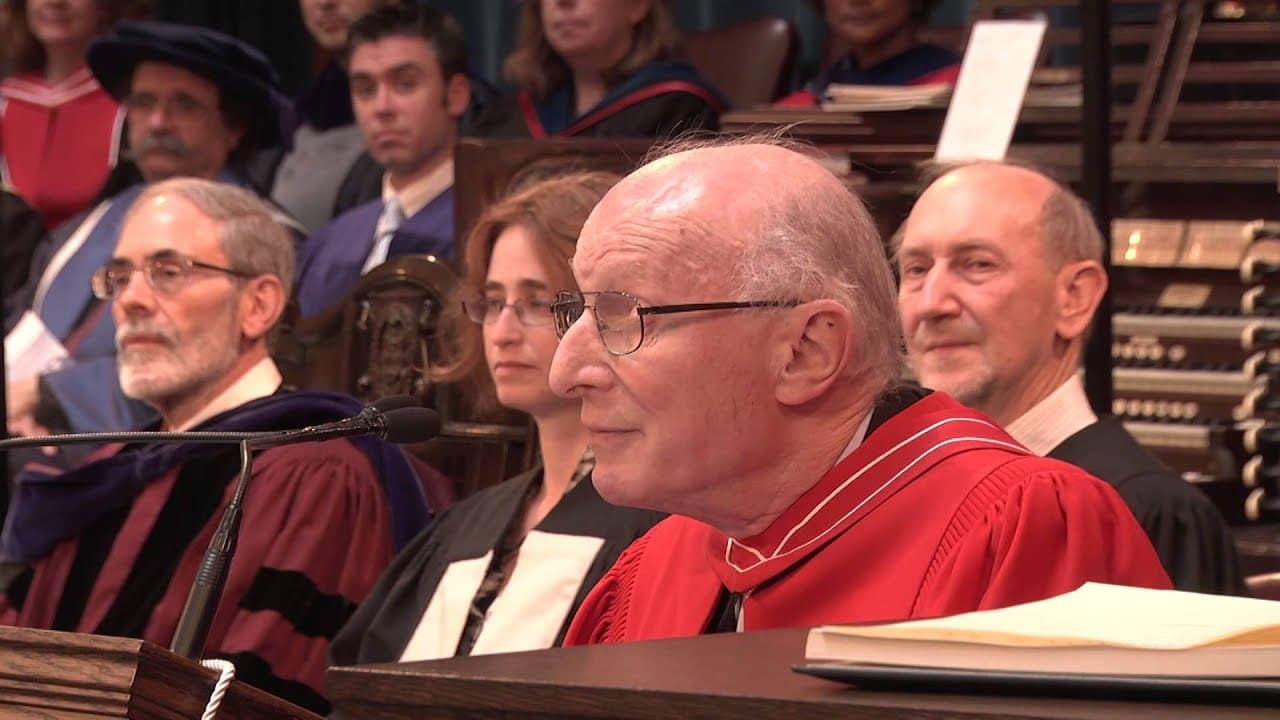
University of Toronto: Stuart A. Rice, Convocation 2013 Honorary Degree recipient
TL;DR
Stuart A. Rice urges University of Toronto graduates to balance individual and collective good by helping others, supporting intellectual work across disciplines, and defending universities. Drawing on a career of more than 60 years, he argues that ideas and new knowledge prepare society for unforeseen shocks and opportunities. Read on to understand the responsibilities he assigns graduates and why universities need their active advocacy.
Transcript
chancellor wilson dean corman professor brumer graduates ladies and gentlemen the admonition it goes without saying is always an introduction to saying so i do say that i am greatly pleased and i feel considerably elevated to have been selected to receive the degree doctor of science honoris causa from the university of toronto i have had the good ... Read More
Key Insights
- ❓ Graduates have a responsibility to support individuals and institutions for societal progress.
- 🖐️ Universities play a crucial role in shaping intellectual activities and contributing to societal well-being.
- 💡 The emphasis on practical knowledge may diminish the importance of ideas for future societal advancement.
- 🪡 Chancellor Corman emphasizes the need for graduates to actively participate in promoting the value of universities in society.
- ❓ Supporting all intellectual activities irrespective of subject is crucial for a healthy society.
- 🛟 Ideas serve as the foundation for future innovations and societal progress.
- 🎓 Graduates are encouraged to be active participants in the debate surrounding the contributions of universities to societal betterment.
Install to Summarize YouTube Videos and Get Transcripts
Explore YouTube Video Summarizer or Get YouTube Transcript Extractor
Questions & Answers
Q: What message does Stuart A. Rice give University of Toronto graduates at the 2013 convocation?
Rice asks graduates to accept responsibility for balancing individual and collective good. He urges them to help others achieve their goals, support intellectual activity across all subjects, and promote public understanding of universities’ value.
Q: Why does Stuart A. Rice believe graduates have an obligation to help others?
Graduates received direct or indirect help from family, friends, fellow students, teachers, mentors, and the society that supports universities. Rice argues that this assistance creates an obligation to help other people pursue their own goals.
Q: How should graduates support intellectual activity outside their own fields?
Rice asks graduates to value and support intellectual activity regardless of subject. He says engineers should support the arts, while writers and philosophers should remain informed about developments in the sciences and open-minded toward ideas throughout intellectual life.
Q: What role does Stuart A. Rice believe universities play in society?
Universities transmit knowledge, create new understanding, and contribute to society’s intellectual heritage. Rice also describes their longevity as evidence of a broad consensus that their work is valuable.
Q: Why does Rice mention the University of Bologna and the year 1088?
Rice cites the University of Bologna’s founding in 1088 to illustrate the longstanding principles guiding universities. Those principles are that ideas matter even when their practical effects may be distant and that improved understanding in any field enriches intellectual heritage.
Q: What challenge to universities does Rice identify?
Rice says some legislators and others want university science to produce so-called useful knowledge and education to focus primarily on workforce preparation. He warns that emphasizing immediate practical use comes at the high price of diminishing the importance of ideas themselves.
Q: Why does Rice argue that ideas and new knowledge matter for the future?
Rice calls ideas the seeds of future ideas and says they power society. Because no one can foresee future shocks and opportunities, society will need new ideas to respond, while reduced knowledge creation will likely have adverse effects.
Q: What action does Rice ask graduates to take after leaving university?
Rice asks graduates to become active participants in the debate about how society can best support universities’ contributions to intellectual heritage and the greater good. He says universities’ future contributions to society will depend on how graduates confront this challenge.
Summary & Key Takeaways
-
Chancellor Wilson Dean Corman expresses gratitude for receiving an honorary doctorate and emphasizes the importance of individual and collective responsibilities.
-
He urges graduates to support both individuals and institutions, emphasizing the value of all intellectual activities and the role of universities in society.
-
The future contributions of universities to society depend on graduates actively promoting the importance of ideas and knowledge creation.
Read in Other Languages (beta)
Share This Summary 📚
Summarize YouTube Videos and Get Video Transcripts with 1-Click
Try YouTube Summary with ChatGPT & Claude or YouTube Transcript Generator
Explore More Summaries from University of Toronto 📚

Summarize YouTube Videos and Get Video Transcripts with 1-Click
Try YouTube Summary with ChatGPT & Claude or YouTube Transcript Generator