How to Build AI Systems That Work Like a Team
TL;DR
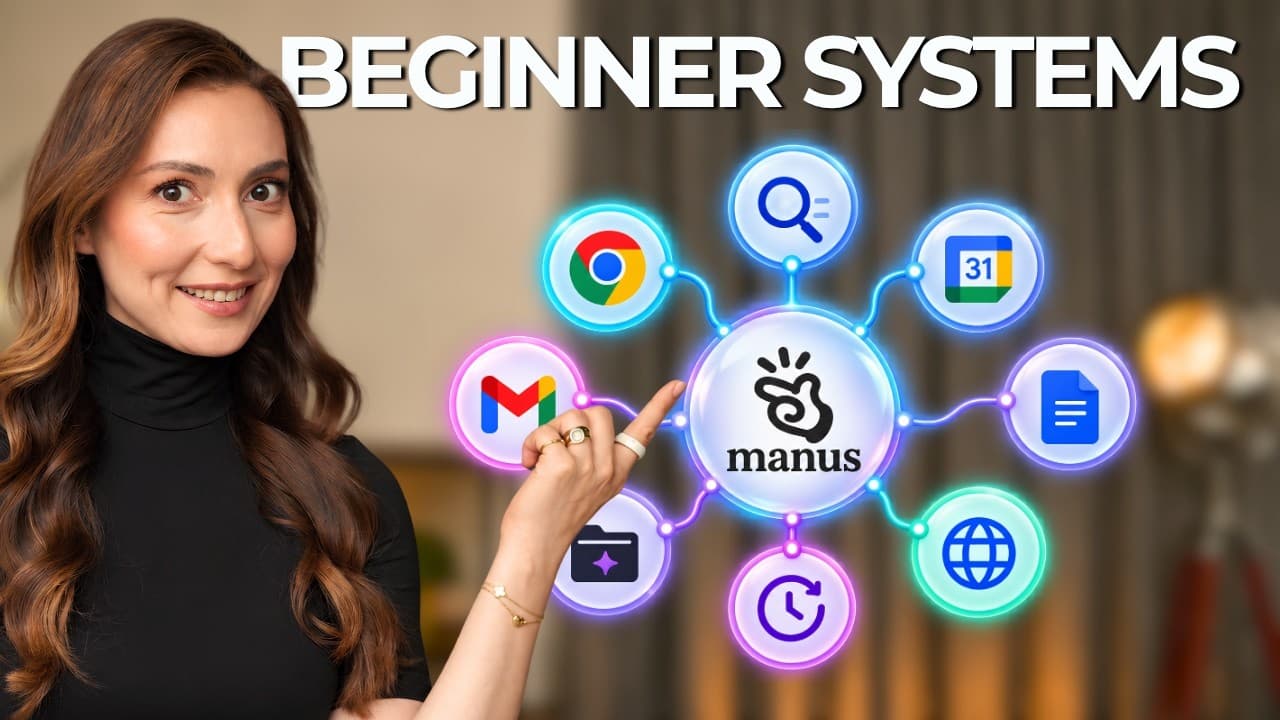
Use AI as a coordinated department by assigning it complete workflows, not isolated questions. Build parallel research with a disagreement check, let an authorized browser operator prepare real deliverables within explicit boundaries, schedule proven workflows to run automatically, and preserve useful corrections so future work improves instead of restarting from scratch.
Transcript
Everyone you work with has access to basically the same AI that you do. And that's the strange part. The tools got evenly distributed, but the results didn't. And I don't think the gap is intelligence or effort. It's the job that you give the AI actually because you know what happened? Most people have hired themselves a very fast assistant. But a ... Read More
Key Insights
- The quality gap in AI use comes from job design, not merely tool access. Most people employ AI as a fast assistant for individual answers, while more effective users assign coordinated workflows that resemble the work of an entire department.
- Parallel research works by splitting one decision into independent investigative paths. The demonstrated research desk examines regulation, competitors, alternatives, and failed market entries simultaneously, allowing the user to inspect more of a problem within a short deadline.
- The disagreement check is a deliberate search for evidence against the preferred answer. It asks what would justify saying no, which assumption carries excessive risk, and where credible sources conflict, exposing the parts of a decision that require more judgment.
- Human accountability remains essential when AI produces a recommendation. The user should verify the sources carrying the conclusion because the person presenting or acting on the decision, not the AI system, bears the practical responsibility and risk.
- A decision presentation should communicate an established recommendation rather than invent one. The demonstrated Gamma workflow receives completed research, audience context, the decision at stake, and instructions to place the recommendation first, followed by evidence, the largest risk, and the next step.
- A browser operator completes work inside authorized tools instead of merely describing how to do it. It can move through calendars, email threads, documents, and browser tabs already available in a permitted local session, reducing manual copying and assembly.
- Explicit operational boundaries make browser automation more controllable. The meeting-preparation workflow permits research and document updates but forbids sending, responding to invitations, deleting, or altering source records, while the user can observe, interrupt, take over, or stop the process.
- Scheduled execution turns a successful workflow into a recurring result. A Sunday run can repeat meeting preparation automatically, so the completed material is ready before Monday rather than relying on the user to remember and act on a reminder.
- More videos from this channel:
- More from this channel: AI Founders
Install to Summarize YouTube Videos and Get Transcripts
Explore YouTube Video Summarizer or Get YouTube Transcript Extractor
Questions & Answers
Q: How can AI work like a department instead of a chatbot?
AI works more like a department when it receives ownership of a complete, structured workflow rather than a single question. The demonstrated systems divide research into parallel paths, operate across authorized browser tools to assemble deliverables, repeat proven instructions on a schedule, and retain useful corrections. The human still defines the goal, permissions, output structure, and verification requirements.
Q: How do you build an AI research desk for business decisions?
Start with the decision and identify independent questions that affect it, such as competitors, regulation, alternatives, customer complaints, and previous failed entries. Ask the AI to investigate those paths in parallel and return a recommendation, the evidence carrying the conclusion, the strongest opposing argument, and unresolved issues. Before acting, personally verify the sources supporting the recommendation.
Q: What is an AI disagreement check?
An AI disagreement check is a deliberate request for evidence that weakens or contradicts a preferred conclusion. It asks what facts would support rejecting the proposal, which assumption carries the greatest risk, and where credible sources conflict. The purpose is to reveal weaknesses and areas requiring judgment, rather than create a collection of research that simply agrees with the original idea.
Q: Why should AI research include arguments against a recommendation?
Arguments against a recommendation expose assumptions, risks, and disputed evidence that supportive research may overlook. If every research path agrees with the idea supplied by the user, the result can become confirmation rather than analysis. Locating credible disagreement shows where the decision needs further investigation and helps the human determine whether the recommendation is sufficiently grounded to defend.
Q: How can an AI browser operator prepare meetings?
An authorized browser operator can inspect the calendar, locate relevant email threads, open prior documents, research changes, and update a preparation document without requiring the user to copy each item into chat. The demonstrated output organizes the meeting objective, previous context, recent changes, open questions, and required reading, placing the practical preparation for several meetings in one location.
Q: What permissions should an AI browser workflow have?
Permissions should match the exact work required and explicitly prohibit actions outside that scope. In the meeting-preparation example, the operator may research information and update the preparation document, but it may not send messages, respond to invitations, delete anything, or modify source records. The user can watch its actions, interrupt it, take control, or stop it if it behaves unexpectedly.
Q: What is the difference between an AI reminder and a scheduled result?
A reminder tells the user that work still needs to be done, effectively returning the task to them. A scheduled result runs the established instructions and produces the requested preparation before it is needed. In the demonstrated Sunday run, recurring meeting preparation is completed ahead of Monday, removing the separate burden of remembering to launch the workflow manually.
Q: How should AI research be turned into a presentation?
Complete the analysis before asking a presentation tool to shape it visually. Provide the research, identify the audience and decision, and request a structure that states the recommendation early, places supporting evidence beneath it, then covers the largest risk and next step. The user can revise wording, structure, layout, and visuals while keeping the substantive recommendation grounded in prior research.
Summary & Key Takeaways
-
The research desk divides a business decision into independent lines of investigation, including competitors, regulation, alternatives, failed market entries, and evidence that challenges the preferred conclusion. Its final output emphasizes the recommendation, decisive evidence, strongest counterargument, and unresolved questions, while leaving source verification and responsibility with the human decision-maker.
-
The browser operator prepares meetings by moving through authorized calendars, emails, documents, and research sources in the signed-in local browser. It consolidates each meeting's objective, prior context, recent changes, open questions, and required reading into one place, while explicit restrictions prevent sending messages, responding to invitations, deleting information, or changing source records.
-
Once a browser workflow works reliably, a scheduled Sunday run repeats the same instructions before the workweek begins. The distinction is that a reminder merely returns the task to the user, while scheduled execution produces the preparation itself. Together with retained corrections, recurring workflows can become more consistent and require less repeated direction.
Read in Other Languages (beta)
Share This Summary 📚
Summarize YouTube Videos and Get Video Transcripts with 1-Click
Try YouTube Summary with ChatGPT & Claude or YouTube Transcript Generator
Explore More Summaries from AI Founders 📚






Summarize YouTube Videos and Get Video Transcripts with 1-Click
Try YouTube Summary with ChatGPT & Claude or YouTube Transcript Generator