Why AI Progress Won't Plateau Despite High Costs
TL;DR
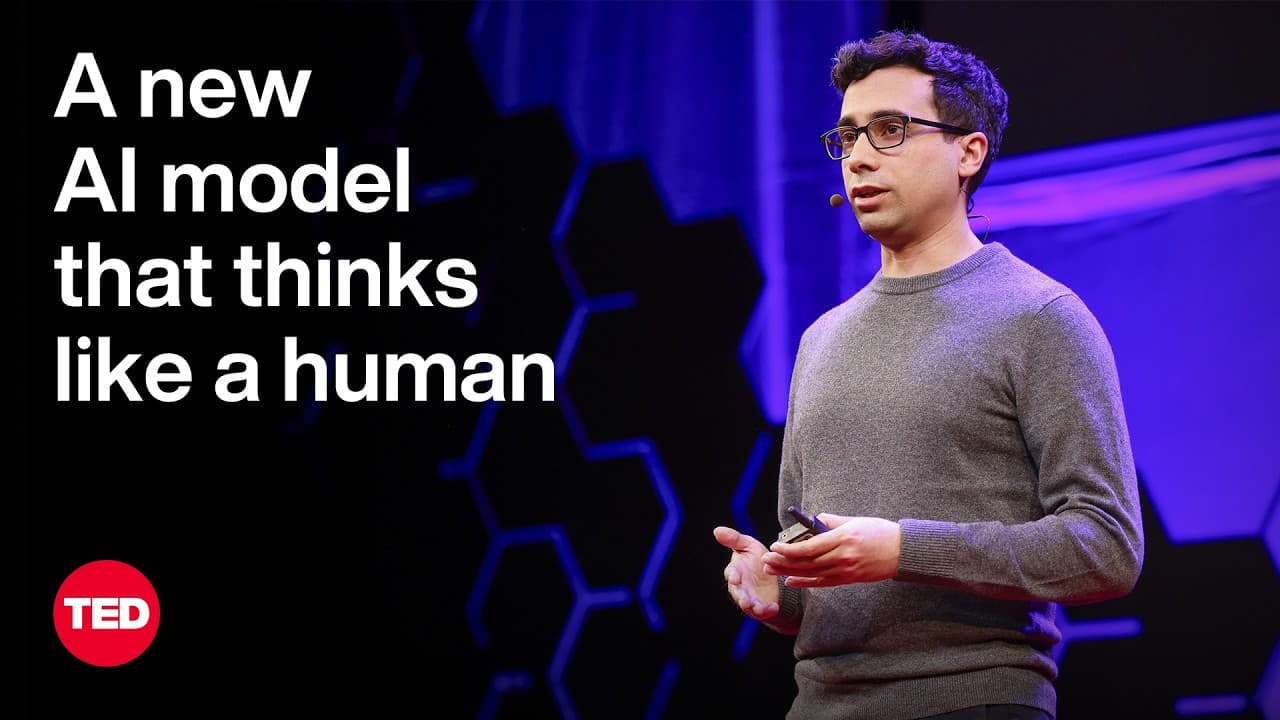
AI will not reach a plateau because performance significantly improves when models are allowed more time to think. Research shows that increasing decision-making time can enhance effectiveness by the same margin as scaling the model size immensely. This approach is now being applied to language models, unlocking new possibilities for AI beyond traditional uses.
Transcript
the incredible progress in AI over the past 5 years can be summarized in one word scale yes there have been algorithmic advances but the frontier models of today are still based on the same Transformer architecture that was introduced in 2017 and they are trained in a very similar way to the models that were trained in 2019 the main difference is i... Read More
Key Insights
- 🥺 The scaling of AI models has reached new financial heights, leading to increased skepticism regarding the sustainability of future advancements due to high costs.
- 💄 Performance in AI can dramatically improve by incorporating longer decision-making processes, rather than solely relying on data and model size.
- ✌️ Historical competitions, like those in poker, provide valuable insights into how deep strategy understanding can alter victory probabilities in human vs. AI clashes.
- 🎮 The lessons learned from game-playing AI may have broader applications, potentially revolutionizing AI in language processing and other critical domains.
- 🤔 The distinction between system one and system two thinking is fundamental in AI development, revealing that rapid action doesn't always yield the best outcomes.
- 🤔 New generations of AI models, like those developed by OpenAI, are recognizing the value of constructive "thinking" time, which is a novel approach in AI design.
- 🇨🇷 The ongoing conversation around querying costs indicates a shift in how AI might be monetized in the future, aligning the value of detailed responses with financial feasibility.
- 🎙️ More videos with Noam Brown:
Install to Summarize YouTube Videos and Get Transcripts
Explore YouTube Video Summarizer or Get YouTube Transcript Extractor
Questions & Answers
Q: What are the main advancements seen in AI over the past five years?
The advancements in AI during this period have largely revolved around scaling up models through increased data and computational power. While foundational architectures like transformers remain unchanged since 2017, the amount of data and the computational resources employed have drastically increased. The costs required to train these models have surged, prompting discussions about the sustainability of continued scaling.
Q: How does thinking time impact AI performance in games like poker?
In the context of poker, it was observed that providing the AI with even short periods to think significantly improved its decision-making capabilities. Specifically, allowing a bot to think for just 20 seconds yielded performance improvements equivalent to scaling the model size and training duration vastly. This illustrates a critical distinction between rapid, intuitive responses versus methodical reasoning.
Q: What were the results of the poker competition between AI and human experts?
Initially, an AI poker bot faced off against four top human players but lost decisively, demonstrating the limits of immediate decision-making. After reevaluating their approach, the developers redesigned the bot to incorporate more thinking time. Subsequently, in a second competition, this revised AI triumphed impressively, highlighting the effectiveness of strategic thought processes over sheer speed.
Q: How is the concept of "system one" and "system two" thinking relevant to AI development?
System one thinking refers to quick, instinctive responses, while system two thinking is more deliberate and analytical. Many AI models have relied primarily on system one capabilities, executing immediate decisions. Understanding the benefits of system two thinking has led to new strategies, where allowing more time for computation can lead to superior outcomes, as evidenced in competitive scenarios.
Q: Can the advancements seen in poker AI translate to other domains?
Yes, the principles of enhanced thinking time applied in poker are being explored in broader contexts. For example, AI models in language processing are now being designed to "think" before generating responses. This approach could significantly enhance the quality and accuracy of AI outputs and prove useful in complex problem-solving across various fields.
Q: What financial implications do these advancements have for AI models?
Training cutting-edge AI models has become increasingly expensive, with costs reaching hundreds of millions of dollars. Interest exists in balancing the costs associated with model training against the querying expenses, which are remarkably lower. As AI progresses, the financial sustainability of longer thinking periods in decision-making will need careful consideration, potentially justifying higher costs for more complex queries.
Q: What does the future of AI development look like considering these insights?
The future of AI development appears promising, with emerging paradigms that focus on enhancing thinking and processing capabilities. By integrating system two thinking into AI models, there is potential for groundbreaking applications that can tackle complex issues efficiently. There is a renewed confidence among researchers that AI is likely to see accelerated growth rather than stagnation.
Q: How might the application of these principles disrupt current AI paradigms?
Current AI models primarily function as chatbots or immediate-response systems. The focus on scaling thinking time could recast AI’s role in sectors like healthcare or scientific research, where thorough consideration is valued. The ability to process complex inquiries more comprehensively and methodically can lead to AI solutions that are not only faster but also significantly more effective, pushing the boundaries of what AI can achieve today.
Summary & Key Takeaways
-
Over the last five years, AI has progressed through scaling up models and data, with significant financial investments leading to drastic improvements. Concerns about hitting a plateau due to costs have been raised, yet optimism for continued growth remains.
-
The experience of developing poker AI revealed that allowing for more thinking time dramatically enhances performance. In one instance, a bot's thought time equated to a 100,000x scaling of the model, emphasizing the importance of a methodical approach.
-
Recent developments in language models suggest that this concept of enhancing "thinking time" could be applied broadly in AI applications, opening the door to innovative possibilities beyond traditional chatbot functions, if the costs are justified.
Read in Other Languages (beta)
Share This Summary 📚
Summarize YouTube Videos and Get Video Transcripts with 1-Click
Try YouTube Summary with ChatGPT & Claude or YouTube Transcript Generator
Explore More Summaries from TED 📚






Summarize YouTube Videos and Get Video Transcripts with 1-Click
Try YouTube Summary with ChatGPT & Claude or YouTube Transcript Generator