Why Did Thomas Baker Ask for Eight Bullets?
TL;DR
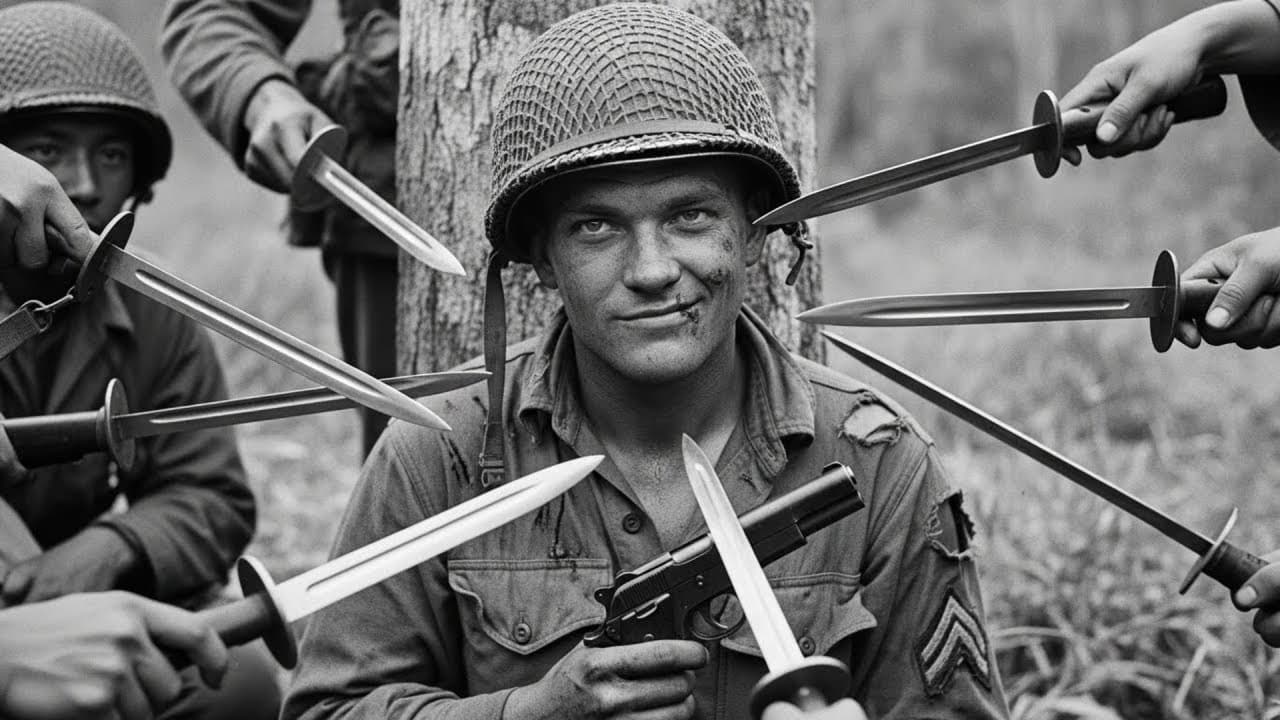
Private Thomas Baker asked for a pistol with eight bullets because he was too badly wounded to walk and refused to endanger more soldiers by accepting evacuation. Propped against a tree facing the enemy, he continued resisting alone during the massive Japanese charge on Saipan, an act that contributed to his posthumous Medal of Honor.
Transcript
At 4:45 in the morning on July 7th, 1944, Private Thomas Baker lay in his foxhole on the Tanipag plane of Saipan, watching a wave of shadows pour out of the jungle 300 yards ahead. 28 years old, 3 weeks of combat on this island, and now staring at the largest suicide charge of the entire Pacific War. Between 3,000 and 5,000 Japanese soldiers were r... Read More
Key Insights
- Private Thomas Baker was a 28-year-old rifleman from Troy, New York, serving with Company A of the 105th Infantry Regiment during the Battle of Saipan. He had joined the Army in October 1940 and spent nearly four years preparing before reaching combat.
- The Japanese final attack began around 4:45 a.m. on July 7, 1944, after commanders ordered a last suicide assault. Between 3,000 and 5,000 soldiers charged American positions, making it the largest such attack described in the Pacific War.
- Saipan was strategically important because American forces intended to capture the island, destroy its Japanese garrison, and construct airfields within range of Japan for B-29 bombers. The operation began when Marine divisions landed on June 15, followed by the Army the next day.
- The 105th Infantry Regiment faced severe numerical pressure near Tanapag Village. Roughly a thousand men from two battalions confronted an attacking force four to five times larger, and Japanese reconnaissance had identified a 500-yard gap between those battalions.
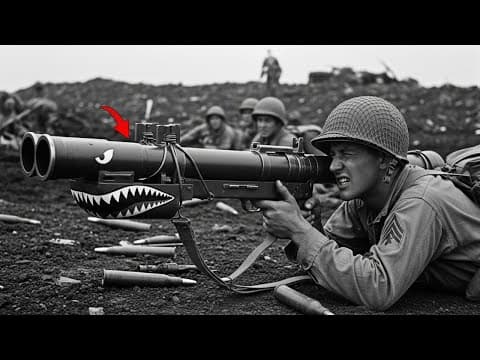
- Baker had demonstrated exceptional combat initiative before July 7. On June 19, he crossed 100 yards of exposed ground with a bazooka and destroyed a machine-gun position, then later attacked fortified and infiltrating Japanese groups while operating alone.
- The American defense survived by reorganizing after its original perimeter collapsed. Scattered soldiers formed new positions, officers assumed command of nearby survivors, and isolated groups continued fighting until the Japanese assault began losing momentum after suffering thousands of casualties.
- Baker continued fighting after being wounded and after his weapons failed. One rifle jammed, another rifle’s stock shattered during hand-to-hand combat, and he refused to withdraw while fellow soldiers remained engaged against attackers at extremely close range.
- Baker requested eight bullets because he could no longer walk and would not risk more soldiers during another evacuation attempt. He asked to be propped against a tree facing the enemy with a pistol, choosing to continue resisting alone rather than burden his comrades.
Install to Summarize YouTube Videos and Get Transcripts
Explore YouTube Video Summarizer or Get YouTube Transcript Extractor
Questions & Answers
Q: Why did Thomas Baker ask for eight bullets?
Thomas Baker asked for a pistol containing eight bullets because he was severely wounded, unable to walk, and unwilling to place more American soldiers at risk by accepting further evacuation. After another soldier’s attempt to carry him failed, Baker requested that his comrades prop him against a tree facing the enemy and leave him there with the loaded weapon.
Q: What happened during the final Japanese charge on Saipan?
Between 3,000 and 5,000 Japanese soldiers launched a final suicide attack around 4:45 a.m. on July 7, 1944. They poured through a 500-yard gap between two American battalions, broke apart the original defensive perimeter, overran artillery positions, and pushed more than a thousand yards forward before casualties and reorganized American resistance slowed the attack.
Q: How did Thomas Baker fight after his weapons failed?
Baker kept fighting despite repeated weapon failures and a serious wound. After his first M1 Garand jammed, he took another rifle from a dead soldier and continued shooting. When ammunition ran out and attackers reached his position, he used the rifle as a club in hand-to-hand combat until its stock shattered, leaving him without a working weapon.
Q: Why was the Japanese garrison ordered to make a suicide attack?
The Japanese garrison had been driven into Saipan’s northern tip with nowhere left to retreat. Its supplies were exhausted, reinforcements were not coming, and the Imperial Japanese Navy had been shattered in the Battle of the Philippine Sea. Lieutenant General Yoshitsugu Saito therefore ordered his remaining forces to make a final attack rather than surrender or become prisoners.
Q: How did American forces respond after their defensive line collapsed?
American resistance fragmented into small, isolated fights after Japanese troops broke through the perimeter. Soldiers fired in multiple directions and fought inside foxholes with rifles, bayonets, rifle butts, and their hands. Later, scattered units found one another, created new defensive positions, and accepted leadership from available officers, gradually turning the chaos into organized resistance.
Q: What acts of courage had Thomas Baker performed before July 7, 1944?
On June 19, Baker took a bazooka and crossed 100 yards of exposed ground while his company was pinned down by machine-gun fire. He destroyed the enemy position with one shot, allowing his unit to advance. Days later, he independently attacked two fortified positions containing 12 Japanese soldiers, then killed six more soldiers who had infiltrated behind American lines.
Q: What role did Lieutenant Colonel William O’Brien play during the attack?
Lieutenant Colonel William O’Brien commanded the first battalion of the 105th Infantry Regiment and moved along the line during the assault instead of remaining under cover. Carrying a pistol in each hand, he fired at Japanese soldiers who approached. His visible presence encouraged frightened and isolated troops to continue fighting during the collapse of their original defensive positions.
Q: Why did Thomas Baker receive the Medal of Honor?
Baker received the Medal of Honor for his conduct during the July 7 battle on Saipan. He continued fighting after being wounded, remained in action through the failure and destruction of his rifles, and refused further evacuation because it would endanger other Americans. Unable to walk, he chose to face the enemy alone with a pistol holding eight bullets.
Summary & Key Takeaways
-
On July 7, 1944, between 3,000 and 5,000 Japanese soldiers launched a final suicide attack against American positions on Saipan’s Tanapag Plain. The assault penetrated a gap between two battalions of the 105th Infantry Regiment, shattered the defensive perimeter, and produced isolated battles involving rifles, grenades, bayonets, and hand-to-hand combat.
-
Private Thomas Baker fought through repeated waves of attackers, replacing one jammed rifle before another weapon’s stock shattered during hand-to-hand combat. Although wounded and in pain, he refused to leave while the attack continued. A fellow soldier eventually tried carrying him toward safety, but the attempted evacuation failed after roughly 50 yards.
-
Unable to walk and unwilling to risk additional American lives, Baker refused further evacuation. He asked to be positioned against a tree facing the enemy and given a pistol containing eight bullets. His comrades left him as the battle continued. Baker later received the Medal of Honor, alongside Lieutenant Colonel William O’Brien and Captain Ben Salomon.
Read in Other Languages (beta)
Share This Summary 📚
Summarize YouTube Videos and Get Video Transcripts with 1-Click
Try YouTube Summary with ChatGPT & Claude or YouTube Transcript Generator
Explore More Summaries from WW2 Records 📚
Summarize YouTube Videos and Get Video Transcripts with 1-Click
Try YouTube Summary with ChatGPT & Claude or YouTube Transcript Generator