Why Jim Cramer Is Still Holding Nvidia Stock
TL;DR
Nvidia should be owned for the long term rather than traded on fear, according to Jim Cramer, because its AI leadership, resources, profits, and history of overcoming competitive concerns outweigh the current risks. Alphabet’s custom chips, Meta’s potential interest in them, expensive Nvidia hardware, and questions surrounding OpenAI are valid concerns, but Cramer does not consider them insurmountable.
Transcript
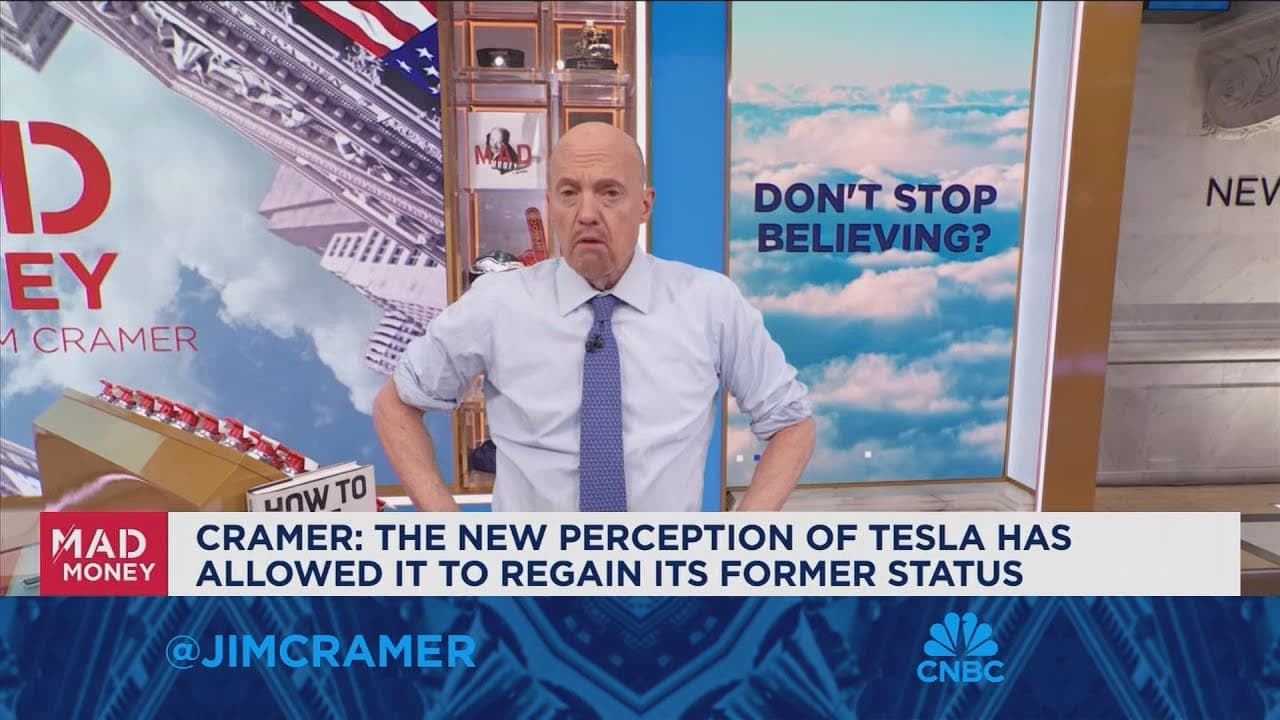
Hey I'm Cramer. Welcome to Mad Money. Welcome to Cramer through my friends I'm just trying to make a little money here. My job is not just to entertain but I'm teaching tonight. So call me one 873 CBC or tweet me JimCramer. You either believe in artificial intelligence or you just stay away. >> Don't buy don't buy. >> You trust Nvidia Jen-Hsun Huan... Read More
Key Insights
- Cramer’s central recommendation is to own Nvidia rather than trade it, because short-term price weakness and competitive headlines do not outweigh his confidence in the company’s long-term artificial intelligence position and its ability to address significant but potentially manageable business challenges.
- Trust is the foundation of Cramer’s growth-stock strategy, because investors cannot benefit from market weakness if they lack enough conviction to buy additional shares when prices decline. He considers selling during drops and buying only after rallies a consistently damaging approach.
- Nvidia’s immediate competitive concern is Alphabet’s greater reliance on custom chips made with Broadcom, which could reduce its need for Nvidia products. Reports that Meta may also obtain Alphabet’s chips intensified fears about Nvidia’s pricing power, customer demand, and AI market dominance.
- Nvidia’s stock fell despite what Cramer considered a strong quarterly report, moving from 186 before the report to 180 afterward and then to 177 following the Alphabet and Meta news. It traded as low as 169 after reaching 212 at the end of October.
- Meta’s shares gained nearly 4% as investors anticipated that access to Alphabet’s chips might improve Meta’s gross margins by reducing spending on expensive Nvidia semiconductors. Cramer presents this reaction as evidence that the market views alternative AI chips as a meaningful competitive threat.
- The Magnificent Seven earned their prominence through strong performance, substantial profits, and extensive resources, according to Cramer. He believes those qualities give Alphabet, Amazon, Apple, Meta, Microsoft, Nvidia, and Tesla more capacity than ordinary companies to adapt when their original growth narratives face pressure.
- Alphabet demonstrates the danger of selling a strong company because of fear, in Cramer’s account. He exited amid antitrust concerns and worries that Gemini would weaken search margins, but the judge later favored the company and Gemini complemented and enhanced its search business.
- Nvidia’s risks are real but not insurmountable, according to Cramer, and resemble objections raised throughout the stock’s earlier rise. He rejects comparisons between Nvidia and Enron as categorically absurd and refuses to treat allegations connecting Nvidia with fraudulent accounting as credible reasons to sell.
Install to Summarize YouTube Videos and Get Transcripts
Explore YouTube Video Summarizer or Get YouTube Transcript Extractor
Questions & Answers
Q: Why is Jim Cramer still holding Nvidia stock?
Jim Cramer is still holding Nvidia because he believes its long-term artificial intelligence opportunity, financial strength, resources, and record of overcoming concerns remain more important than current competitive headlines. He acknowledges risks from Alphabet’s custom chips, Meta’s possible interest in those chips, Nvidia’s high prices, and questions about OpenAI, but views the problems as manageable rather than sufficient reasons to abandon the company.
Q: What does Cramer mean by owning Nvidia instead of trading it?
Owning Nvidia means maintaining a long-term position through volatility rather than reacting to every decline, earnings response, or competitive report. Cramer argues that investors should have enough trust in a company to buy more during weakness. If they cannot develop that conviction, he says they are free to avoid Nvidia and choose other stocks instead of repeatedly buying strength and selling fear.
Q: Why did Nvidia stock fall after its quarterly report?
Nvidia traded at 186 before the quarter, fell to 180 after reporting, and later dropped to 177 following news about competing chips, after reaching as low as 169. Investors focused on Alphabet’s plan to rely more heavily on its own chips made with Broadcom and on reports that Meta might obtain those chips, potentially reducing demand for Nvidia’s expensive semiconductors.
Q: How could Alphabet and Broadcom threaten Nvidia’s AI business?
Alphabet has been a major Nvidia customer, but it is increasingly emphasizing its own chips, which are made with Broadcom. The threat grows if Alphabet uses fewer Nvidia products and supplies or licenses its chips to other companies. Meta’s reported interest suggests that Nvidia customers may seek lower-cost alternatives, potentially affecting Nvidia’s sales, pricing power, and dominance in artificial intelligence computing.
Q: Why did Meta stock rise on the news about Google chips?
Meta rose nearly 4% because investors believed access to Google’s chips could reduce its reliance on Nvidia’s high-priced semiconductors. Lower chip spending could improve Meta’s gross margins, which made the alternative technology attractive to shareholders. Cramer uses the market response to show why reports about Alphabet’s chips are a legitimate near-term concern for Nvidia, even though he remains committed to Nvidia.
Q: What lesson did Cramer learn from selling Alphabet?
Cramer learned that fear can lead investors to leave substantial gains behind. He sold Alphabet because of antitrust concerns and the possibility that Gemini would cannibalize Google’s search margins. Instead, the judge ultimately favored the company, including its $20 billion payment to Apple, and Gemini complemented and enhanced search. Cramer considers the sale a mistake despite successfully reinvesting the proceeds in Broadcom.
Q: What risks to Nvidia does Cramer consider legitimate?
Cramer considers several near-term concerns legitimate: Alphabet may use more of its own chips, Meta may acquire similar chips at considerable savings, Nvidia’s products may pressure customer margins, and OpenAI has faced stories questioning its balance sheet. He also allows that these developments could mark the beginning of reduced AI dominance, although he personally believes Nvidia can overcome the problems.
Q: Does Cramer think every investor should buy Nvidia?
Cramer does not say every investor must buy Nvidia. He repeatedly states that people who lack confidence in artificial intelligence or Nvidia can stay away and choose drug companies, railroads, retailers, or other stocks. His point is that committed Nvidia investors should own the company with long-term conviction, while skeptical investors should avoid it instead of obsessing over each short-term move.
Summary & Key Takeaways
-
Cramer argues that investors should either commit to the AI trade with enough confidence to buy during weakness or avoid it entirely. He says fear-driven selling and momentum-driven buying are poor strategies, especially with successful growth companies whose resources, profits, and market positions have supported their rise to trillion-dollar valuations.
-
Nvidia shares weakened after a strong quarterly report as investors focused on Alphabet’s increasing use of custom chips made with Broadcom and reports that Meta might acquire similar technology. The market interpreted these developments as potential threats to Nvidia’s pricing, customer relationships, demand, and long-standing dominance in artificial intelligence infrastructure.
-
Cramer remains committed to Nvidia because abandoning successful Magnificent Seven companies during periods of fear has historically cost him gains. He compares the situation with his premature sale of Alphabet, whose antitrust and AI cannibalization risks proved less damaging than expected, and concludes that Nvidia’s current challenges appear manageable rather than decisive.
Read in Other Languages (beta)
Share This Summary 📚
Summarize YouTube Videos and Get Video Transcripts with 1-Click
Try YouTube Summary with ChatGPT & Claude or YouTube Transcript Generator
Explore More Summaries from CNBC Television 📚



Summarize YouTube Videos and Get Video Transcripts with 1-Click
Try YouTube Summary with ChatGPT & Claude or YouTube Transcript Generator