When Could the Next Stock Market Crash Happen?
TL;DR
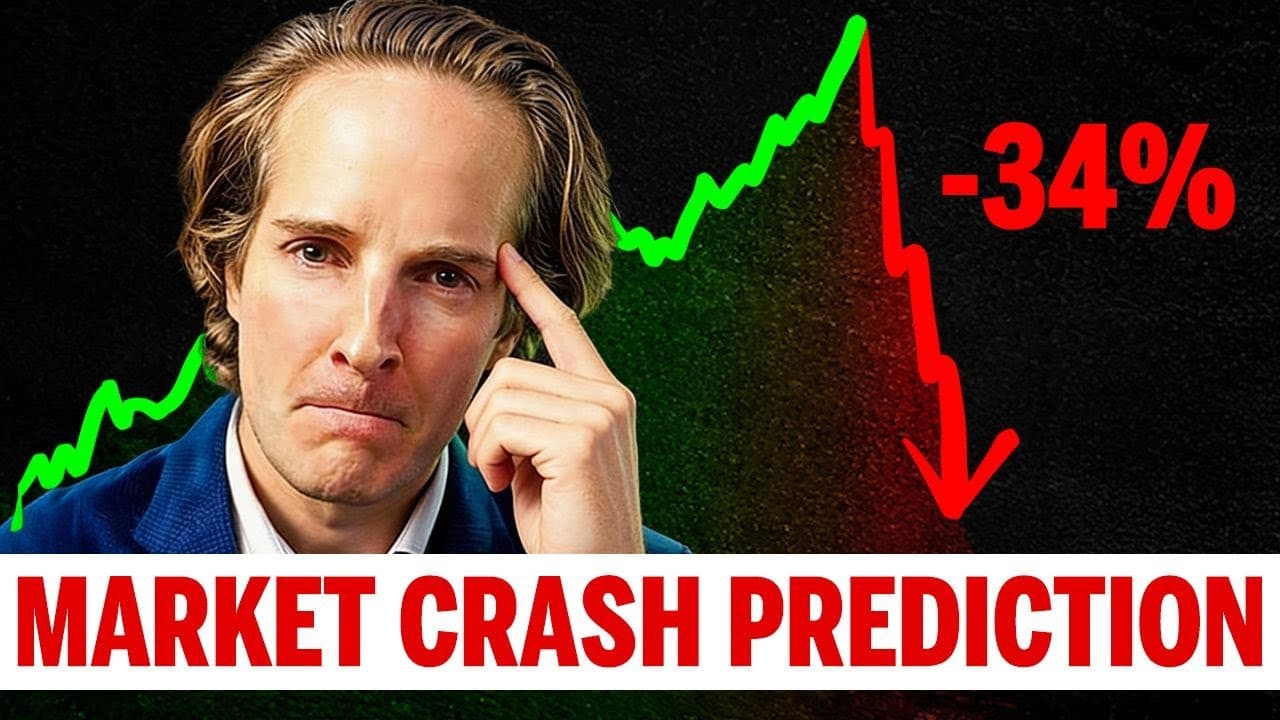
The market crash cannot be dated precisely from the evidence presented, but renewed Federal Reserve purchases and a cluster of highly valued technology IPOs are framed as warning signals. The presenter expects added liquidity to support asset prices first, while arguing that investors should reduce risk and become more cautious as major private companies pursue public listings in 2026.
Transcript
The Federal Reserve just announced they're printing money again. Not like in the future, not next quarter. No, they've already done it. They've already started $40 billion every single month. Plus, they shoved about $75 billion on the last day of the year properly into JP Morgan. Now, that's a silver story. We're not going to cover that one today. ... Read More
Key Insights
- The Federal Reserve reportedly started reserve management purchases worth $40 billion each month, or $480 billion per year. Although Jerome Powell is described as distinguishing these short-term bill purchases from quantitative easing, the presenter emphasizes that the Federal Reserve's balance sheet is expanding again.
- Banking-system liquidity is presented as the reason for renewed Federal Reserve purchases. Bank reserves were described as being at a four-year low, while use of the emergency lending window reportedly reached a record, which the presenter interprets as evidence that banks needed additional immediately available cash.
- Fractional reserve banking works by allowing banks to lend deposited money while depositors retain account balances they can withdraw. The transcript illustrates this with a $100 deposit and a $90 loan, producing $190 in combined recorded deposits and spendable cash within the simplified example.
- United States banks have reportedly faced a 0% reserve requirement since March 2020. The presenter argues that this structure normally functions because only a small share of depositors request cash simultaneously, but it becomes vulnerable when fear causes many customers to withdraw funds together.
- A bank run occurs when withdrawal demands exceed a bank's available cash. Silicon Valley Bank is cited as an example: nervous technology startups withdrew deposits, the bank sold bonds at a loss, panic spread through Twitter, and America's 16th-largest bank collapsed within 48 hours in 2023.
- Additional liquidity can raise asset prices because money seeks returns, according to the presenter's framework. Federal Reserve purchases add reserves to banks, banks can lend more, and the resulting money can flow into stocks and real estate, potentially extending a rally before financial risks become more visible.
- The planned 2026 IPO activity of major private technology companies is presented as a market-cycle warning. SpaceX, OpenAI, Databricks, Anthropic, and Anduril are described as pursuing or considering listings while technology and artificial intelligence valuations remain unusually prominent in investor attention.
- Historical IPO outcomes are used as cautionary comparisons rather than a guaranteed timetable. The presenter notes that the NASDAQ fell 78% after the 2000 period and that 95% of IPO investors lost money in 2021, but the transcript does not establish an exact future crash date.
Install to Summarize YouTube Videos and Get Transcripts
Explore YouTube Video Summarizer or Get YouTube Transcript Extractor
Questions & Answers
Q: When will the next stock market crash happen?
The transcript does not establish an exact date for the next stock market crash. It instead identifies 2026 as a period requiring greater caution because several highly valued private technology companies are reportedly preparing public listings while the Federal Reserve is adding liquidity. These conditions are presented as warning signals, not as proof that a crash will occur on a particular day or month.
Q: Why is the Federal Reserve buying $40 billion per month?
The presenter says the Federal Reserve began reserve management purchases because banking-system cash reserves were under pressure. Bank reserves were reportedly at a four-year low, and use of the Federal Reserve's emergency lending window had reached a record. Buying short-term bills adds cash to bank reserves, helping banks meet withdrawals and reducing the immediate risk of liquidity problems or bank runs.
Q: Are reserve management purchases the same as quantitative easing?
Jerome Powell is described as saying reserve management purchases are not quantitative easing because the Federal Reserve is buying short-term bills rather than long-term debt. The presenter accepts that technical distinction but argues that the practical direction is similar because the Federal Reserve's balance sheet is expanding after shrinking for two years, placing additional money and reserves into the financial system.
Q: How does fractional reserve banking create money?
Fractional reserve banking allows a bank to lend part of a customer's deposit while continuing to show the full deposit in that customer's account. In the transcript's simplified example, one person deposits $100 and the bank lends $90 to another person. The depositor still sees $100, while the borrower holds $90, creating $190 in combined account value and spendable cash.
Q: Why can a bank run cause a bank to collapse?
A bank run becomes dangerous because banks lend deposited funds and do not keep every dollar ready for immediate withdrawal. If many depositors request their money simultaneously, available cash may be insufficient. The bank may then sell assets at a loss, which can intensify concern. The transcript says this sequence contributed to Silicon Valley Bank collapsing within 48 hours in 2023.
Q: Why can Federal Reserve liquidity push stock prices higher?
The presenter's explanation is that Federal Reserve purchases place more reserves into banks, making banks feel safer and enabling further lending. More money then circulates through the financial system and seeks a return. Some of that money can enter stocks and real estate, raising asset prices. The same liquidity can therefore support a rally even when it was introduced because banks showed signs of stress.
Q: Why are large technology IPOs considered a warning sign?
The presenter views simultaneous IPO plans as a warning because founders and early investors may prefer to sell shares when valuations and market enthusiasm are high. SpaceX, OpenAI, Databricks, Anthropic, and Anduril are cited as technology-focused companies pursuing or considering listings. The pattern is compared with IPO enthusiasm surrounding the 2000 NASDAQ decline and weak IPO investor results in 2021.
Q: How should investors respond to the market risks described?
The transcript's broad recommendation is to become more cautious and take less risk as 2026 progresses, while recognizing that added Federal Reserve liquidity may support asset prices in the short term. It does not provide a precise portfolio allocation or guaranteed trade. The description also states that the material is educational, carries a risk of loss, and is not personalized investment advice.
Summary & Key Takeaways
-
The Federal Reserve reportedly began reserve management purchases of $40 billion per month, reversing a two-year period of balance-sheet contraction. The presenter interprets the purchases as money creation intended to restore banking-system liquidity after reserves reached a four-year low and emergency lending-window usage reached a record level.
-
Banks lend deposited funds rather than holding every dollar as immediately available cash. The presenter uses fractional reserve banking and Silicon Valley Bank's 2023 collapse to illustrate liquidity risk, arguing that Federal Reserve purchases give banks more reserves and help them satisfy withdrawals when confidence weakens or depositors demand cash.
-
SpaceX, OpenAI, Databricks, Anthropic, and Anduril are presented as highly valued private technology companies considering public listings. The presenter compares this concentration with IPO activity before the 2000 NASDAQ crash and poor IPO returns in 2021, treating synchronized listings as a reason for caution rather than proof of a precisely dated crash.
Read in Other Languages (beta)
Share This Summary 📚
Summarize YouTube Videos and Get Video Transcripts with 1-Click
Try YouTube Summary with ChatGPT & Claude or YouTube Transcript Generator
Explore More Summaries from Felix & Friends (Goat Academy) 📚



Summarize YouTube Videos and Get Video Transcripts with 1-Click
Try YouTube Summary with ChatGPT & Claude or YouTube Transcript Generator