Why Does the UK Government Keep Changing Policy?
TL;DR
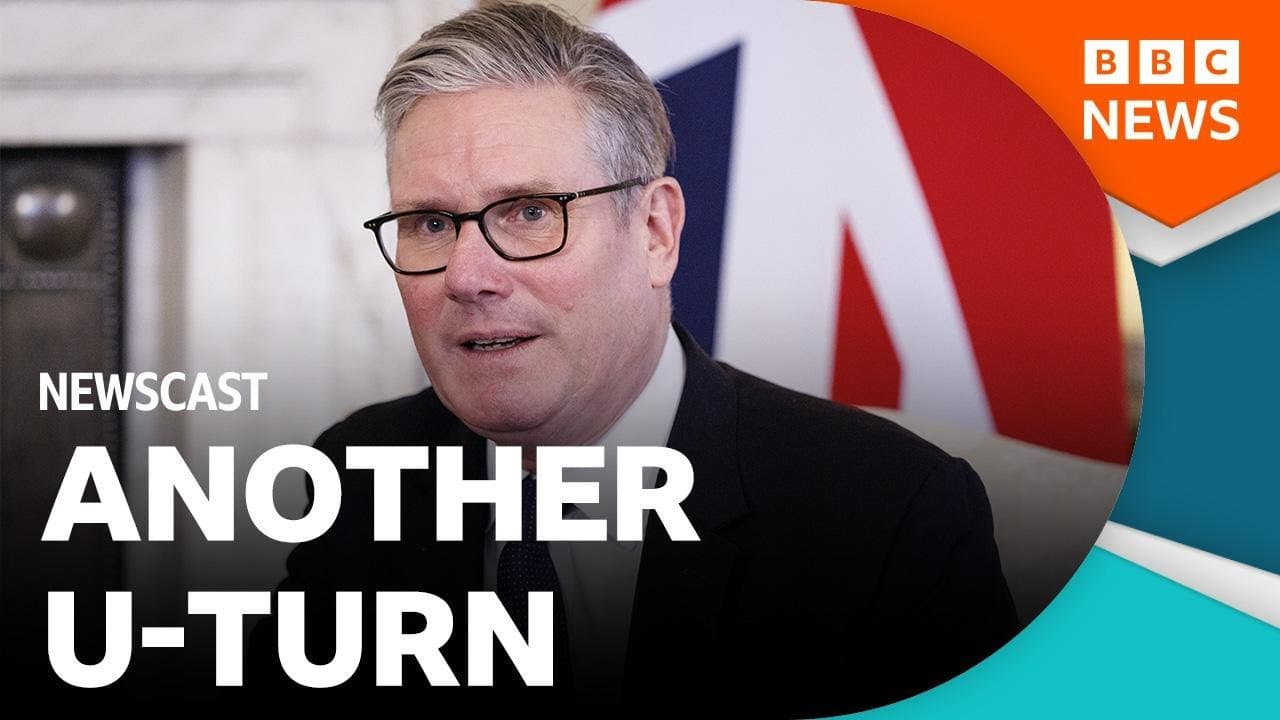
Repeated policy reversals can make a government appear weak or directionless, even when changing course may be the right response to new information. The discussion identifies about nine clear policy changes, including revised plans for mandatory digital ID, while also examining a separate leadership controversy involving West Midlands Police and an intelligence report containing AI-generated false information.
Transcript
Hello and welcome to episode 323 of Is a U-turn a U-turn or just the government changing its mind or is it a partial U-turn which makes it more of a J turn a subject we've discussed a lot on this podcast and we're going to do it again this time with Henry Zeffan. Hello Henry. >> Good morning Adam. >> Good morning. Oh gosh, it was good morning last ... Read More
Key Insights
- A political U-turn is a substantial change in an announced or established policy, although the term is often applied more broadly than its literal meaning of returning completely to an earlier position.
- The label U-turn is politically loaded because colleagues may interpret a reversal as weakness, while members of the public may regard the same decision as a sensible correction made in response to circumstances.
- Repeated policy changes can create a larger narrative about government competence. The presenters judge that about nine unequivocal changes are identifiable, an unusually large total for a relatively new government with a large majority.
- A proposal that never became formal government policy does not necessarily qualify as a U-turn. The discussion therefore excludes the pre-budget suggestion of increasing the income tax rate, despite describing the episode as embarrassing.
- The mandatory digital ID plan became another example of a government changing its position. The episode links Keir Starmer's revised plans with growing concern among Labour MPs about an accumulating pattern of policy reversals.
- The ban on Maccabi Tel Aviv supporters was an unusually severe response to safety concerns surrounding the Aston Villa fixture. Birmingham's safety advisory group made the decision in October based on police advice for a match planned in November.
- The West Midlands Police intelligence process included false information about a match between Maccabi Tel Aviv and West Ham that never occurred. The error was eventually identified as an AI hallucination produced through Microsoft Copilot.
- Craig Guildford's credibility was damaged by conflicting statements about the research process. He first denied that artificial intelligence had been used, then acknowledged its use in a letter after MPs had already questioned his evidence twice.
Install to Summarize YouTube Videos and Get Transcripts
Explore YouTube Video Summarizer or Get YouTube Transcript Extractor
Questions & Answers
Q: What counts as a political U-turn in the UK?
A political U-turn generally means a clear reversal or substantial change in government policy. A strict interpretation requires the government to return to its original position, but everyday political usage also includes abandoned, diluted, or significantly revised proposals. The phrase is contested because it can imply weakness even when a policy change represents a reasonable correction.
Q: How many UK government U-turns does the discussion identify?
The Times counted 13 government U-turns, but the presenters consider that figure too generous because some examples were never formal policies or were not complete reversals. Their assessment is that the list can easily reach about nine unequivocal changes of government policy. They consider that a significant number for a relatively new government with a large parliamentary majority.
Q: Why are repeated government U-turns politically damaging?
A single policy reversal may be accepted by the public as evidence that ministers listened and corrected a mistake. Repeated reversals carry a different risk because they can combine into a broader story about weak leadership, poor preparation, or uncertainty. The political damage therefore comes not only from each decision, but also from the accumulating pattern surrounding the government.
Q: Why was the income tax episode not treated as a clear U-turn?
The possible income tax increase discussed before the budget was not considered a clear U-turn because raising the income tax rate never became formal government policy. The government appeared to consider the idea and then decided against it, which the presenters describe as embarrassing. However, changing an unconfirmed plan is different from reversing an established or officially announced policy.
Q: What changed about the UK government's digital ID plans?
Keir Starmer changed his plans to implement a mandatory digital ID, making the issue another example in the discussion of a government altering its position. The episode presents the decision within a wider pattern of mounting policy reversals and examines how Labour MPs are reacting. The supplied material does not provide the detailed design of the revised digital ID policy.
Q: Why were Maccabi Tel Aviv supporters barred from the Aston Villa match?
Birmingham City Council's safety advisory group decided in October to prevent Maccabi Tel Aviv supporters from attending a planned November match against Aston Villa. The decision relied on police advice and was described as an unusually draconian step. The prime minister and home secretary disagreed, but the government was reluctant to intervene directly in an operational policing matter.
Q: How did artificial intelligence affect the West Midlands Police report?
West Midlands Police used Microsoft Copilot while researching matches involving Maccabi Tel Aviv. The tool produced false information about a match against West Ham that had never occurred, creating what the discussion calls an AI hallucination. That fiction entered the intelligence process, raising serious questions about verification standards in a police report used to inform a consequential public-safety recommendation.
Q: Why did Craig Guildford face calls to stand down?
Chief Constable Craig Guildford faced criticism over both the handling of the supporter ban and his explanations to MPs. He initially said the force did not use artificial intelligence in the relevant research and attributed the false result to a Google search. He later acknowledged that Microsoft Copilot had been used, further weakening confidence in his evidence and leadership.
Summary & Key Takeaways
-
The presenters debate what qualifies as a government U-turn. A strict definition requires returning to the original position, but political usage also covers diluted, abandoned, or substantially changed policies. Although the Times counted 13 reversals, the discussion concludes that about nine can be classified as unequivocal changes of government policy.
-
West Midlands Police faced criticism over advice that led Birmingham's safety advisory group to bar Maccabi Tel Aviv supporters from an Aston Villa match. The government disagreed with the decision but avoided intervening in operational policing. Maccabi ultimately declined the offered tickets, and the match proceeded without its supporters present.
-
The police controversy intensified after Chief Constable Craig Guildford initially told MPs that artificial intelligence had not been used to research a fictional match involving Maccabi Tel Aviv and West Ham. He later acknowledged that Microsoft Copilot had been used. Home Secretary Shabana Mahmood described the independent report's findings as damning and identified a leadership failure.
Read in Other Languages (beta)
Share This Summary 📚
Summarize YouTube Videos and Get Video Transcripts with 1-Click
Try YouTube Summary with ChatGPT & Claude or YouTube Transcript Generator
Explore More Summaries from BBC News 📚


Summarize YouTube Videos and Get Video Transcripts with 1-Click
Try YouTube Summary with ChatGPT & Claude or YouTube Transcript Generator