How to Hedge August and September Stock Volatility

TL;DR
Investors can hedge August and September stock volatility by combining covered calls on existing positions with a cheap VIX hedge while keeping cash available to buy favored stocks after a decline. The Dow had broken below its 20-day moving average, while the S&P 500 fell below that level for the first time in more than 70 days. Read on for the market signals, seasonal data, and risks behind this approach.
Transcript
August volatility is officially back and there could be a massive opportunity to bank both ways in the next couple of months. We definitely don't want to miss these opportunities as we are seeing huge ranges. Some of the indices have broken structure. This is the Dow Jones for instance and we are seeing massive intraday moves where the indices will... Read More
Key Insights
- August and September are historically rocky months in the stock market, and it is described as uncommon for both months to finish green. This seasonal tendency does not guarantee an immediate decline, but it supports preparing for volatility, consolidation, or a pullback during the two-month period.
- The Dow Jones broke below its 20-day moving average and then retested that level as resistance. Because the Dow has sometimes moved ahead of the S&P 500 by several days or more, this break-and-retest pattern may signal broader weakness before it becomes equally visible in the S&P 500.
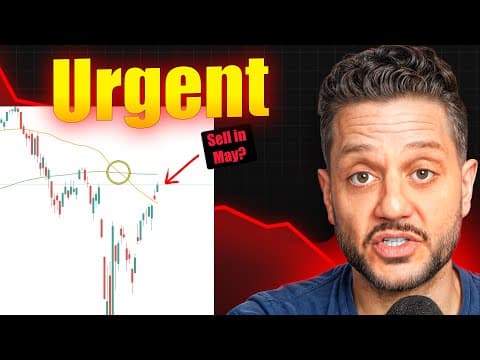
- The S&P 500 fell below its 20-day moving average for the first time in more than 70 days, then began riding that average. The index could still use a nearby gap as support and reach another high, because increased volatility does not necessarily produce an immediate sharp decline.
- VIX spikes occurred during each of the previous six August and September periods discussed, with maximum readings of 65, 20, 35, 29, 38, and 25. The cited data also indicates an average August VIX spike of 18%, with a 70% hit rate for making an interim high.
- New chip tariffs as high as 100% were described as potentially arriving the following week. The stated objective was to encourage domestic chip production, although the administration's seriousness remained uncertain and the proposal could instead function as leverage in negotiations with semiconductor companies.
- AMD reported lower-than-expected margins partly because of tariffs and restrictions on sales to China, followed by a large post-earnings decline. This example illustrates how tariff exposure can affect semiconductor profitability and stock performance even when the final scope of proposed trade policies remains uncertain.
- Initial unemployment claims reached 226,000 against an expectation of 221,000, while the stated probability of a September 17 rate cut was about 93%. The market may react negatively if it interprets a cut as a forced response to deteriorating employment conditions rather than a routine adjustment.
- Covered calls can produce income during consolidation or a pullback while establishing higher effective sale prices if shares are assigned. The positions discussed covered Google, AMD, and Nvidia, while a separate cheap VIX hedge was preferred over outright VIX calls because those calls were described as extremely expensive.
Install to Summarize YouTube Videos and Get Transcripts
Explore YouTube Video Summarizer or Get YouTube Transcript Extractor
Questions & Answers
Q: How can investors hedge August and September stock volatility?
The proposed approach combines covered calls on existing stock positions with a cheap VIX hedge. Covered calls can generate option income during consolidation or a decline, while the VIX position may benefit from a volatility spike. Investors can also retain the ability to buy favored stocks at lower prices if the market falls.
Q: Why might the Dow Jones provide an early warning for the S&P 500?
The Dow had broken below its 20-day moving average and retested that level as resistance while the S&P 500 was still riding its own 20-day moving average. The two indices were described as having nearly identical larger trends, although one can lead the other by a few days or more. The Dow gave the earlier signal in February 2025, while the S&P 500 led in August 2023.
Q: Does August and September seasonality mean stocks will fall immediately?
No. The transcript says volatility does not have to begin as soon as August starts, and the market may consolidate or move higher before any decline. The main point is that having both August and September finish green is described as uncommon because they are the market's two rockiest months.
Q: What market structure showed that volatility was returning?
Major indices experienced large intraday reversals, including sessions that rose about 1% before surrendering those gains. The S&P 500 fell below its 20-day moving average for the first time in more than 70 days and then began riding that level. The Dow showed a clearer structural break by retesting its 20-day moving average as resistance.
Q: What does the cited VIX history suggest about August and September volatility?
The previous six August and September periods discussed produced maximum VIX readings of 65, 20, 35, 29, 38, and 25. The cited data also showed an average August VIX spike of 18% and a 70% hit rate for making an interim high. These figures support preparing for a volatility increase without assuming an immediate market crash.
Q: Why use a cheap VIX hedge instead of buying VIX calls outright?
The cheap VIX trade was presented as a way to benefit from a volatility pop while limiting the loss if the forecast proved wrong. The presenter said it could potentially return four times the money, with only a very small hit if unsuccessful. Outright VIX calls were described as extremely expensive, and the transcript does not disclose the cheap hedge's complete structure.
Q: How do covered calls help during a volatile or consolidating market?
Covered calls generate option income against shares an investor already owns. If the options are assigned, the shares are sold at the agreed strike, producing a higher effective sale price when the premium is included. The positions discussed involved Google, AMD, and Nvidia.
Q: Which economic and policy risks could increase market volatility?
The risks discussed include proposed chip tariffs as high as 100%, weakening jobs data, and a weak Treasury auction. Initial unemployment claims reached 226,000 versus an expectation of 221,000, while the stated probability of a September 17 rate cut was about 93%. The concern was that markets could interpret a rate cut as a forced response to deteriorating employment conditions.
Summary & Key Takeaways
-
The market entered August with large intraday reversals and an initial structural break in major indices. The Dow Jones fell below its 20-day moving average and retested that level as resistance, potentially providing an early warning for the S&P 500, which was still consolidating near its own 20-day moving average.
-
Seasonality and VIX history support preparing for turbulence rather than predicting an immediate crash. August and September are described as unusually rocky months, while each of the previous six August and September periods produced a maximum VIX reading above its level at the time discussed, including spikes from 20 to 65.
-
The proposed strategy seeks returns in either direction. Covered calls on Google, AMD, and Nvidia can generate option income or sell shares at higher effective prices if assigned. A cheap VIX hedge may benefit from a volatility spike, while a broader decline could provide lower entry prices for long-term stock purchases.
Read in Other Languages (beta)
Share This Summary 📚
Summarize YouTube Videos and Get Video Transcripts with 1-Click
Try YouTube Summary with ChatGPT & Claude or YouTube Transcript Generator
Explore More Summaries from The Traveling Trader 📚



Summarize YouTube Videos and Get Video Transcripts with 1-Click
Try YouTube Summary with ChatGPT & Claude or YouTube Transcript Generator