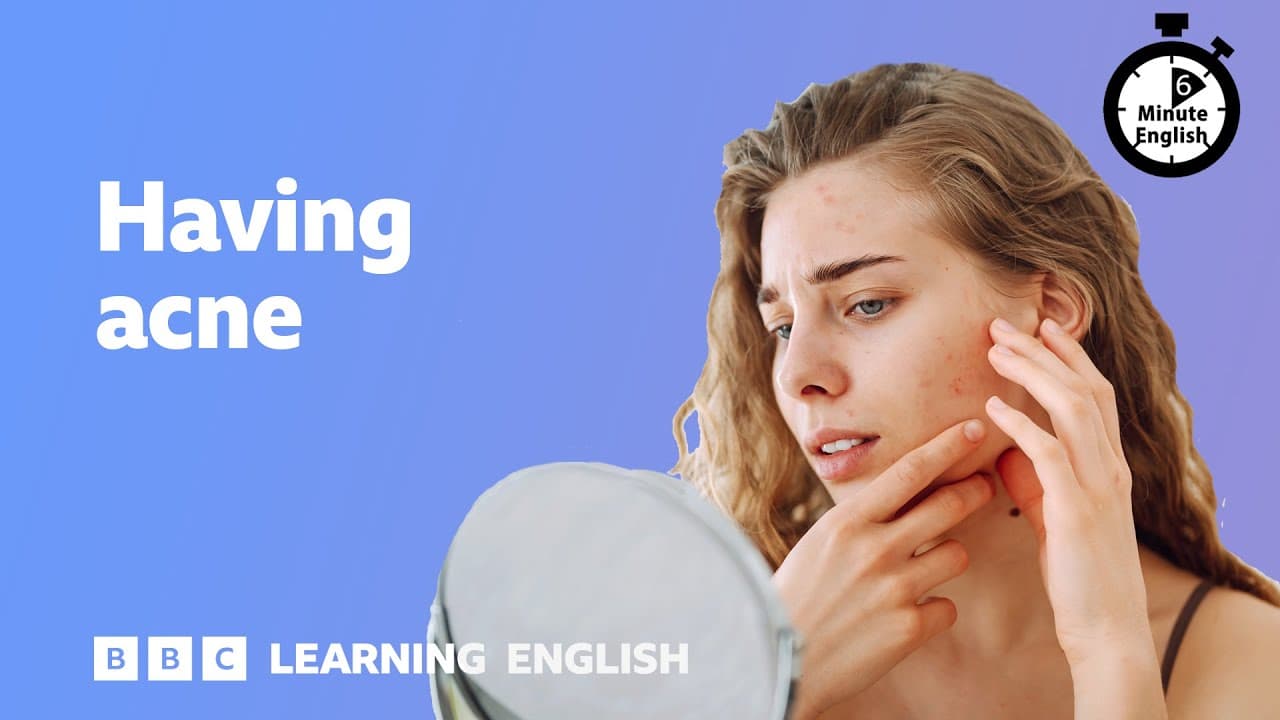
Having acne ⏲️ 6 Minute English
TL;DR
Acne affects many teenagers and can impact mental health.
Transcript
Hello, this is 6 Minute English from BBC Learning English. I'm Neil. And I'm Beth. As a society we're obsessed with our skin. But the pursuit of perfect skin can make life difficult for people who struggle with skin conditions. Spots, zits or pimples. There are many names for the red inflamed marks which appear on the face and neck, but the medical... Read More
Key Insights
- Acne is a common skin condition affecting people, especially between ages 14 to 19, but can persist into adulthood.
- The condition manifests in various forms, from mild blackheads to severe cysts and scarring, impacting self-esteem.
- Puberty, characterized by hormonal changes, often triggers acne, affecting teenagers' emotional and physical well-being.
- Acne's psychological impact is significant, potentially affecting friendships and peer interactions during vulnerable teenage years.
- Doctor Sharon Crichlow, a dermatologist, shares personal experiences of acne's emotional toll and her journey to help others.
- Acne is largely genetic, with hormones causing oil and bacteria buildup in skin pores, leading to spots.
- Over-the-counter treatments are commonly used for acne, although professional dermatological advice can be beneficial.
- Acne is natural and widespread, affecting 95% of people aged 11 to 30, with many overcoming it as they age.
Install to Summarize YouTube Videos and Get Transcripts
Explore YouTube Video Summarizer or Get YouTube Transcript Extractor
Questions & Answers
Q: What age group is most commonly affected by acne?
Acne most commonly affects individuals between the ages of 14 and 19, coinciding with puberty. During this stage, hormonal changes such as increased testosterone levels lead to the development of acne. However, it can also persist into adulthood, affecting up to 20% of females in their 30s and 40s.
Q: How does acne impact teenagers psychologically?
Acne can have a profound psychological impact on teenagers, affecting their self-esteem and social interactions. During the emotionally vulnerable teenage years, acne can lead to feelings of self-consciousness and social isolation. It can interfere with friendships and peer relationships, making it important not to trivialize the condition.
Q: What personal experience does Dr. Sharon Crichlow share about acne?
Dr. Sharon Crichlow shares her personal experience of growing up with acne, which significantly impacted her mental health. Without access to a dermatologist, she relied on over-the-counter treatments. Her experience inspired her to become a dermatologist and help others manage acne, using her insights to empathize with patients.
Q: What are the main causes of acne?
Acne is largely caused by genetic factors and hormonal changes, particularly during puberty. Hormones like testosterone increase oil production in the skin, leading to clogged pores and bacterial growth. This process results in the development of various acne forms, from mild blackheads to severe cysts and scarring.
Q: How common is acne among young people?
Acne is extremely common among young people, affecting approximately 95% of individuals aged 11 to 30 to some extent. It is a natural condition that many experience during puberty and adolescence, although the severity and duration can vary significantly among individuals.
Q: What treatments are commonly used for acne?
Many individuals with acne use over-the-counter treatments, which include topical creams and cleansers designed to reduce oil and bacteria on the skin. However, professional dermatological advice can provide more effective management strategies, especially for severe cases, as emphasized by Dr. Crichlow.
Q: Why shouldn't acne be trivialized?
Acne should not be trivialized because it has significant psychological and social impacts, particularly on teenagers. It affects self-esteem, confidence, and peer relationships, making it a serious concern for those affected. Understanding and support are crucial in helping individuals cope with the emotional challenges of acne.
Q: How did Dr. Crichlow's experience with acne influence her career?
Dr. Crichlow's personal struggles with acne during her youth, without access to professional help, motivated her to become a dermatologist. Her experiences gave her a unique understanding of the condition's emotional toll, inspiring her to support and empathize with patients facing similar challenges.
Summary & Key Takeaways
-
Acne is a prevalent skin condition, often occurring during puberty due to hormonal changes. It can significantly affect teenagers' self-esteem and social interactions. Dermatologist Dr. Sharon Crichlow shares her personal journey with acne, emphasizing its psychological impact and the importance of not trivializing the condition.
-
Dr. Crichlow highlights that acne can persist into adulthood, affecting up to 20% of females in their 30s and 40s. She advocates for understanding and support, drawing from her experience of managing acne without professional help during her youth.
-
Acne is largely genetic, caused by hormonal changes during puberty, leading to oil and bacteria buildup in skin pores. While many use over-the-counter treatments, seeking professional advice can provide better management strategies, as emphasized by Dr. Crichlow.
Read in Other Languages (beta)
Share This Summary 📚
Summarize YouTube Videos and Get Video Transcripts with 1-Click
Try YouTube Summary with ChatGPT & Claude or YouTube Transcript Generator
Explore More Summaries from BBC Learning English 📚






Summarize YouTube Videos and Get Video Transcripts with 1-Click
Try YouTube Summary with ChatGPT & Claude or YouTube Transcript Generator