How Are Remote Communities Achieving Internet Access?
TL;DR
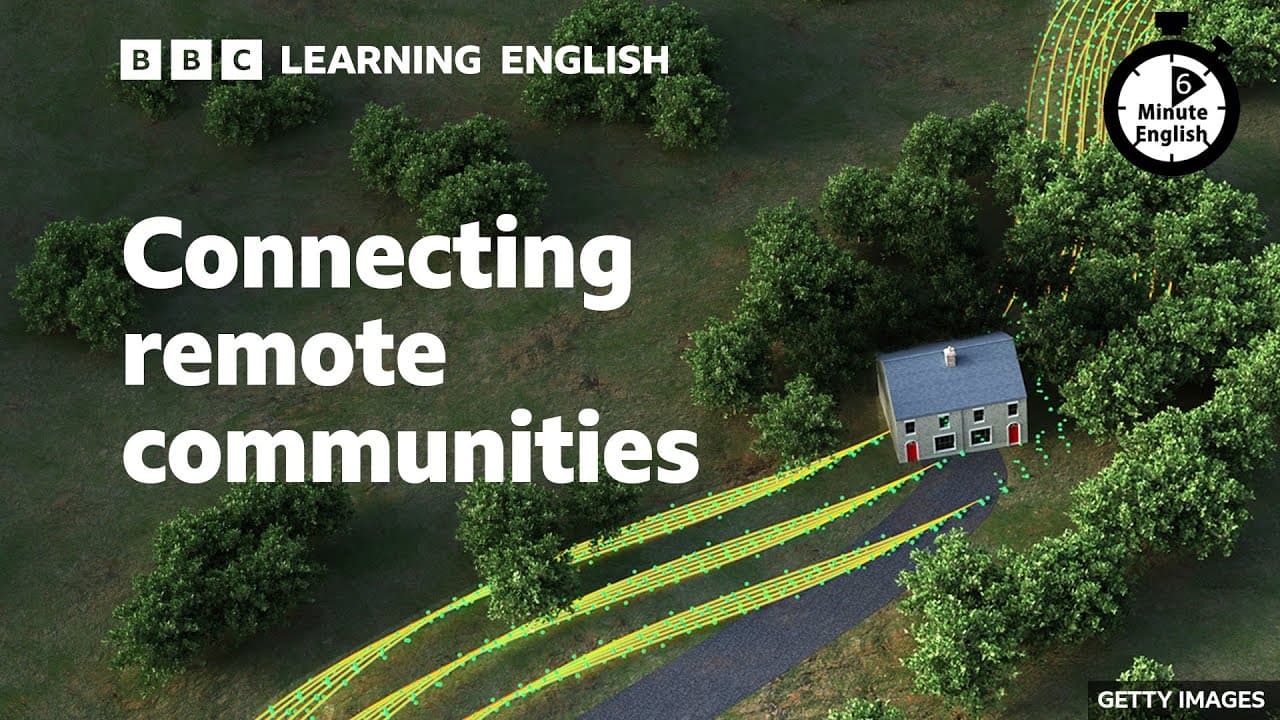
Remote communities are overcoming internet access challenges by building their own infrastructure, such as community-driven transmission towers. In places like Pakistan's Punjab, these initiatives provide reliable connections and valuable information, enabling farmers to improve crop management. The disparity in connectivity highlights ongoing digital divide issues even in more developed regions like the UK.
Transcript
Hello. This is 6 Minute English from BBC Learning English. I’m Neil. And I’m Sam. If you’re old enough to remember the early days of dial-up internet then you’ll know the unforgettable sound of the ‘handshake’, the clicks and squeaks your computer made as it struggled to connect to the internet through the telephone line. Yes, I remember that stra... Read More
Key Insights
- Dial-up internet was characterized by slow speeds and the inability to use the phone simultaneously, a stark contrast to today's broadband capabilities.
- Despite advancements, many communities worldwide still struggle with unreliable or nonexistent internet connections, highlighting a digital divide.
- In the UK, even developed areas like Dorset experience spasmodic internet due to outdated infrastructure, affecting daily communication.
- In Pakistan's Punjab, a community-built internet tower has transformed farming practices by providing reliable weather information directly.
- Community efforts in building internet infrastructure emphasize the importance of collective action in overcoming connectivity challenges.
- The first internet browser was called WorldWideWeb, invented by Tim Berners-Lee, marking a significant milestone in internet history.
- The term 'global village' describes the modern world where technology bridges physical distances, enhancing global communication.
- Gadgets, small electronic devices, play a crucial role in improving connectivity and providing useful functions in remote areas.
Install to Summarize YouTube Videos and Get Transcripts
Explore YouTube Video Summarizer or Get YouTube Transcript Extractor
Questions & Answers
Q: What was the main topic discussed in the episode?
The episode focused on the challenges and efforts to connect remote communities to the internet, highlighting examples from both developed and developing regions and the impact of improved connectivity on local communities.
Q: How did the internet evolve from its early days?
The internet has evolved from slow, dial-up connections, which couldn't be used simultaneously with phone calls, to high-speed broadband that enables seamless communication across the globe, creating a concept known as the 'global village.'
Q: What challenges do rural areas in the UK face regarding internet access?
In rural areas like Dorset, UK, residents face spasmodic internet connections due to outdated and unreliable infrastructure, impacting their ability to communicate effectively and access online resources consistently.
Q: How have communities in Pakistan addressed internet connectivity issues?
In Pakistan's Punjab region, communities have built their own internet infrastructure, such as a transmission tower, to access reliable weather information, which is crucial for successful farming and has significantly improved local agricultural practices.
Q: What role does community action play in improving internet access?
Community action is vital in addressing internet connectivity challenges, as demonstrated by efforts to build local infrastructure, which not only improves access but also fosters a sense of collaboration and shared responsibility among residents.
Q: Who invented the first internet browser, and what was its significance?
The first internet browser, WorldWideWeb, was invented by Tim Berners-Lee. It was significant as it laid the foundation for modern web browsing, enabling users to search and access information online, thus revolutionizing digital communication.
Q: What does the term 'global village' mean in the context of the internet?
The 'global village' refers to the modern world where technological advancements, particularly the internet, have diminished physical distances, allowing people to communicate and share information instantly across the globe, thus creating a more interconnected community.
Q: What is the impact of gadgets on connectivity in remote areas?
Gadgets, or small electronic devices, play a crucial role in enhancing connectivity in remote areas by providing essential functions such as receiving internet signals, enabling access to information, and supporting communication, thereby improving the quality of life in isolated communities.
Summary & Key Takeaways
-
The episode discusses the disparity in internet access between urban and rural areas, emphasizing the challenges faced by remote communities in connecting to the digital world.
-
Examples from the UK and Pakistan illustrate the varying degrees of internet connectivity issues, from spasmodic connections to complete lack of access.
-
Community-driven initiatives, such as building transmission towers, showcase innovative solutions to improve internet access and its impact on local economies and communication.
Read in Other Languages (beta)
Share This Summary 📚
Summarize YouTube Videos and Get Video Transcripts with 1-Click
Try YouTube Summary with ChatGPT & Claude or YouTube Transcript Generator
Explore More Summaries from BBC Learning English 📚

Summarize YouTube Videos and Get Video Transcripts with 1-Click
Try YouTube Summary with ChatGPT & Claude or YouTube Transcript Generator