How to Build a Profitable Personal Brand From Scratch
TL;DR
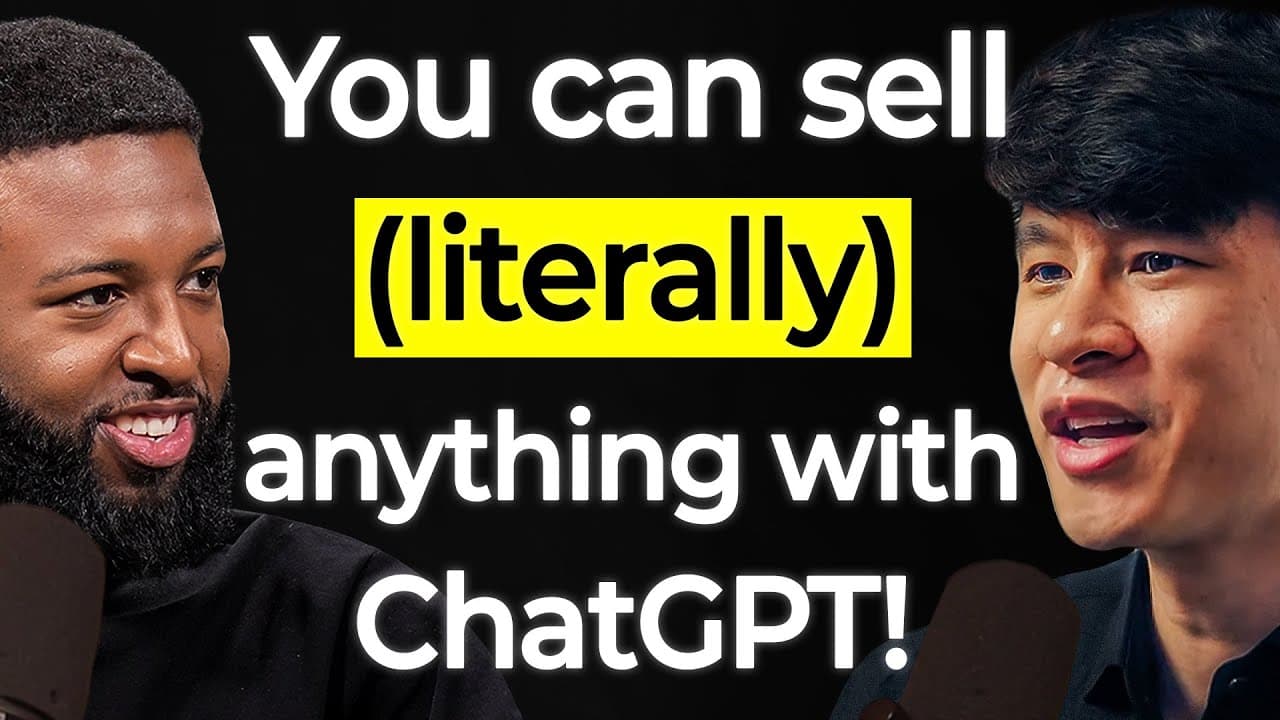
You don't need a big following to make money from a personal brand. A single LinkedIn post seen by a thousand people can produce one lead who buys over the phone. The fastest path is teaching a skill you already have: Patrick Dang went from $200 in his account to $1,000 in his first month by packaging his sales knowledge into an online course.
Transcript
Content is not fun. If you're not making money, you're going to burn out. So, the only way to make it worth it for you is to actually get a reward. You don't need a big following. Literally, if you post a LinkedIn post and maybe a thousand people see it, one guy might actually hit you up and then you talk to him on the phone and you sell them. And ... Read More
Key Insights
- Content without income leads to burnout, so the reward has to be real. As Patrick frames it, the only way to make creating content worth it is to actually get paid for the knowledge already inside your head.
- A large audience is not required to earn money online. Patrick argues that a LinkedIn post seen by about a thousand people can surface one person who contacts you, gets on a phone call, and becomes a paying customer.
- AI is described as a game changer that lets you do anything in your life five times faster for about $20 a month. Patrick calls it something the world is currently sleeping on given that low cost.
- Building a personal brand is possible from zero, with no following, no prior content, and little time. Patrick's stated goal is showing people how to do it profitably by providing real value rather than chasing trends.
- Authenticity matters more than performing. Patrick warns against being 'a clown on social media' following trends, and stresses building a brand around what you love so you attract a tribe that resonates with your style.
- Desperation created clarity for Patrick. After a year of failed ideas and roughly $200 left, he asked himself what he could actually teach that people would pay for, which led directly to his first course.
- Teaching an existing skill was the breakthrough. Patrick had informally taught cold email and LinkedIn tactics to peers at Oracle for free, so he turned that same knowledge into a paid Udemy course called a lead generation machine.
- His first course earned $1,000 in month one and became top rated, after about twelve months of trying five or six different business models that never stuck, including apps and a matcha ice cream shop.
Install to Summarize YouTube Videos and Get Transcripts
Explore YouTube Video Summarizer or Get YouTube Transcript Extractor
Questions & Answers
Q: Do you need a big following to make money with a personal brand?
No. Patrick states you don't need a big following to profit from a personal brand. He gives the example that if you post on LinkedIn and maybe a thousand people see it, one person might contact you, talk to you on the phone, and buy from you. The emphasis is on attracting people willing to pay for the knowledge in your head rather than chasing large audience numbers or engagement for its own sake.
Q: How did Patrick Dang make his first $1,000 online?
Patrick made his first $1,000 by creating an online course on Udemy called a lead generation machine, teaching people how to generate leads with cold email based on his tech sales background. In the first month the course earned $1,000 and became a top rated course. This came after roughly a year of trying five or six different models that failed, when he had about $200 left in his bank account.
Q: Why does Patrick say content is not worth making if you aren't earning money?
Patrick says content is not fun, so if you're not making money from it you're going to burn out. His view is that the only way to make creating content worth it is to actually get a reward for it. Rather than performing or following trends like a clown on social media, he advocates providing real value so you attract people willing to pay you money for what you know.
Q: How does Patrick describe the value of AI for building a personal brand?
Patrick calls AI a game changer that the world is sleeping on. He frames it as a magical tool where anything you do in your life you can do five times faster, and it only costs about $20 a month, which he considers crazy value. In the conversation AI is positioned as a key advantage for building a profitable personal brand in the current era, though the detailed use cases come later in the episode.
Q: What was Patrick Dang's breaking point before he succeeded?
Patrick's breaking point came about a year after quitting his tech sales job. After living in Thailand and Vietnam as a digital nomad and trying multiple ideas, including apps and a matcha ice cream shop, he had used up his savings and had roughly $200 left. He felt like a loser, moved back in with his parents, and faced a choice between getting a job again or giving himself one more shot to figure it out.
Q: How can you build a personal brand from scratch with no following?
Patrick says you can build a personal brand from zero even without a following, without ever having made content, and even if you feel you have no time, because you can make time for what's important. The core method is building the brand around things you love and are passionate about, providing real value so you attract a tribe of people who resonate with your authentic style and are willing to pay for your knowledge.
Q: What skill did Patrick teach to turn his knowledge into income?
Patrick taught sales skills, specifically cold email lead generation and LinkedIn tactics drawn from his tech sales career at Oracle. He had already taught these informally to peers and entire teams at Oracle for free because he enjoyed it. Realizing people had asked him to teach them, he packaged that knowledge into paid courses, starting with lead generation and then a sales course covering how to get leads on the phone and close them.
Q: What is 'the dip' and how does it relate to Patrick's story?
The dip is a concept from Seth Godin, referenced by Calum Johnson, describing the difficult middle stage on the way to a goal where you've tried something a few times and it isn't working. Godin's point is that if you can push through the dip, you reach the other side. Calum connects this to Patrick being down to $200 in his account, a clear moment of being in the dip before his course success turned things around.
Summary & Key Takeaways
-
Patrick Dang, appearing on Calum Johnson's show, argues we live in a creative economy where people become known out of nowhere by making content. His aim is to show how anyone can build a profitable personal brand from scratch, even with no following, no content experience, and seemingly no time.
-
After nearly two years in tech sales at Oracle, Patrick quit to pursue entrepreneurship, moving to Thailand and Vietnam as a digital nomad. He tried apps and a low-margin matcha ice cream stand, but after about a year nothing stuck and he was down to roughly $200, forcing him to move back with his parents.
-
Facing a choice between getting a job or one more attempt, Patrick created a Udemy course teaching cold email lead generation from his sales background. It made $1,000 the first month and became top rated. He kept making bestselling courses like a sales course, growing his monthly income until he rebuilt his life in Vietnam.
Read in Other Languages (beta)
Share This Summary 📚
Summarize YouTube Videos and Get Video Transcripts with 1-Click
Try YouTube Summary with ChatGPT & Claude or YouTube Transcript Generator
Explore More Summaries from The Calum Johnson Show 📚


Summarize YouTube Videos and Get Video Transcripts with 1-Click
Try YouTube Summary with ChatGPT & Claude or YouTube Transcript Generator