Why Is Homelessness Rising in California?

TL;DR
California has more than 160,000 people experiencing homelessness on a given night, with a per-capita rate about three times that of the rest of the United States. Addressing the problem requires better-linked, more timely data across public agencies and nonprofits, rigorous evaluation of interventions, and closer examination of how existing money is spent.
Transcript
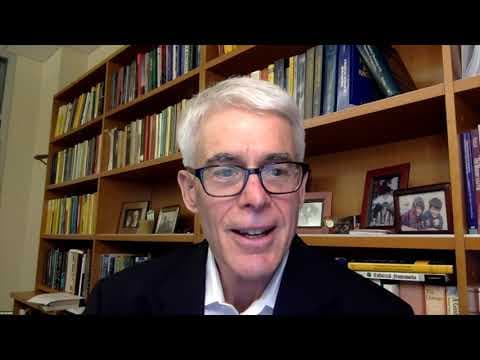
good morning everyone and welcome to the stanford institute for economic policy research and to our spring policy forum on homelessness in california i am mark duggan the triony director of seeper and the wayne and jody cooperman professor of economics here at stanford uh this is our first very big event at cpr since you know uh you know since marc... Read More
Key Insights
- California homelessness is particularly severe, with more than 160,000 people estimated to be homeless on any given night. That population is described as comparable in size to the nearby cities of Salinas or Hayward.
- California's homelessness rate per capita is about three times the level found in the rest of the United States. This comparison shows that the state's challenge is not merely part of a uniform nationwide pattern.
- The best available data indicate that California homelessness rose by 42 percent over six years, while homelessness in the rest of the United States fell by 9 percent. The figures are presented with an explicit warning that existing data are imperfect.
- Better homelessness policy depends on stronger links among data held by city, county, and state governments, nonprofit organizations, and separate agencies within the same jurisdiction. Fragmentation makes it difficult to see changes, services, and outcomes clearly.
- More timely and detailed data can reveal how government services assist people experiencing homelessness, what effects those services produce, and how interventions should be adjusted. Weak data quality has impeded rigorous economic research on the issue.
- The objective of homelessness policy requires explicit discussion because reducing the number of people experiencing homelessness may be one goal among others. Clarifying the desired outcome helps determine which policy levers should be evaluated, pulled, or modified.
- Survey respondents overwhelmingly viewed California homelessness policy as being on the wrong track, with 98 percent selecting that assessment. Two-thirds said the central problem was not the amount of money, but the need to examine how money is spent.
- SIEPR's approach is nonpartisan, interdisciplinary, and oriented toward practical policy influence. Its forum applies rigorous examination while acknowledging that no participant has every answer and that effective responses may involve government, academia, nonprofits, and the broader private sector.
Install to Summarize YouTube Videos and Get Transcripts
Explore YouTube Video Summarizer or Get YouTube Transcript Extractor
Questions & Answers
Q: How severe is homelessness in California?
Homelessness is described as a particularly severe problem in California. The best estimates cited indicate that more than 160,000 people are homeless in the state on any given night, a population comparable to the size of Salinas or Hayward. On a per-capita basis, California's level is about three times that found across the rest of the United States.
Q: How has California homelessness changed over six years?
The best available data suggest that homelessness increased by 42 percent in California over the previous six years. During the same period, it fell by 9 percent in the rest of the United States. The remarks emphasize that these data are imperfect, but the sharply different trends provide a strong reason to investigate California's circumstances and policy response.
Q: Why is better data important for homelessness policy?
Better data would help researchers and policymakers understand how homelessness is changing, which government services are reaching affected people, what results those services produce, and how interventions can be improved. More timely and detailed evidence would also support clearer decisions about which policy levers should be used. Poor data quality has impeded economists seeking to study the issue rigorously.
Q: Why is homelessness data difficult to coordinate?
Homelessness involves city, county, and state governments, nonprofit organizations, and numerous agencies operating within the same jurisdictions. Their information is not necessarily connected, making it difficult for any participant to obtain a complete view of services, changing conditions, and intervention outcomes. Better linkages among these organizations could produce more timely, detailed, and useful evidence for policy decisions.
Q: Is California homelessness mainly a funding problem?
The forum's attendee survey did not indicate broad agreement that homelessness is simply a money problem. Two-thirds of respondents said the issue requires better examination of how money is spent rather than treating insufficient funding as the central explanation. The remarks caution that surveys are not necessarily correct, but characterize the responses as reflective and informative for the day's discussion.
Q: What should California homelessness policy aim to achieve?
The remarks identify the objective of policy as an important question rather than assuming a single answer. Reducing the number of people experiencing homelessness is offered as one possible central goal, while the possibility of other objectives is left open for discussion. Defining the desired outcome is necessary for evaluating interventions and deciding which policy levers should be changed.
Q: How can academic research influence homelessness policy?
Academic research can influence homelessness policy by connecting rigorous evidence with policymakers, journalists, business leaders, nonprofits, and other people capable of producing change. SIEPR does not present itself as having every answer or as dictating government action. Its stated role is to examine ideas impartially, improve the evidence base, encourage new approaches, and move policy in a better direction.
Q: Who should participate in developing homelessness solutions?
Developing responses to homelessness requires perspectives from many groups because the issue involves numerous institutions and policy factors. The forum includes advocates, politicians, scholars, businesspeople, nonprofit leaders, moderators, and other experts. Public agencies at the city, county, and state levels also matter. Their combined experience and data can help evaluate interventions through the dual priorities of equity and efficiency.
Summary & Key Takeaways
-
Stanford's spring policy forum focuses on homelessness as an especially severe California policy challenge. The state's best available estimates indicate more than 160,000 people are homeless on a given night, while its per-capita rate is roughly three times the rate across the rest of the United States.
-
Available data suggest homelessness increased by 42 percent in California during the previous six years while falling by 9 percent elsewhere in the United States. Although the data are imperfect, this divergence motivates careful investigation into the causes of California's trend and the interventions that might reverse it.
-
SIEPR seeks to connect rigorous, nonpartisan research with policymakers, journalists, businesses, nonprofits, and other people capable of creating change. The forum brings together scholars, advocates, politicians, businesspeople, and nonprofit leaders while emphasizing humility, diverse perspectives, better data, and policy choices that account for both equity and efficiency.
Read in Other Languages (beta)
Share This Summary 📚
Summarize YouTube Videos and Get Video Transcripts with 1-Click
Try YouTube Summary with ChatGPT & Claude or YouTube Transcript Generator
Explore More Summaries from Stanford Institute for Economic Policy Research (SIEPR) 📚





Summarize YouTube Videos and Get Video Transcripts with 1-Click
Try YouTube Summary with ChatGPT & Claude or YouTube Transcript Generator