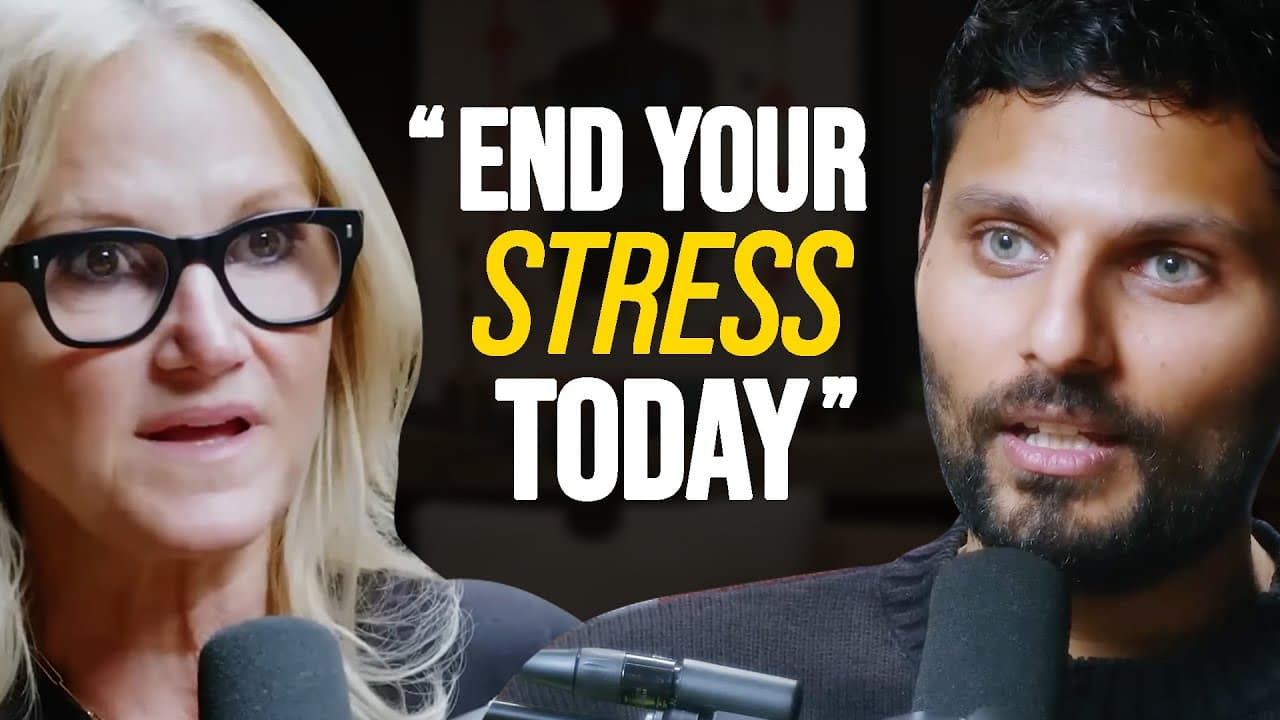
Mel Robbins ON: If You STRUGGLE With Stress & Anxiety, This Will CHANGE Your Life! | Jay Shetty
TL;DR
Happiness is a skill you practice, not a state you reach. Mel Robbins says she kept herself busy for years to outrun a deep unhappiness, and the pandemic forced her to face it. Her practice now is to notice when her mind defaults to loss or worry, breathe, anchor in her body, and reframe the moment toward what she already has.
Transcript
the purpose of going for a hike ironically is not to get to the top it's to be on the trail if you focus on the freaking Trail whatever step you're on and you keep reminding yourself this is going to lead me somewhere that is where the meaning comes in your life because the bestselling author and host the number one Health and Wellness podcast on p... Read More
Key Insights
- Staying busy can be a way to outrun unhappiness. Mel Robbins says she kept herself busy for most of her life, and only when the pandemic slowed her down did she see the discontent her activity had been covering.
- Coping mechanisms often distract rather than resolve. Mel notes that running errands, travel, drinking, or vaping can numb uncomfortable feelings, but unless you want to numb them, you eventually have to deal with them directly.
- A campaign of misery is the habit of defaulting to loss. Mel uses the phrase to describe gripping onto what makes you unhappy, such as missing someone, instead of noticing the good fortune present in the same moment.
- Missing someone deeply is also a form of loving them. Mel frames the sadness of her daughter growing up and leaving as part of the human experience, rather than something to fix or avoid.
- Contentment means being okay with things rather than fixing them. Mel describes allowing emotions to rise, noticing them, and then recognizing there is a different way to feel, instead of wrestling the feeling away.
- Anchoring in the body can calm a racing mind. Mel says her mind usually runs 15 steps ahead, so she works through her nervous system and body to slow down and be physically where her feet are.
- Learning often happens through small painful experiences. When Mel burned her ear with a curling iron, her daughter said you have to learn somehow, and Mel saw that the body absorbs lessons through such moments.
- Happiness works like a muscle that is trained over time. Mel treats it as her number one goal, practicing daily to catch negative spirals, breathe through them, and reframe her thoughts in a more positive way.
Install to Summarize YouTube Videos and Get Transcripts
Explore YouTube Video Summarizer or Get YouTube Transcript Extractor
Questions & Answers
Q: Why do busy people sometimes feel unhappy when they slow down?
Mel Robbins explains that she kept herself extremely busy for most of her life as a way to outrun a deep-seated unhappiness. When the pandemic forced her to slow down, she could no longer travel, run errands, or rely on her usual distractions. Without those coping mechanisms, the underlying discontent became visible, and she had to choose between numbing it and dealing with it.
Q: What is the campaign of misery Mel Robbins describes?
The campaign of misery is Mel Robbins's name for the habit of gripping onto the thing that makes you unhappy. While lying next to her daughter, she noticed she was focused on how much she would miss her instead of appreciating that she could visit, that her daughter wanted to spend the night, and that her daughter was pursuing her dream of being a singer songwriter.
Q: How can you stop defaulting to negative thoughts?
Mel Robbins practices catching the moment when her mind goes negative, then breathing through it and reframing the situation more positively. She asks herself why she is complaining or obsessing about tomorrow when she is not even present now. Rather than trying to fix the emotion, she allows it to rise, notices it, and recognizes there is a different way to feel.
Q: How does anchoring in your body help with anxiety?
Mel Robbins says her mind runs a million miles an hour and is usually 15 steps ahead, which means she is never content where she is. Instead of wrestling with her thoughts in her head, she works with her nervous system and body to slow down. Anchoring physically where her feet are helps her stay present and calmer.
Q: Is it normal to feel sad when your adult child leaves home?
Mel Robbins describes being deeply choked up about her 22-year-old daughter, who is about to start the next chapter of her life while Mel lives on the other side of the country. She calls encouraging someone you love to leave and grow one of the hardest things in life, and notes that deeply missing somebody is also about loving them, which is part of the human experience.
Q: What does the curling iron story teach about learning?
While learning to curl her hair from YouTube tutorials, Mel Robbins burned her ear. Her daughter casually said you have to learn somehow. Mel saw wisdom in this: you learn how close to hold the iron by getting burned, and your body absorbs the lesson. She applies this to happiness, pulling back from the fire of discontent toward a calmer place.
Q: Can happiness be learned like a skill?
Mel Robbins treats happiness and contentment as a muscle she is actively building. She says her number one goal for the last two years has been learning to be happy and content wherever she is. Her practice involves noticing discontent, friction, complaining, or looking for what is wrong, and then deliberately moving back toward a safer, calmer state through breathing and reframing.
Q: Why can even optimistic people struggle with contentment?
Mel Robbins says people may be surprised because she is a very positive and optimistic person. Yet when she truly slows down, her mind races ahead, planning many steps into the future. Being optimistic about outcomes does not guarantee being content in the present, so she has had to work specifically on staying where she is rather than living several steps ahead.
Summary
This video features an interview with Mel Robbins, a bestselling author and podcast host, who discusses the importance of focusing on the present moment and finding happiness. She talks about her personal struggle with happiness and how she has been working on being content and present in her life. She also discusses the concept of a "campaign of misery" where people actively engage in negative thoughts and self-doubt that hold them back from pursuing their dreams. The importance of taking small steps towards one's goals and getting on the court of life is emphasized.
Questions & Answers
Q: How does Mel Robbins define happiness?
Mel Robbins used to associate happiness with parties, laughter, and being joyful. However, through her personal journey, she has come to realize that true happiness is about being content and present in every moment. It is about finding meaning in one's life and being okay with the current circumstances.
Q: What is the hardest thing Mel Robbins is working on right now?
Mel Robbins shares that the hardest thing she is working on right now is happiness. She explains that she spent a lot of her life keeping busy and running away from her unhappiness and anxiety. However, the pandemic forced her to slow down and face her inner struggles. She is now focused on learning how to be happy and content wherever she is.
Q: Why does Mel Robbins believe that many people settle for the pain of their current situation?
According to Mel Robbins, many people settle for the pain of their current situation because they believe they don't deserve happiness or they feel unworthy of it. They may also view mediocrity as a safer option to avoid the disappointment of unmet expectations. This mindset prevents them from going after their dreams and taking risks.
Q: How does Mel Robbins differentiate between dreams and delusions?
Mel Robbins believes that dreams are not meant to be achieved but serve as a directional signal in one's life. Dreams are deeply personal and connected to the flame inside each individual. Pursuing a dream is about awakening something within oneself, regardless of the outcome. Delusions, on the other hand, are often driven by arrogance and a desire to be better than others.
Q: What is the purpose of dreams according to Mel Robbins?
The purpose of dreams, according to Mel Robbins, is to make something come alive inside oneself. Dreams are meant to ignite passion, curiosity, and natural intelligence. They serve as a compass guiding individuals towards a fulfilling and meaningful life. The ultimate goal is not achievement but personal growth and self-discovery.
Q: How does Mel Robbins encourage people to overcome their campaign of misery?
Mel Robbins advises people to stop listening to their inner campaign of misery and instead take small steps towards their dreams. By getting on the court of life and actively pursuing what brings them joy, individuals can silence the negative self-talk and self-doubt. The pain of not pursuing one's potential far outweighs the risks and challenges of trying.
Q: How does Mel Robbins view the concept of faking it till you make it?
Mel Robbins does not support the idea of faking it till you make it. She believes that calling oneself a fake amplifies self-doubt and insecurity. Instead, she suggests trying until you make it. Embracing the vulnerability and willingness to learn and grow is more empowering and authentic.
Q: How does Mel Robbins describe the difference between confidence and arrogance?
According to Mel Robbins, confidence is the belief in oneself and the willingness to try. It is about taking risks and pursuing dreams with a sense of self-assuredness. Arrogance and conceitedness, on the other hand, stem from a belief that one is better than others. It is important to differentiate between the two and approach one's dreams with confidence rather than arrogance.
Q: What type of content does Mel Robbins produce through her media company?
Mel Robbins' media company produces provocative and life-changing content. She has sold millions of books, accumulated billions of video views, and is known for her TEDx talk, which is one of the most viewed talks in the world. Her work focuses on motivation, confidence, and personal growth.
Q: What advice does Mel Robbins give to someone passionate about something but settling for their current situation?
Mel Robbins advises individuals to stop settling for the pain of their current situation and take small steps towards their passions. By actively engaging in their dreams and pursuing what brings them joy, they can silence the negative self-talk and self-doubt. The ultimate goal is to get on the court of life and start walking towards their dreams.
Takeaways
Mel Robbins emphasizes the importance of focusing on the present moment and being content wherever one is. She encourages individuals to overcome their inner campaign of misery, which holds them back from pursuing their dreams. Dreams are seen as a directional signal in life, meant to awaken something within oneself rather than being achieved. Taking small steps towards one's passions and getting on the court of life is essential for personal growth and fulfillment.
Summary & Key Takeaways
-
Mel Robbins names happiness as the hardest thing she is working on. She realized she spent most of her life staying busy to outrun a deep-seated unhappiness, and when the pandemic removed her usual distractions, she had to face it directly instead of numbing it.
-
Lying beside her 22-year-old daughter, Mel caught herself focusing on missing her rather than appreciating the moment. She calls this habit a campaign of misery and now practices noticing it, breathing through it, and reframing toward gratitude for what is in front of her.
-
A burned ear from a curling iron, and her daughter's remark that you have to learn somehow, became Mel's metaphor for contentment: when she feels the fire of discontent or complaining, she pulls back toward a calmer place, letting the body absorb the lesson.
Read in Other Languages (beta)
Share This Summary 📚
Summarize YouTube Videos and Get Video Transcripts with 1-Click
Try YouTube Summary with ChatGPT & Claude or YouTube Transcript Generator
Explore More Summaries from Building Confidence & Overcoming Fears 📚




Summarize YouTube Videos and Get Video Transcripts with 1-Click
Try YouTube Summary with ChatGPT & Claude or YouTube Transcript Generator