How hard is cooking school lunches from scratch in cafeterias
TL;DR
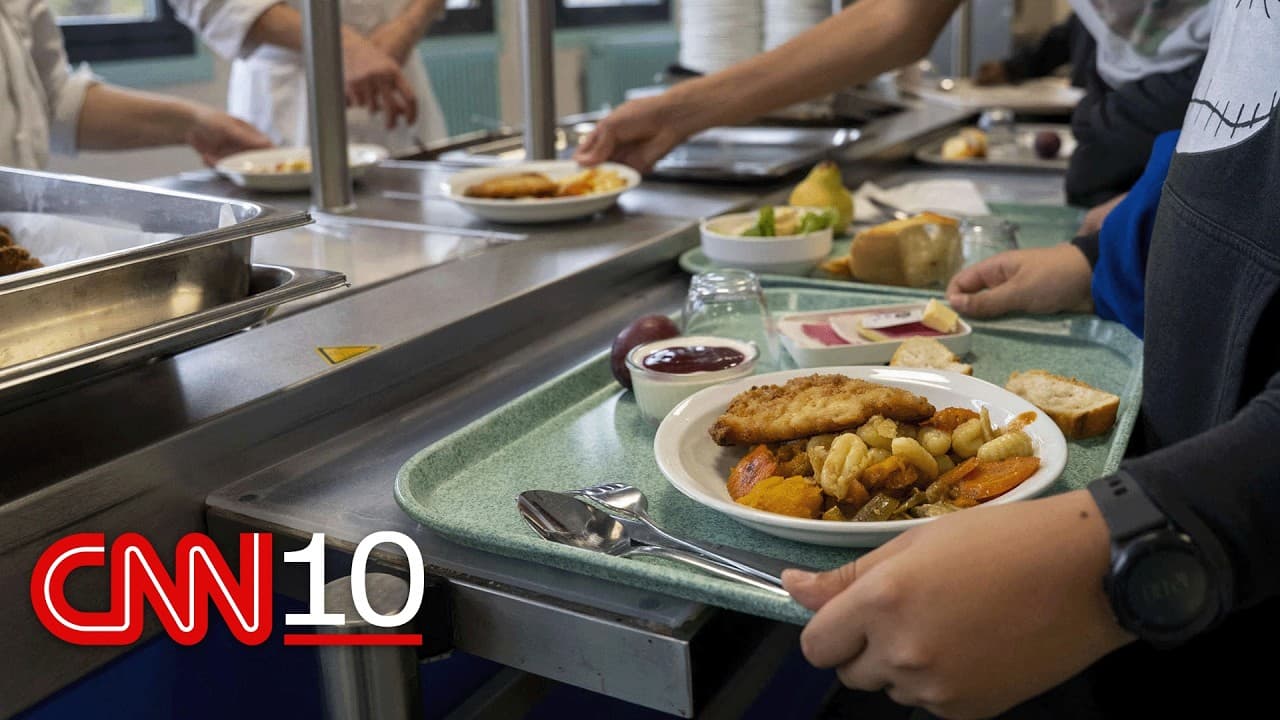
Cooking school lunches from scratch is challenging due to outdated kitchens, cramped spaces, and insufficient funding. The segment visits Connecticut and Colorado districts to show equipment upgrades and the ongoing need for resources, while noting that some places already cook a portion of meals from scratch but still struggle to scale up.
Transcript
[music] [music] >> What's up, sunshine? Happy Monday. I'm Coy Wire, you're watching CNN 10. Today, we've got school cafeterias trying to make lunches less shelf-stable, a former NFL player putting his money where his planet is, and a polar bear goes to the dentist. Stay tuned for all those stories, but first, on this day, 79 years ago, it was light... Read More
Key Insights
- Scratch cooking is hampered by space constraints in existing cafeterias.
- Outdated equipment and limited ovens and refrigeration restrict from-scratch meal production.
- Federal grants exist but funding is still insufficient in many districts.
- A portion of meals can be prepared from scratch, but full-scale adoption remains challenging.
- Space and infrastructure upgrades are costly, with some districts budgeting millions.
- Administration policies push toward fresh ingredients but require logistical support to implement.
- Local schools show creative solutions like dedicated production kitchens to increase scratch cooking.
- Districts report that real food is preferred but difficult to sustain without resources.
Install to Summarize YouTube Videos and Get Transcripts
Explore YouTube Video Summarizer or Get YouTube Transcript Extractor
Questions & Answers
Q: How can schools transition to scratch cooking given limited kitchen space
Schools can start by assessing available prep space and identifying underutilized areas such as closets or hallways that could be repurposed for small scale prep. They may need more ovens and refrigeration, as well as staff training to adapt recipes for limited equipment. Grants and phased implementation help manage costs.
Q: What challenges do Connecticut schools face in switching to scratch meals
Connecticut schools face outdated facilities and limited prep space that hinder scratch cooking. The story highlights a kitchen cobbled together from a closet and hallway and notes that district equipment budgets are often exceeded by repair costs. These factors make it hard to move away from ready made options.
Q: Which factors influence the cost of building a production kitchen
Costs are driven by the size of the kitchen, the number of meals served, and the need for specialized equipment such as ovens and refrigeration. Startup costs can be high, and districts may require grants or subsidies. Ongoing maintenance and staff training also contribute to total expenses.
Q: What role do federal grants play in improving school nutrition
Federal grants are intended to support upgrading equipment and expanding scratch cooking capacity. The report mentions millions in funding and the need for more allocations. Grants help offset capital costs, but districts still face budget shortfalls that limit full program implementation.
Q: What benefits come from cooking from scratch for students
Cooking from scratch can offer fresher ingredients and potentially healthier meals. It can also support local food systems and reduce reliance on shelf stable products. However, without adequate equipment and space, the transition may not fully realize these benefits in the near term.
Q: How did a Littleton, Colorado district approach scratch cooking
Littleton built a production kitchen and now makes about half of its lunches from scratch. The project cost a bit over four million dollars, demonstrating that significant investment can enable more scratch cooking, though such costs may be prohibitive for some districts without substantial funding.
Q: What is a common obstacle across districts trying to cook from scratch
A common obstacle is the mismatch between the goal of fresh meals and the realities of aging buildings and limited kitchen space. This includes not enough ovens, limited work areas, and slow or insufficient funding, which together make it difficult to sustain large scale scratch cooking.
Q: What advice is given for engaging students with water and conservation
The program suggests encouraging exploration of water resources and serving communities by starting with interests students already have. If students see litter or water issues nearby, they can take simple actions like picking up trash, which connects environmental stewardship to everyday life.
Summary & Key Takeaways
-
A school lunch overhaul faces physical space constraints and aging facilities that limit from-scratch cooking.
-
Funding gaps and slow implementation hinder districts from fully transitioning away from shelf-stable meals.
-
Some districts are making progress by building dedicated production kitchens and expanding scratch cooking capacity.
Read in Other Languages (beta)
Share This Summary 📚
Summarize YouTube Videos and Get Video Transcripts with 1-Click
Try YouTube Summary with ChatGPT & Claude or YouTube Transcript Generator
Explore More Summaries from CNN 10 📚






Summarize YouTube Videos and Get Video Transcripts with 1-Click
Try YouTube Summary with ChatGPT & Claude or YouTube Transcript Generator