Ed Catmull: The Hungry Beast and the Ugly Baby

Transcript
Read and summarize the transcript of this video on Glasp Reader (beta).
Install to Summarize YouTube Videos and Get Transcripts
Explore YouTube Video Summarizer or Get YouTube Transcript Extractor
Summary
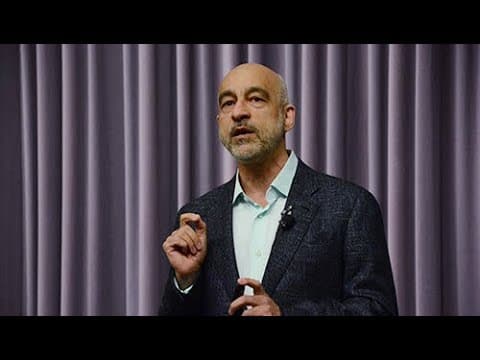
In this video, the speaker discusses the challenge of generating new ideas in a company. He compares the process to feeding a hungry beast, where the upfront generation of ideas is fundamentally different from the operational side of running the company. The speaker emphasizes the fragility of new ideas and the need for protection and engagement to successfully transition them into execution.
Questions & Answers
Q: How does the speaker describe the group responsible for generating revenue in a company?
The speaker describes this group as the "Hungry Beast," acknowledging that it is both the source of revenue and the primary cost for the company.
Q: What analogy does the speaker use to illustrate the need to constantly feed the group responsible for generating ideas?
The analogy of news or newspapers is used to emphasize the constant need for new content to sustain the group responsible for generating ideas, similar to continuously feeding a beast.
Q: Why do companies often face challenges in generating new ideas after the founders transition out?
After the departure of the founders, the individuals in charge of running the beast, who are typically more organized, take over the upfront process. This arises from the fact that the upfront generation of ideas requires a different approach and mindset than the operational side of running the company.
Q: How does the speaker describe the nature of the upfront process in generating new ideas?
The upfront process is characterized as being in wild territory, where the outcomes are unknown and unpredictable. It involves venturing into uncharted territory and taking risks.
Q: What is the speaker's viewpoint on the perception of making movies and generating new ideas?
The speaker notes that while making movies may seem exciting, there is a misconception about the process. He compares it to having a baby, where there is an idealized expectation of the baby growing up to be a beautiful movie star. However, the reality is that some ideas may not initially look good or promising, and they require protection and nurturing to develop into successful ventures.
Q: How does the speaker explain the fragility of new ideas?
The speaker emphasizes that new ideas are fragile and cannot be judged solely based on their appearance or initial impression. They require protection and support to allow for their growth and development.
Q: According to the speaker, how can the team's effectiveness be evaluated during the upfront process?
While the ideas themselves cannot be judged at this stage, the speaker points out that it is possible to assess how well the team is working together during the upfront process.
Q: What challenges does the speaker identify in transitioning ideas from the upfront process to operational execution?
The speaker states that the normal occurrence is for people to make mistakes or mishandle the upfront process, making it challenging to effectively transition ideas into execution.
Q: How does the speaker suggest engaging with the operational side of the company to successfully transition upfront ideas?
The speaker acknowledges that the process is lengthy but highlights the importance of engaging with the beast (the operational side) to successfully transition ideas. This engagement involves finding a balance between the upfront creative process and the operational requirements.
Q: What is the speaker's overall message regarding the upfront generation of ideas?
The speaker emphasizes the critical importance of protecting and supporting new ideas during the upfront process, as they are inherently fragile. He also highlights the need for a thoughtful and deliberate transition from upfront idea generation to the operational side of the company.
Takeaways
Generating new ideas in a company is akin to feeding a hungry beast. The upfront process of idea generation is fundamentally different from the operational side of running the company. New ideas are fragile and require protection and nurturing to reach their full potential. Transitioning ideas into execution can be challenging, but engaging with the operational side is necessary for successful implementation. It is crucial to strike a balance between the creative upfront process and the operational requirements of the company.
Read in Other Languages (beta)
Share This Summary 📚
Summarize YouTube Videos and Get Video Transcripts with 1-Click
Try YouTube Summary with ChatGPT & Claude or YouTube Transcript Generator
Explore More Summaries from Stanford eCorner 📚

![Rebeca Hwang: Small Acts and Big Impacts [Entire Talk] thumbnail](/_next/image?url=https%3A%2F%2Fi.ytimg.com%2Fvi%2FJKM09MBacTE%2Fhqdefault.jpg&w=750&q=75)
![Bobby Lee: Why Bitcoin Makes Sense [Entire Talk] thumbnail](/_next/image?url=https%3A%2F%2Fi.ytimg.com%2Fvi%2FyCIuEKbQNPo%2Fhqdefault.jpg&w=750&q=75)
![Astro Teller: Celebrating Failure Fuels Moonshots [Entire Talk] thumbnail](/_next/image?url=https%3A%2F%2Fi.ytimg.com%2Fvi%2FwtCBCa7DiHo%2Fhqdefault.jpg&w=750&q=75)
Summarize YouTube Videos and Get Video Transcripts with 1-Click
Try YouTube Summary with ChatGPT & Claude or YouTube Transcript Generator