How Technology is "Downgrading Humans" (Tristan Harris X Capgemini)
TL;DR
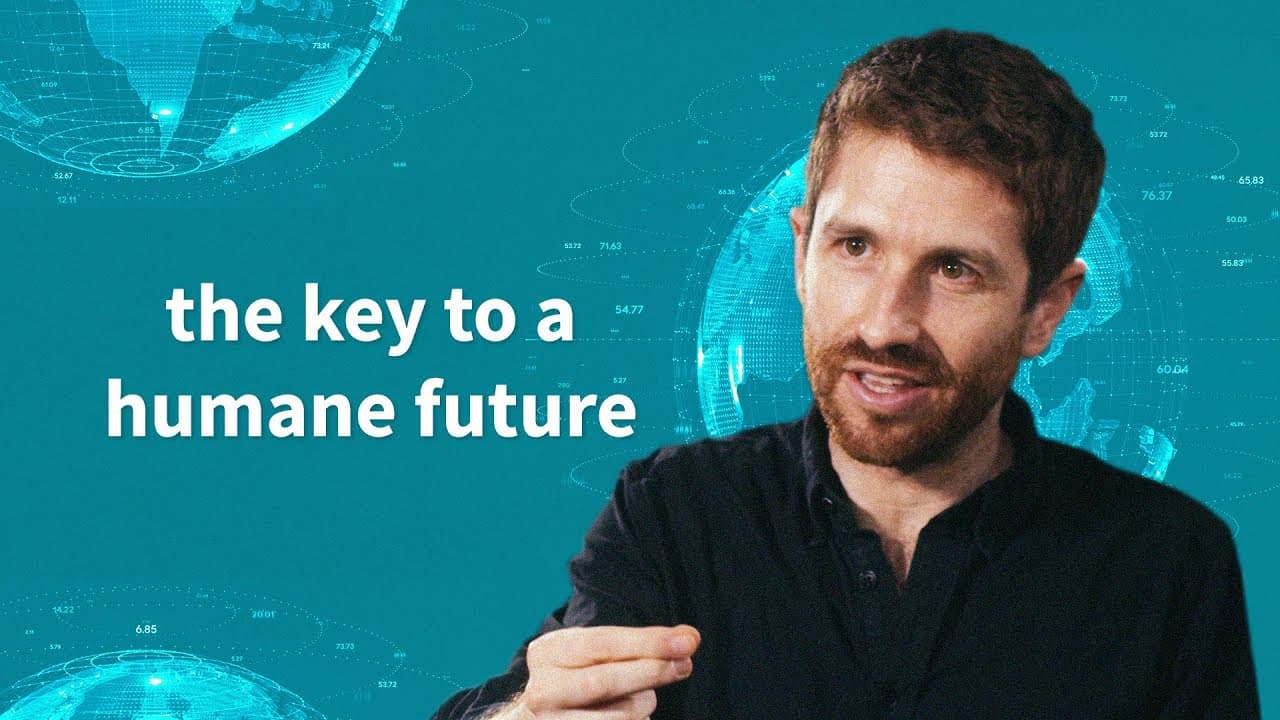
Technology is “downgrading humans” by exploiting cognitive and emotional vulnerabilities, producing an interconnected system of harms that includes information overload, addictive use, fake news, polarization, and weakened trust. Tristan Harris argues that about a thousand people in Silicon Valley could influence this trajectory, but lasting change requires a broader movement and systemic solutions that end attention and surveillance capitalism. Read on to see how specific vulnerabilities produce these cultural problems.
Transcript
uh we're really excited to talk to you tonight because we're playing with some ideas this is not like we've got the answer and we're going to tell you about it this is a really hard problem it's a it's on the scale of climate change we talk about it as the sort of global climate change of culture that's caused by technology we often sometimes say t... Read More
Key Insights
- 🧑💻 The small number of tech leaders can create widespread cultural shifts, impacting everyone.
- ⛔ Human emotional and cognitive limits are exploited by technology, contributing to societal problems.
- 💁 Issues like polarization and information overload are effects of interconnected technological abuse.
- 🪡 Systemic solutions are needed rather than quick fixes to address deeper social issues.
- 🎨 A shift in mindset is necessary to reform how technology is designed and used.
- 🧑💻 Collective responsibility and awareness can alter the trajectory of tech impacts on culture.
- 🥺 Emphasizing human strengths and well-being can lead to healthier tech interactions.
Install to Summarize YouTube Videos and Get Transcripts
Explore YouTube Video Summarizer or Get YouTube Transcript Extractor
Questions & Answers
Q: What does Tristan Harris mean by “human downgrading”?
Human downgrading is an interconnected system of harms created when technology overwhelms or exploits human vulnerabilities. It degrades people’s sense-making and choice-making through problems such as information overload, addictive use, polarization, and weakened trust.
Q: Why is human downgrading compared with climate change?
Harris calls it the “climate change of culture” because many apparently separate harms arise from a larger technological system. He says focusing on notifications or grayscale screens is like addressing climate change by banning straws: the response is too small for the underlying problem.
Q: How does technology exploit human weaknesses without being smarter than people?
Like a magician, technology does not need to exceed human strengths; it only needs to understand or overwhelm human weaknesses. Harris argues that society focused on when technology might surpass human abilities while missing this earlier threshold of exploiting emotional and cognitive limits.
Q: Which human vulnerabilities does technology exploit?
The talk identifies limited short-term memory, the dopamine system, the need for social validation, confirmation bias, outrage, and limits on knowing whom or what to trust. Exploiting these vulnerabilities can produce information overload, addictive use, mass narcissism, fake news, polarization, deepfakes, and bots.
Q: How does confirmation bias contribute to fake news?
Information that affirms a person’s worldview feels good at a nervous-system level, while contradictory information feels bad. Harris says technology can exploit that confirmation bias, helping create the conditions for fake news.
Q: What wider harms can information overload create?
Information overload occurs when technology overwhelms the brain’s limited short-term memory, described in the talk as plus or minus seven items. Harris connects it with shortened attention spans and a post-truth environment in which people feel overwhelmed and do not know what to believe.
Q: Why are turning off notifications and using grayscale screens insufficient solutions?
Those steps address isolated symptoms rather than the interconnected system causing the harms. Harris says the problem requires a systemic solution rather than separately attacking addiction, fake news, and every other visible effect.
Q: What systemic solution does Tristan Harris propose?
Harris says the core problem is the pairing of attention capitalism and surveillance capitalism, which rewards real-time manipulation of a person’s nervous system using information about that person. He argues that this model must end and mentions regulation, problems involving fake clicks and bots, and action by Apple as possible parts of a longer-term response.
Summary & Key Takeaways
-
The discussion centers around the complicated relationship between technology and culture, highlighting that a small number of influencers in Silicon Valley can shape vast global issues.
-
The diagnoses focus on the emotional and cognitive vulnerabilities of humans that are exploited by technological systems, leading to serious societal problems like information overload, polarization, and mental health issues.
-
Addressing these interconnected problems requires systemic thinking and transformative questions that promote responsibility rather than commodification of human experiences.
Read in Other Languages (beta)
Share This Summary 📚
Summarize YouTube Videos and Get Video Transcripts with 1-Click
Try YouTube Summary with ChatGPT & Claude or YouTube Transcript Generator
Explore More Summaries from Center for Humane Technology 📚

Summarize YouTube Videos and Get Video Transcripts with 1-Click
Try YouTube Summary with ChatGPT & Claude or YouTube Transcript Generator