Cell Biology | Cell Cycle: Interphase & Mitosis
TL;DR
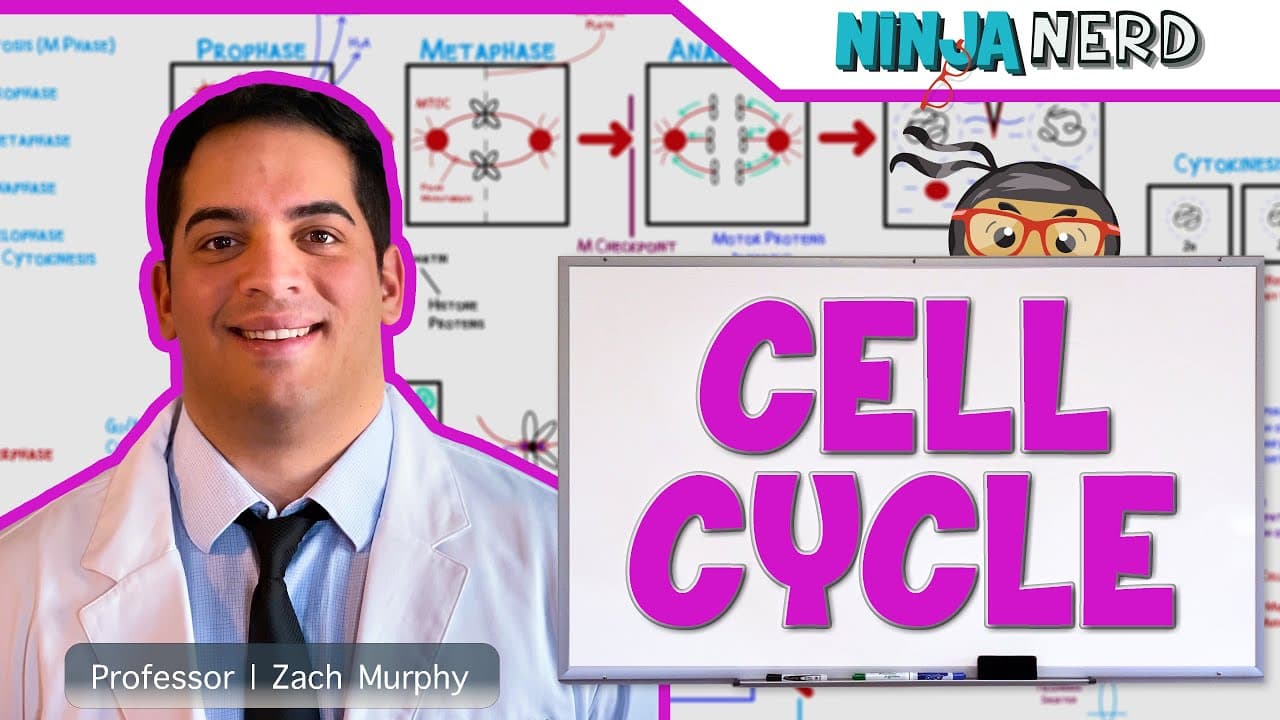
This video provides a detailed explanation of the cell cycle, including interphase and mitosis, and highlights the importance of cell replication and growth control.
Transcript
all right ninja nerds in this video we are gonna talk about the cell cycle the cell cycle is so important why because the cell cycle which we're gonna talk about interphase and mitosis is the series of phases and steps that a cell goes through to replicate itself so we're gonna turn one cell into two cells and this is an important important process... Read More
Key Insights
- 🚲 The cell cycle is essential for cell replication and growth control.
- 🇦🇸 Interphase consists of G1, S, and G2 phases, during which the cell prepares for replication, undergoes DNA synthesis, and experiences further growth.
- 🟰 Mitosis ensures the equal distribution of genetic material to daughter cells.
Install to Summarize YouTube Videos and Get Transcripts
Explore YouTube Video Summarizer or Get YouTube Transcript Extractor
Questions & Answers
Q: What are the three main components of a cell?
The three main components of a cell are the cell membrane, nucleus, and cytoplasm. The cell membrane acts as a protective barrier, the nucleus houses genetic material, and the cytoplasm contains various organelles.
Q: What is the purpose of the cell cycle?
The cell cycle allows cells to replicate themselves and control their growth. It is important for tissue repair, growth, and development.
Q: What are the different phases of interphase?
Interphase consists of three phases: G1 (gap one) phase, S (synthesis) phase, and G2 (gap two) phase. During G1 phase, the cell prepares for replication by increasing organelles and synthesizing proteins. S phase involves DNA replication, and G2 phase focuses on cell growth.
Q: How does mitosis ensure equal distribution of genetic material?
Mitosis consists of four stages: prophase, metaphase, anaphase, and telophase. During anaphase, the microtubules pull the sister chromatids apart, ensuring equal distribution of genetic material to both daughter cells.
Key Insights:
- The cell cycle is essential for cell replication and growth control.
- Interphase consists of G1, S, and G2 phases, during which the cell prepares for replication, undergoes DNA synthesis, and experiences further growth.
- Mitosis ensures the equal distribution of genetic material to daughter cells.
- Different cell types have varying preferences for different phases of the cell cycle, depending on their rate of replication and growth.
Summary & Key Takeaways
-
The cell cycle is a crucial process that allows cells to replicate and control cell growth.
-
The three main components of a cell are the cell membrane, nucleus, and cytoplasm.
-
The cell cycle consists of interphase (G1, S, and G2 phases) and mitosis (prophase, metaphase, anaphase, telophase, and cytokinesis).
Read in Other Languages (beta)
Share This Summary 📚
Summarize YouTube Videos and Get Video Transcripts with 1-Click
Try YouTube Summary with ChatGPT & Claude or YouTube Transcript Generator
Explore More Summaries from Ninja Nerd 📚
Summarize YouTube Videos and Get Video Transcripts with 1-Click
Try YouTube Summary with ChatGPT & Claude or YouTube Transcript Generator