How to Scale Affordable Healthcare Businesses
TL;DR
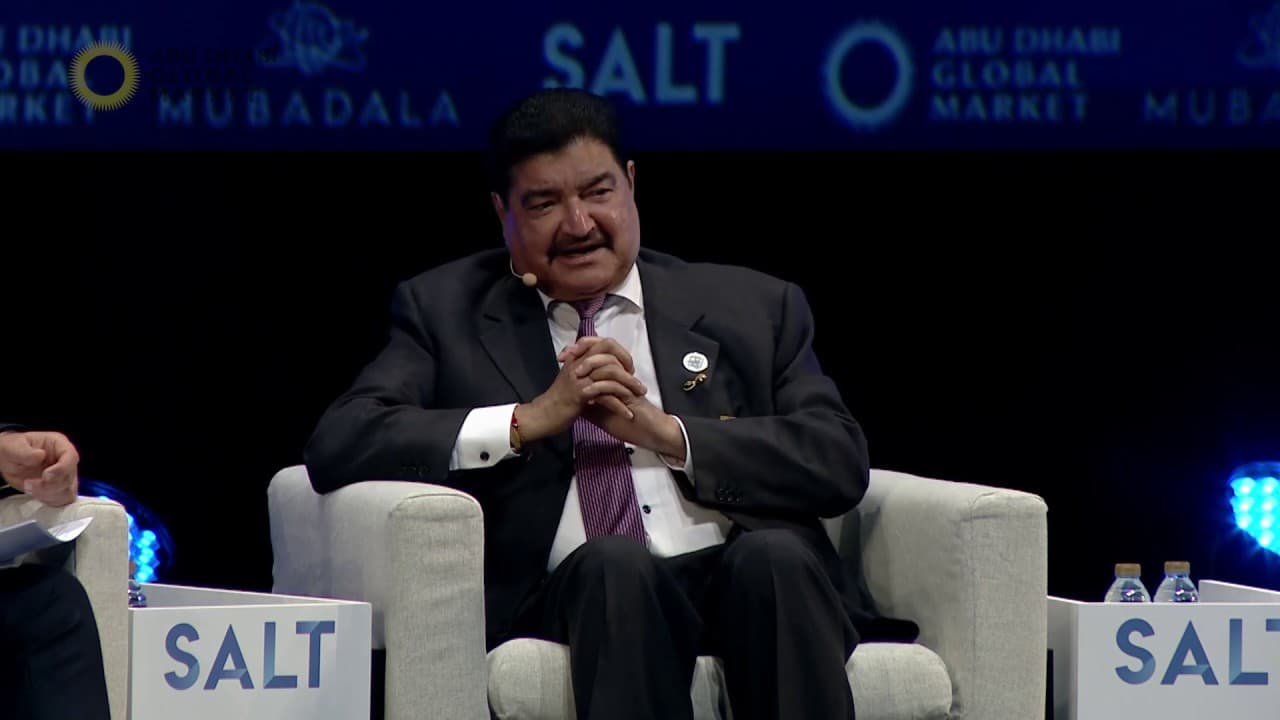
Scalable healthcare starts with affordable community service, timely action on opportunities, and strong employee support. Dr. B.R. Shetty describes growing a one-room Abu Dhabi clinic into 208 facilities across 19 countries by combining organic expansion, acquisitions, bank financing, local encouragement, and practical benefits such as staff housing, education, and employment opportunities for qualified family members.
Transcript
Okay, next up, we have a very special keynote interview. Uh, this is with a man who encompasses a lot of the d- uh, topics that have been discussed thus far, so healthcare, entrepreneurship, diversity. Uh, this is an Indian man that moved to the Middle East in nineteen seventy-three with just a few dirhams to his name, and he built from scratch the... Read More
Key Insights
- A service-oriented purpose is the foundation of Shetty's businesses. He connected his mother's advice to benefit the community with Sheikh Zayed bin Sultan Al Nahyan's call for quality healthcare at an affordable cost, then used that combined principle to guide his first clinic and later ventures.
- NMC Healthcare began as a one-room private clinic in Abu Dhabi. Shetty opened it after clearing his liabilities, and his wife served as its first doctor, establishing the small operational base from which the healthcare organization later expanded across countries and facilities.
- NMC Healthcare reached 208 facilities in 19 countries, with 3,000 doctors serving 8.5 million patients per year. Shetty describes the satisfaction created by this reach as more important than focusing only on the company's fluctuating market capitalization.
- Opportunity is treated as scarce and time-sensitive in Shetty's decision-making. He says he responds positively when an opportunity appears and then works out how to execute it, because an opportunity missed may not return during a person's lifetime.
- Strong relationships can determine whether an acquisition succeeds. Shetty says the Travelex founder supported his purchase when another offer emerged, illustrating his principle that business leaders should preserve constructive relationships with everyone, including people they consider opponents.
- Acquisitions should remain connected to the company's underlying concept. Shetty characterizes healthcare, UAE Exchange, Travelex, and pharmaceutical manufacturing as service-oriented activities that benefit society, describing their relationship as backward integration rather than unrelated diversification.
- Employees are a company's strength, according to Shetty. He argues that happy employees produce more, so his organization provides accommodation from lower-paid roles through doctors, helping address expensive housing and supporting cleanliness when employees interact with patients.
- Employee support can extend beyond salary and housing. Shetty says his schools provide education for employees' families, qualified spouses may receive job opportunities, and some families have remained connected to his businesses through second and third generations.
Install to Summarize YouTube Videos and Get Transcripts
Explore YouTube Video Summarizer or Get YouTube Transcript Extractor
Questions & Answers
Q: How did Dr. B.R. Shetty start NMC Healthcare?
Dr. B.R. Shetty started after moving from India to the UAE to repay liabilities incurred while building municipal infrastructure. Because he could not find a pharmacist position, he became an outdoor salesman and cleared his debts within one year. Guided by his mother's advice to serve the community, he then opened a one-room private clinic with his wife as NMC's first doctor.
Q: How large did NMC Healthcare become under Shetty?
Dr. B.R. Shetty states that NMC Healthcare grew from a one-room clinic into 208 facilities operating across 19 countries. He reports that the organization had 3,000 doctors and treated 8.5 million patients each year. He emphasizes that the satisfaction created by serving patients at this scale mattered more to him than the company's market capitalization alone.
Q: What principles did Shetty use to scale healthcare?
Shetty describes a model built around community service, affordable healthcare, timely action, and consistent principles. He combined his mother's advice to do something good for society with Sheikh Zayed bin Sultan Al Nahyan's call for quality healthcare at an affordable cost. He also pursued growth opportunities while keeping new activities connected to a broader service-oriented business concept.
Q: Why does Shetty say entrepreneurs should act quickly on opportunities?
Shetty believes an opportunity may come only once in a lifetime, so losing it can mean losing it permanently. His approach is to say yes when a promising opportunity appears and then begin working through the practical requirements. He presents this willingness to act as a major factor in both organic expansion and acquisitions, including his decision to pursue Travelex.
Q: How did relationships help Shetty acquire Travelex?
Shetty says his relationship with Travelex founder and chairman Lloyd Hofmann became decisive when a Chinese bank submitted another offer. According to Shetty, Hofmann insisted that Shetty receive the company. After the acquisition was secured, Goldman Sachs contacted him and offered substantial underwriting support, reinforcing his view that maintaining relationships can produce practical support during major transactions.
Q: How did Shetty finance the growth of his businesses?
Shetty describes the foundation of his growth as his own effort, bank money, and encouragement from Abu Dhabi's royal family. During the Travelex acquisition, he says Goldman Sachs offered to underwrite financing after he had secured the deal. He also states that investor interest exceeded what was needed, leaving him without having to take money from every available investor.
Q: How did Shetty support employees as his company expanded?
Shetty says employees are the strength of a company and that happy workers can produce more. His organization provided accommodation to employees ranging from peons to doctors because housing was expensive. He also connected housing with cleanliness in patient-facing work, explaining that even employees carrying files to patients should arrive clean and without the smell of sweat.
Q: What employee benefits did Shetty provide beyond housing?
Shetty says his support system included education and family employment opportunities in addition to accommodation. Employees with families could access education through his schools, while qualified wives could be offered jobs. He describes second and third generations working with him, presenting long family relationships with the organization as evidence of employee loyalty and sustained institutional connection.
Summary & Key Takeaways
-
Dr. B.R. Shetty says his healthcare journey began after he moved from India to the UAE to repay debts. Unable to find work as a pharmacist, he became an outdoor salesman, cleared his liabilities within one year, and then opened a one-room private clinic in Abu Dhabi with his wife as its first doctor.
-
NMC Healthcare grew from that clinic into 208 facilities across 19 countries, employing 3,000 doctors and serving 8.5 million patients annually. Shetty attributes the expansion to personal effort, bank financing, encouragement from Abu Dhabi's royal family, and a service-oriented commitment to providing quality healthcare at an affordable cost.
-
Shetty presents opportunity, relationships, and employee welfare as foundations for sustainable scale. He says entrepreneurs should act when opportunities appear, preserve relationships even with adversaries, keep acquisitions aligned with a service-oriented concept, and support workers through housing, education, and jobs for qualified family members whenever possible.
Read in Other Languages (beta)
Share This Summary 📚
Summarize YouTube Videos and Get Video Transcripts with 1-Click
Try YouTube Summary with ChatGPT & Claude or YouTube Transcript Generator
Explore More Summaries from SALT 📚
Summarize YouTube Videos and Get Video Transcripts with 1-Click
Try YouTube Summary with ChatGPT & Claude or YouTube Transcript Generator