Food, Drugs, and Tech: 100 years of Public Health
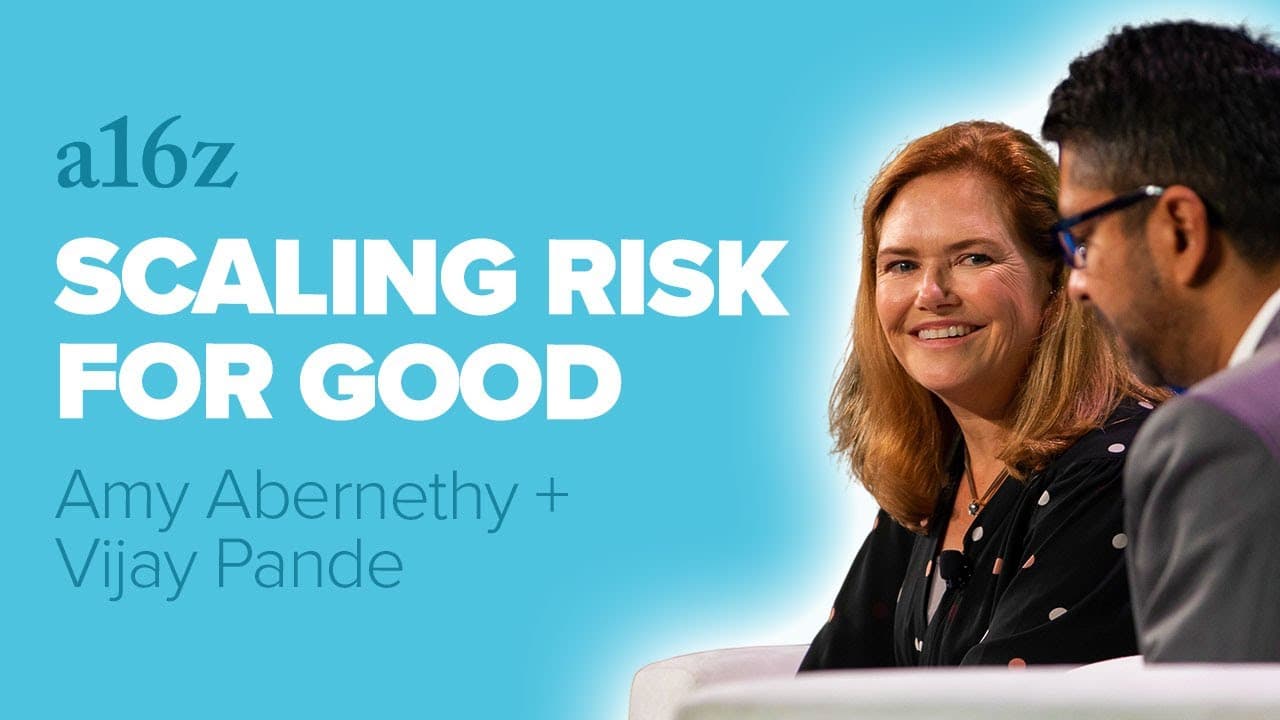
TL;DR
The FDA remains relevant because rapidly emerging biology and new medical products increase the need for objective assessments of safety and effectiveness. Established in 1906, the agency oversees a five-stage development path spanning discovery, preclinical work, clinical studies, an approval application, and post-marketing surveillance. Its next challenge is replacing paper and PDF-based submissions with structured digital data that can be reviewed at scale. Read on to see how that modernization could improve public health oversight.
Transcript
one of the things we've been contemplating at FDA is like ultimately could you imagine the application on your phone that allows you to scan peaches and understand did the peaches have a full supply chain that we can monitor so thank you so much for joining us terrific to be here hello so you know in thinking about how to start this I was thinking ... Read More
Key Insights
- 😀 The FDA's core mission of ensuring safety and effectiveness remains relevant in the face of emerging scientific innovations.
- ❓ The FDA is focused on modernizing its infrastructure to embrace digital advancements and improve efficiency.
- ⚾ The agency adopts a risk-based approach to regulatory decision-making, balancing the need for innovation with consumer safety.
- 🖐️ The FDA plays a crucial role in addressing crises like the opioid epidemic and foodborne outbreaks.
- 👶 New technologies like CRISPR and algorithms present unique regulatory challenges that require frameworks and adaptive approaches.
- 😒 The FDA aims to enhance data-driven decision-making and use real-world evidence to assess medical products.
- 📒 The future of FDA involves increased automation, digitalization, and leveraging technologies like blockchain and distributed ledger for traceability.
Install to Summarize YouTube Videos and Get Transcripts
Explore YouTube Video Summarizer or Get YouTube Transcript Extractor
Questions & Answers
Q: Why is the FDA still relevant after more than 100 years?
Rapidly emerging biology and a growing number of potential products make objective safety and effectiveness assessments increasingly important. The FDA also gives consumers confidence that a treatment is appropriate for them while promoting innovation and protecting public health.
Q: What are the five main stages of drug and biologic product development?
The five stages are discovery, preclinical development, clinical studies, submission of a new drug or biologics application, and post-marketing assessment. After approval, the FDA continuously monitors the medical product.
Q: What must happen before clinical studies can begin?
A product must undergo adequate preclinical development in line with good laboratory practice. The developer then submits an investigational new drug application to the FDA, which can grant permission to begin studies in people.
Q: What clinical trial phases do drugs and biologics typically follow?
Drugs and biologics typically progress through phase one, phase two, and phase three clinical studies. The transcript notes that the boundaries between these phases are beginning to blur for some drugs.
Q: How are medical product applications currently submitted to the FDA?
Most drug applications arrive in some electronic form, often as PDFs that resemble digital versions of the paper once delivered by truckload. Some materials still arrive on paper, including a cited example involving orphan-disease work.
Q: How does the FDA want to modernize its application review process?
The FDA wants more applications to arrive in digital formats containing structured data. That would allow the agency to review information at scale, operate more efficiently, and improve continuous surveillance of medical products.
Q: Why does the FDA need to modernize its underlying infrastructure?
Receiving structured digital data is useful only if the agency has infrastructure capable of storing, reviewing, and using it effectively. The speaker therefore took on the CIO role in addition to focusing on data and digital innovation at the FDA.
Q: How could technology improve food supply-chain oversight?
One possibility being considered is a phone application that could scan peaches and show whether their full supply chain can be monitored. The FDA is also exploring machine learning to predict unsafe food at the border and technologies such as blockchain or distributed ledgers for traceability.
Summary
In this video, Dr. Amy Abernethy, the Principal Deputy Commissioner of the FDA, discusses the role and relevance of the FDA in today's rapidly changing healthcare landscape. She addresses topics such as the FDA's core mission, the current system of drug development and approval, the need for modernization, and the challenges and opportunities presented by emerging technologies like CRISPR, algorithms, and synthetic biology in food production. Dr. Abernethy emphasizes the importance of risk-based regulation, data privacy and security, and the need for new regulatory paradigms to keep pace with scientific innovations.
Questions & Answers
Q: Is the FDA still relevant?
Yes, the FDA is still relevant in a time of rapidly emerging biology and scientific innovations. The need for an objective and science-based assessment of safety and effectiveness, as well as the promotion of innovation, makes the FDA even more essential in today's landscape.
Q: What are the steps in drug and biologic product development?
The typical steps in drug and biologic product development include discovery, preclinical development, submission of an investigational new drug application, clinical studies, submission of a new drug or biologics application, and post marketing assessment and surveillance.
Q: How does the FDA currently receive drug applications and data?
The majority of drug applications come in the form of large digital representations of previously paper-based documents. However, the FDA is working towards receiving more applications in structured digital formats that can be reviewed at scale and allow for continuous surveillance of medical products.
Q: How can the FDA modernize its infrastructure?
To become more efficient, the FDA needs to receive applications in digital formats that represent structured data. This would require an update of the FDA's underlying infrastructure to handle the increased volume of digital applications and to enable better analysis and surveillance of medical products.
Q: How does the FDA deal with the asymmetry of risk in its decision-making process?
The FDA focuses on risk-based scientific decision making, aiming to balance the degree of review and expectation with the potential risks of a particular product. This includes considering safety risks, risks to the population impacted, risks of public perception, and risks that can be mitigated through consistent expectations and toxicology studies.
Q: What are some examples of crises the FDA has dealt with?
The FDA is responsible for many types of medical products, and each can potentially have a crisis associated with it. One example is the recent opioid crisis, which prompted the FDA to put in place an action plan to address the issue. The FDA has also worked to avert drug shortages and foodborne outbreaks.
Q: How does the FDA approach the regulation of innovative technologies like CRISPR?
The FDA applies a risk-based framework to assess and regulate innovative technologies like CRISPR. Factors such as safety, biological plausibility, clinical outcomes, manufacturing consistency, and ethical considerations are taken into account. The FDA also looks at the overall framework of genomic research and how it aligns with the regulatory paradigm.
Q: How does the FDA handle ownership, privacy, and security of healthcare data?
The FDA mainly deals with proprietary and confidential data that belongs to companies. However, there is a growing recognition of the need for privacy and security measures, especially in the context of de-identified data that can still be re-identifiable. Ensuring strong data security and considering new tools and techniques for data privacy are important responsibilities for the FDA.
Q: How does the FDA view the use of algorithms in medical decision-making?
The FDA has different regulatory paradigms for algorithms. Algorithms that act as a medical treatment, replacing physician judgment, are subject to risk-based regulation. The FDA is also exploring ways to keep up with software update cycles and to develop preconditions for software updates. Additionally, the FDA recognizes the need for guidelines on good software controls in the healthcare setting.
Q: How does the FDA approach the use of real-world evidence in clinical trials?
The FDA acknowledges the evolving landscape of clinical trials and is open to new approaches. The use of real-world evidence to enhance clinical trial design and establish a totality of evidence is being explored, along with the blurring of traditional phases in drug development. The FDA is actively working on frameworks to facilitate the use of real-world evidence while ensuring patient safety and well-being.
Q: How does the FDA regulate the use of genetic engineering and synthetic biology in food production?
The FDA works in collaboration with the USDA to ensure proper regulation of genetic engineering and synthetic biology in food production. Agreements have been made to define the responsibilities of each agency, with the FDA focusing on cell culture aspects and the USDA on marketing aspects. The FDA recognizes the need to adapt regulatory paradigms to keep up with emerging innovations in the food industry.
Summary & Key Takeaways
-
FDA, established in 1906, ensures the safety and effectiveness of medical products and promotes public health.
-
The FDA follows a rigorous process for drug and biologic product development, including discovery, clinical trials, and post-marketing assessment.
-
The FDA aims to modernize its infrastructure, receive more digital applications, and embrace new technologies like machine learning to enhance efficiency and safety measures.
Read in Other Languages (beta)
Share This Summary 📚
Summarize YouTube Videos and Get Video Transcripts with 1-Click
Try YouTube Summary with ChatGPT & Claude or YouTube Transcript Generator
Explore More Summaries from a16z 📚



Summarize YouTube Videos and Get Video Transcripts with 1-Click
Try YouTube Summary with ChatGPT & Claude or YouTube Transcript Generator