Which Planet Is Closest to Earth: Mercury or Venus?
TL;DR
Mercury is the closest planet to Earth on average, not Venus. While Venus occasionally comes close, its distance varies, making Mercury the planet with the shortest average distance to all planets. To accurately determine planetary proximity, it's crucial to ask precise questions that distinguish between different contexts of 'closeness.'
Transcript
Hello Internet. While working on a future video, I offhandedly wrote, “Venus, the closest planet to Earth.” But later, while editing, I thought, “You know, let me check that.” Which led to me to this video by Dr. Stockman explaining how, no, Venus is not the closest. This blew my mind and I contacted the author to adapt his video into the one you p... Read More
Key Insights
- 🪐 Venus is not the closest planet to Earth; Mercury holds that title due to its shortest average distance to all other planets.
- ⁉️ Precise questions are necessary to uncover precise answers about planetary proximity.
- 😷 Models can trick us into asking imprecise questions and hinder our understanding of complex systems.
- 🥺 Knowledge should lead us to ask better and more precise questions, leading to new discoveries.
- 🧑🏭 Understanding the true nature of the solar system can uncover hidden facts that may seem obvious in retrospect.
- 🥳 Breaking down complex questions into smaller, precise parts can lead to a deeper understanding of a subject.
Install to Summarize YouTube Videos and Get Transcripts
Explore YouTube Video Summarizer or Get YouTube Transcript Extractor
Questions & Answers
Q: Why is Venus not the closest planet to Earth?
While Venus does get the closest to Earth at times, it is not always the case. Mercury has the shortest average distance to all other planets, making it the closest overall.
Q: What are the four parts of the precise question regarding which planet is closest to Earth?
The four parts are: which planet ever gets the closest, which planet is closest for the longest time, which planet has the shortest average distance, and which planet takes the least time to travel to.
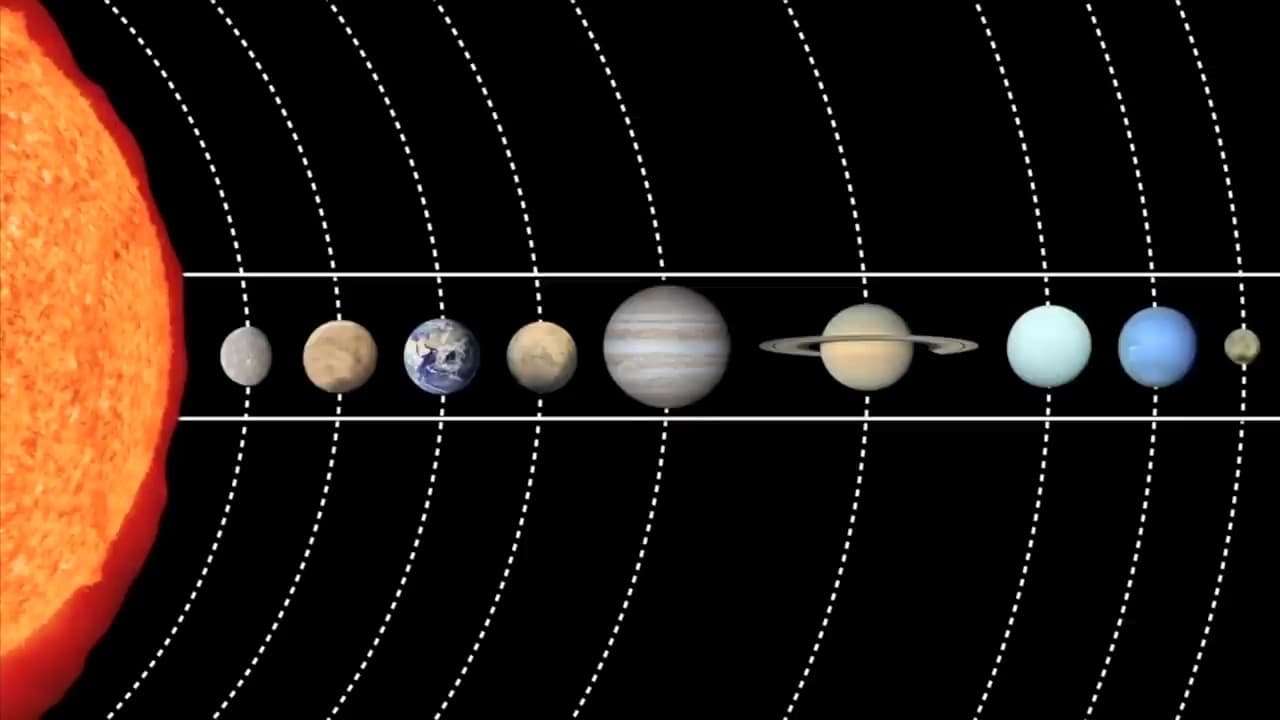
Q: Why do models, such as the linear diagram of the solar system, trick us into asking imprecise questions?
Models simplify complex systems, but they can also create misconceptions. The linear model of the solar system makes us believe that planets are evenly distributed, leading to imprecise questions about proximity.
Q: Why was the fact about Mercury being the closest planet only recently published?
The fact about Mercury being the closest planet is a result of precise measurements and calculations. It took until this year to publish because it is a property of concentric circles that requires accurate data.
Summary & Key Takeaways
-
Venus is not the closest planet to Earth, despite common belief. Mercury actually holds the title for the shortest average distance to all other planets.
-
The question of which planet is closest to Earth is imprecise and should be broken down into four parts: which planet gets the closest, which planet is closest for the longest time, which planet has the shortest average distance, and which planet takes the least time to travel to.
-
Knowledge should yield questions, which in turn yield more knowledge. Precise questions are necessary to uncover precise answers.
Read in Other Languages (beta)
Share This Summary 📚
Summarize YouTube Videos and Get Video Transcripts with 1-Click
Try YouTube Summary with ChatGPT & Claude or YouTube Transcript Generator
Explore More Summaries from CGP Grey 📚




Summarize YouTube Videos and Get Video Transcripts with 1-Click
Try YouTube Summary with ChatGPT & Claude or YouTube Transcript Generator