Who Was Voltaire and Why Is He Important?
TL;DR
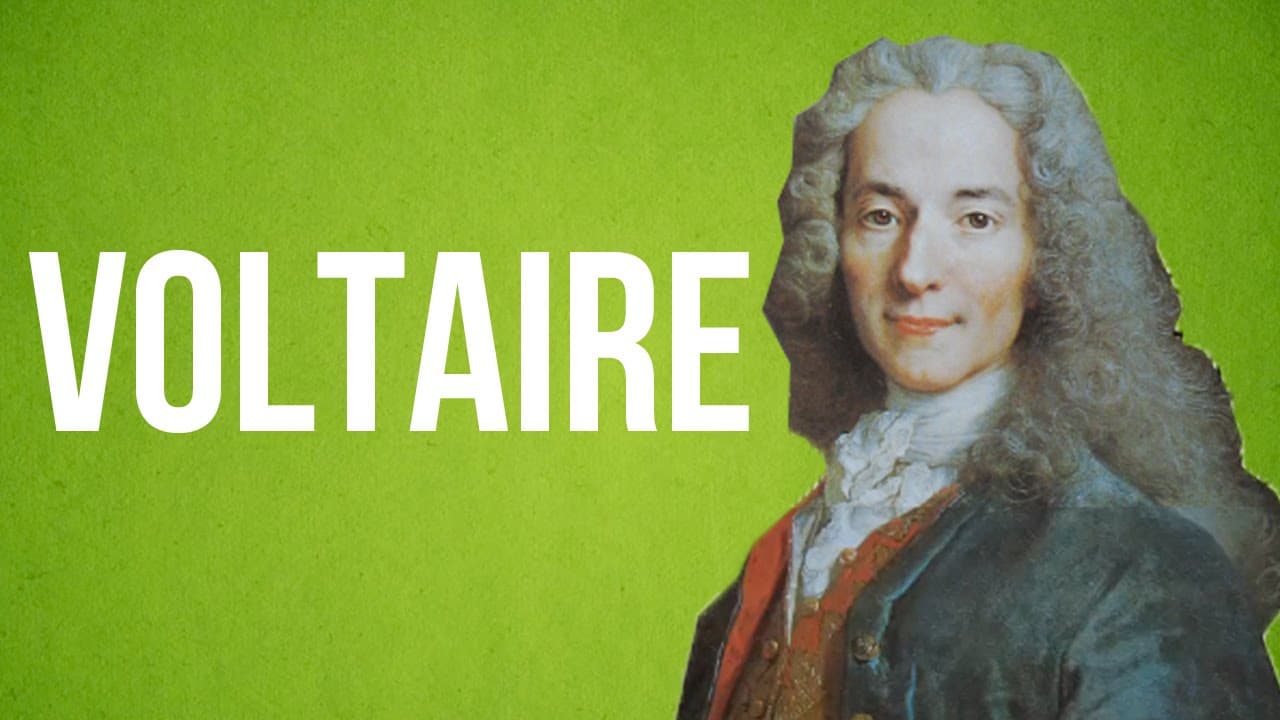
Voltaire, born François-Marie Arouet, was a pivotal Enlightenment thinker known for advocating reason and religious tolerance. His critical writings, including 'Candide' and 'Letters Concerning the English Nation,' challenged societal norms and critiqued fanaticism, establishing him as a champion of liberal values and free speech.
Transcript
François-Marie Arouet was born in Paris in 1694 His father, a well-established lawyer, sent him to the best school in the capital, and by all accounts, he was a brilliant student. The young Arouet, decided at an early age to make his name as a writer, or rather to remake his name, as the first thing he did was to change his name to Voltaire. The 18... Read More
Key Insights
- 🥺 Voltaire emerged as a leading figure of the Enlightenment, advocating for reason, tolerance, and criticism of religion-based fanaticism.
- 💦 His literary works often served dual purposes of entertainment and societal critique, making complex ideas accessible to a broader audience.
- 🖐️ The notion of deism—belief in a rational God without metaphysical intricacies—plays a crucial role in Voltaire’s theological perspective.
- 🛟 Voltaire's "Candide" serves as a satire of philosophical optimism while providing profound commentary on the human condition.
- 👻 His experiences in England allowed him to appreciate cultural differences, ultimately shaping his arguments against intolerance in his native France.
- 🤔 The phrase "Ecrasez l’Infâme!" encapsulated Voltaire’s lifelong mission against superstition and oppression, becoming a rallying cry for Enlightenment thought.
- 🌜 Voltaire's writing style, marked by wit and sharp rhetoric, significantly enhanced the effectiveness of his arguments, leaving a lasting influence on literary expression.
Install to Summarize YouTube Videos and Get Transcripts
Explore YouTube Video Summarizer or Get YouTube Transcript Extractor
Questions & Answers
Q: What influenced Voltaire's decision to change his name?
Voltaire, originally named François-Marie Arouet, sought to establish his identity as a writer in a time dominated by the ideals of Enlightenment. By adopting the name Voltaire, he invoked a sense of authority and originality, aligning with the period’s focus on reason and personal expression. This change also marked a psychological move toward breaking free from societal constraints imposed by his background.
Q: How did Voltaire's experience in England shape his worldview?
During his two and a half years in England, Voltaire gained exposure to English Protestant culture and democratic principles. He admired the pluralistic religious environment and contrasted it with the oppressive Catholicism in France. His observations led to his work "Letters Concerning the English Nation," which highlighted the benefits of religious diversity and critiqued the rigid French political and religious systems.
Q: What significant themes are explored in "Candide"?
"Candide" primarily addresses the philosophical problem of evil, challenging the notion of optimistic determinism as espoused by thinkers like Leibniz. Through the misfortunate experiences of Candide, Voltaire critiques the simplistic belief that "all is for the best," illustrating the absurdity of this view when confronted with real-world suffering and human cruelty.
Q: In what ways did Voltaire impact public opinion and justice during his lifetime?
Voltaire actively campaigned against injustice, notably in the case of Jean Calas, a Protestant falsely accused of murder. His persistent efforts through writing, including pamphlets and letters, raised awareness of religious intolerance and ultimately led to a judicial review of Calas's case, exemplifying Voltaire's belief that public opinion could instigate change and rehabilitate the wrongfully accused.
Summary & Key Takeaways
-
François-Marie Arouet, known as Voltaire, was a prominent 18th-century writer who advocated for reason and religious tolerance, significantly influencing Enlightenment thought.
-
Voltaire's experiences in England shaped his views on religion and politics, leading to works such as "Letters Concerning the English Nation," which criticized French culture.
-
His best-known work, "Candide," challenges the philosophy of optimism, portraying the harsh realities of evil and suffering while advocating for practical action against injustice.
Read in Other Languages (beta)
Share This Summary 📚
Summarize YouTube Videos and Get Video Transcripts with 1-Click
Try YouTube Summary with ChatGPT & Claude or YouTube Transcript Generator