Why Did Zohran Mamdani Win New York City?
TL;DR
Zohran Mamdani won because, in Candace Owens's interpretation, his anti-establishment message proved stronger than the money and institutional pressure supporting Andrew Cuomo. Owens also argues that unusual scheduling details surrounding Charlie Kirk's Utah appearances deserve scrutiny, while clearly presenting her theory of organizational involvement as suspicion rather than established fact.
Transcript
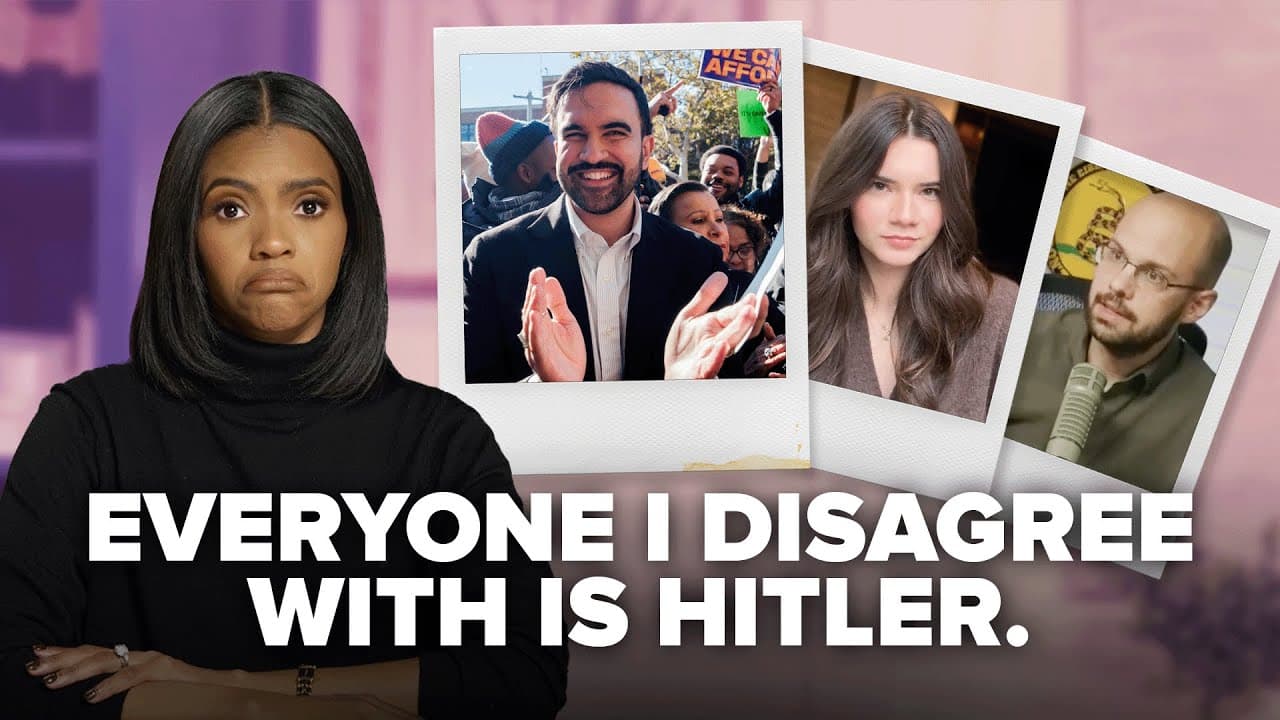
All right, you guys. Happy Wednesday for some people in New York City. Mom Donnie won. Okay, that's kind of the big story. The Republican establishment have they have a lot of excuses regarding that win. The excuses are ranging from because there was too much infighting on the conservative side uh to this country has been taken over by jihadists. I... Read More
Key Insights
- Mamdani's victory is presented as a populist rejection of establishment politics, according to Owens. She argues that Republican explanations emphasizing conservative infighting or jihadism overlook voters' broader frustration with political institutions, entrenched interests, Zionism, and messaging they perceive as dishonest.
- Large political donations did not prevent Mamdani from defeating Andrew Cuomo. Owens cites $1.75 million from Bill Ackman, $8.3 million from Michael Bloomberg, $3.1 million from Airbnb co-founder Joseph Gebbia, and $1.2 million from the Tisch family as examples of unsuccessful opposition spending.
- Mamdani's first mayoral debate is identified by Owens as a likely turning point in the election. She compares his anti-establishment posture with Donald Trump's performance during the first Republican debate in 2016, arguing that an open rejection of conventional expectations can establish political momentum.
- The foreign-visit debate question exposed a contrast between Mamdani and other mayoral candidates, according to Owens. While candidates in the excerpt named Israel as their intended first destination, she highlights the question itself as evidence of establishment priorities that voters may find disconnected from municipal concerns.
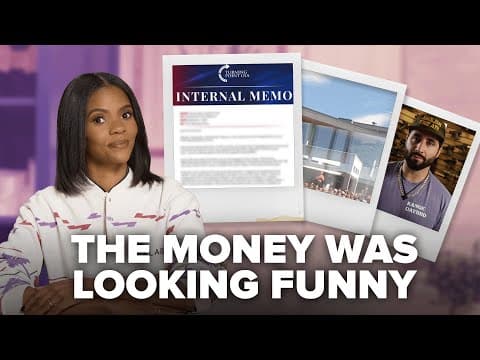
- Turning Point USA campus events were normally planned months in advance during Owens's experience. She presents an October 2023 email discussing possible events for late March and early April 2024 as evidence that room requests, campus approval, availability, and scheduling ordinarily required substantial lead time.
- The Utah Valley University event received unusually rapid approval, according to Owens's account. She says the request arrived in mid-July and the appearance was scheduled for September, a timeline she considers inconsistent with previous Turning Point USA tour planning, though the transcript provides no independent verification.
- Two Utah appearances scheduled ten days apart appear operationally inefficient to Owens. She says tours ordinarily grouped nearby campuses into a regional sweep, citing UCLA, Berkeley, and Stanford, rather than requiring a return home to Arizona followed by another flight to the same region.
- Owens's allegations about Charlie Kirk's death remain explicitly speculative within the episode. She interprets scheduling anomalies, succession claims, memorial speakers, and messaging about his legacy as signs of possible organizational involvement, but the supplied material does not establish her theory as verified fact.
Install to Summarize YouTube Videos and Get Transcripts
Explore YouTube Video Summarizer or Get YouTube Transcript Extractor
Questions & Answers
Q: Why does Candace Owens think Zohran Mamdani won?
Candace Owens argues that Zohran Mamdani won because he represented a populist rejection of establishment politics. She believes his debate performance communicated resistance to conventional political expectations, much as Donald Trump's first Republican debate performance did in 2016. Her explanation emphasizes voter frustration with entrenched institutions and messaging rather than conservative infighting or claims that the country had been overtaken by jihadists.
Q: How much money was spent by major donors opposing Mamdani?
Owens names several contributions connected with efforts to defeat Mamdani or support Andrew Cuomo. She says Bill Ackman gave $1.75 million, Michael Bloomberg gave $8.3 million to a Cuomo-affiliated super PAC, Airbnb co-founder Joseph Gebbia gave $3.1 million, and the Tisch family gave $1.2 million. Her central point is that these large donations did not prevent Mamdani from winning.
Q: What debate moment does Owens connect to Mamdani's victory?
Owens points to the first mayoral debate as the moment Mamdani may effectively have won the contest. She highlights a question asking candidates which foreign country they would visit first as mayor of New York. She considers the premise disconnected from the mayor's municipal responsibilities and uses the candidates' answers about Israel to illustrate the establishment expectations Mamdani challenged.
Q: Why does Owens compare Mamdani with Donald Trump?
Owens compares Mamdani with Donald Trump because she believes both gained momentum by visibly rejecting the political establishment during an early debate. She says Trump effectively won in the first Republican debate of 2016 by expressing an unmistakable refusal to follow establishment expectations. In her interpretation, Mamdani produced a similar impression during the first New York City mayoral debate.
Q: Why does the Utah Valley University event timeline concern Owens?
Owens says Utah Valley University requested Charlie Kirk in mid-July and Turning Point USA approved an appearance for September, only several weeks later. Based on her own experience with the organization, campus tours were usually planned months ahead because rooms, school approvals, availability, and Kirk's crowded travel calendar required coordination. She regards the compressed schedule as suspicious, not as independently established proof of wrongdoing.
Q: How were Turning Point USA campus tours normally planned?
According to Owens, Turning Point USA began arranging campus appearances many months before the events occurred. She cites an October 2023 email discussing possible appearances at the University of North Carolina at Chapel Hill, the University of Pittsburgh, and the University of Alabama for late March and early April 2024. Requests that could not be accommodated were sometimes reconsidered during the following semester.
Q: Why were two separate Utah trips unusual in Owens's experience?
Owens says Charlie Kirk was scheduled to appear in Utah on September 10 and return ten days later for another campus less than two hours away. She explains that Turning Point USA normally grouped nearby schools into a regional sweep, citing UCLA, Berkeley, and Stanford as an example. Returning to Arizona between two close Utah appearances therefore seemed inconsistent with normal tour logistics.
Q: What does Owens allege about Charlie Kirk and Turning Point USA?
Owens speculates that unusual scheduling, later claims about Kirk's notebooks and succession wishes, the selection of memorial speakers, and efforts to direct his supporters toward the Republican administration may indicate organizational involvement in a broader plan. She describes the situation as resembling an assassination followed by a hostile takeover. The supplied transcript presents this as her suspicion and does not provide conclusive evidence establishing it as fact.
Summary & Key Takeaways
-
Owens interprets Mamdani's victory as evidence that an anti-establishment populist message can overcome major financial opposition. She notes that Bill Ackman, Michael Bloomberg, Airbnb co-founder Joseph Gebbia, and the Tisch family supported efforts against Mamdani, yet Andrew Cuomo still lost despite their combined political spending.
-
Owens compares Mamdani's debate performance with Donald Trump's appearance in the first Republican debate of 2016. She argues that both candidates benefited from visibly rejecting establishment expectations. A debate question about which foreign country the mayoral candidates would visit first becomes her example of Mamdani standing apart from conventional political answers.
-
Owens questions the planning of Charlie Kirk's Utah Valley University appearance because the request allegedly arrived in mid-July for a September event. She contrasts that schedule with her April 2024 campus tour, whose planning began in October 2023, and treats the difference as suspicious but not conclusive proof.
Read in Other Languages (beta)
Share This Summary 📚
Summarize YouTube Videos and Get Video Transcripts with 1-Click
Try YouTube Summary with ChatGPT & Claude or YouTube Transcript Generator
Explore More Summaries from Candace Owens 📚

Summarize YouTube Videos and Get Video Transcripts with 1-Click
Try YouTube Summary with ChatGPT & Claude or YouTube Transcript Generator