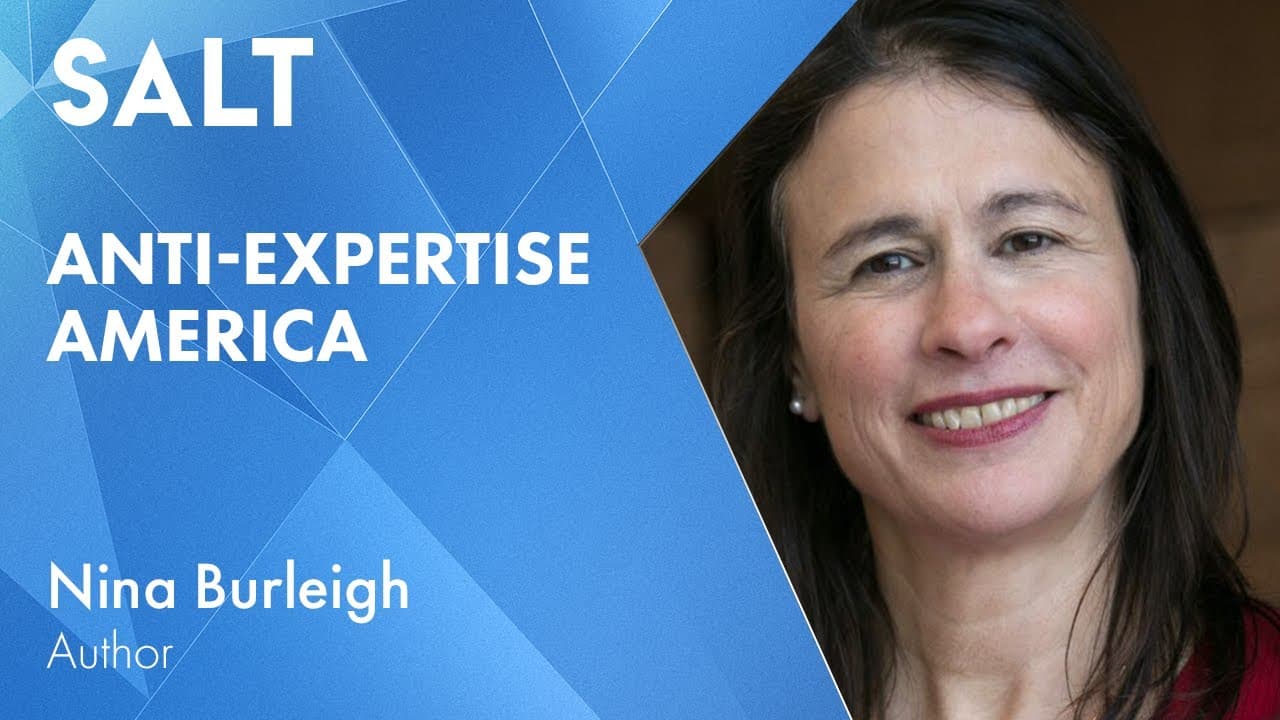
Nina Burleigh: Anti-Expertise America | SALT Talks #231
TL;DR
Nina Burleigh argues that America’s pandemic response was weakened by a long-running distrust of scientific expertise, reinforced by industry-backed contrarian voices and vaccine skepticism among both educated and less-informed groups. She connects these problems to her book, "Virus Vaccinations: The CDC and the Hijacking of America's Response to the Pandemic," while discussing the historical benefits of vaccines. Read on for her background and central argument.
Transcript
hello everyone and welcome back to salt talks my name is john darcy i'm the managing director of salt which is a global thought leadership forum and networking platform at the intersection of finance technology and public policy salt talks are a digital interview series with leading investors creators and thinkers and our goal on these talks the sa... Read More
Key Insights
- 🖐️ Misinformation from leaders and media outlets plays a significant role in fueling vaccine hesitancy.
- ❓ mRNA vaccines have the potential to revolutionize disease prevention and treatment.
- 🧑🏭 Global cooperation and a fact-based response are crucial in tackling future pandemics.
- ⚖️ Balancing freedom and public health requires finding the right balance in policy-making and education efforts.
Install to Summarize YouTube Videos and Get Transcripts
Explore YouTube Video Summarizer or Get YouTube Transcript Extractor
Questions & Answers
Q: What is Nina Burleigh’s argument about anti-expertise in America?
Burleigh traces disrespect for scientific expertise back across several decades of American politics and industry. She says industries promoted competing voices when scientific findings threatened their interests, creating a pattern later visible in debates about climate change and vaccines.
Q: What is Nina Burleigh’s book about?
Her book is titled "Virus Vaccinations: The CDC and the Hijacking of America's Response to the Pandemic." It examines the science and history of viruses, vaccines, and treatments, along with what America did wrong during the pandemic response.
Q: Why does Nina Burleigh connect vaccine hesitancy with anti-expertise?
Burleigh says science denial is not limited to people with little education or information. She notes that a significant portion of vaccine skeptics are educated, challenging assumptions about who rejects scientific expertise.
Q: How does Nina Burleigh describe the historical impact of vaccines?
The interview credits vaccines with helping extend human lifespans and supporting healthier lives over the last 150 years. It also argues that people now take these benefits for granted.
Q: How does Nina Burleigh connect tobacco companies to distrust of science?
Burleigh says companies such as RJ Reynolds wanted competing voices to challenge evidence that tobacco and cigarettes caused cancer. She presents this as part of a broader history of industries undermining scientific expertise.
Q: How does Nina Burleigh connect fossil fuel companies to climate change denial?
Burleigh says companies such as Exxon bankrolled contrarian scientists who disputed the scientific consensus on climate change. She views this as another example of industry supporting challenges to established scientific knowledge.
Q: What is Nina Burleigh’s journalism background?
Burleigh began her journalism career with the Associated Press in Springfield, Illinois, covering the state house. She later covered America under Donald Trump as a national politics correspondent at Newsweek and reported from almost every state in the continental United States.
Q: What is SALT Talks #231?
SALT Talks is a digital interview series featuring investors, creators, and thinkers. In episode #231, Anthony Scaramucci interviews national journalist and author Nina Burleigh about her career, vaccines, scientific expertise, and America’s pandemic response.
Summary & Key Takeaways
-
Definition: Anti-expertise is described as distrust or disrespect for specialized knowledge, especially scientific findings.
-
Who: Nina Burleigh is a national journalist and author who covered national politics for Newsweek.
-
Who: Anthony Scaramucci, founder and managing partner of SkyBridge Capital, hosts the interview.
-
Tool: Burleigh’s book examines viruses, vaccine history, treatments, the CDC, and America’s pandemic response.
-
When: Burleigh traces growing disrespect for expertise to the Reagan years and subsequent political developments.
-
Compare: Vaccine skepticism appears among educated people as well as lower-information groups, according to Burleigh.
-
Number: Vaccines are credited with extending healthier human life over the last 150 years.
-
Who: Burleigh says RJ Reynolds supported competing voices against evidence connecting cigarettes with cancer.
-
Who: Burleigh identifies Exxon as a backer of contrarian scientists disputing climate change science.
-
Definition: SALT Talks is a digital interview series focused on ideas shaping finance, technology, and public policy.
Read in Other Languages (beta)
Share This Summary 📚
Summarize YouTube Videos and Get Video Transcripts with 1-Click
Try YouTube Summary with ChatGPT & Claude or YouTube Transcript Generator
Explore More Summaries from SALT 📚

Summarize YouTube Videos and Get Video Transcripts with 1-Click
Try YouTube Summary with ChatGPT & Claude or YouTube Transcript Generator