Why Did the Stock Market Suddenly Sell Off?

TL;DR
Japan’s second interest-rate increase since 2007 strengthened the yen and disrupted carry trades that funded investments with cheap yen, contributing to a sharp global sell-off. The presenter argues that major US companies remained fundamentally unchanged, compares the episode with the August 2015 flash crash, and favors selective long-term positions over panic selling or day trading during extreme volatility.
Transcript
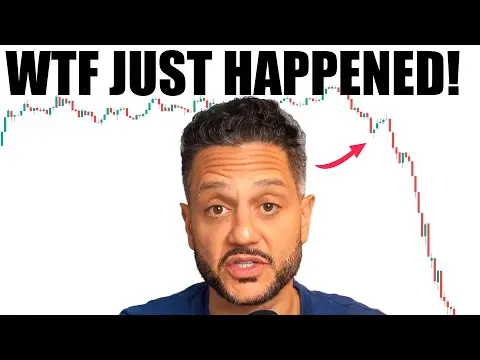
the S&P 500 and the NASDAQ dropped between 4 and 6% overnight in the Asian session as the vix shot through the roof to record levels what the hell happened here I promise you this will be the most concise complete understandable video that you will find on this topic and more importantly are there opportunities for us here because as you guys know ... Read More
Key Insights
- Japan’s rate increase was its second since 2007, and it strengthened the yen after a prolonged period of weakness. Because Japan was raising rates while the United States was considering cuts, the two countries were moving in opposite monetary-policy directions.
- The yen carry trade works by borrowing yen at low interest rates, exchanging the proceeds for dollars, and investing in US assets. The strategy remains attractive while exchange rates are stable, but a stronger yen can erase profits and force investors to close positions.
- Carry-trade unwinding can produce severe market pressure because arbitrage strategies require hundreds of millions or even billions of dollars to generate meaningful incremental profits. When the currency relationship moves against these leveraged positions, forced closures can create rapid and unusually large asset sales.
- The presenter’s central view is that the sell-off did not alter the business fundamentals of Amazon, Microsoft, or Nvidia. He treats the decline as a market-structure and currency event, while acknowledging that the total size and remaining duration of the carry-trade unwind are difficult to measure.
- The August 2015 flash crash provides the presenter’s main historical comparison. That sell-off also occurred on a Monday in August, followed record highs, originated with an Asian market collapse, and generated recession fears that did not precede another recession until the 2020 pandemic.
- QQQ nearly entered bear-market territory during the 2015 decline, while the current episode brought it almost 16% below its highs intraday and nearly 14% below its all-time high at the close. The presenter interprets the intraday recovery as evidence that buyers emerged during panic.
- An emergency Federal Reserve cut could worsen carry-trade stress by weakening the dollar against the yen, according to the presenter. He also argues that unemployment at 4.3%, compared with an expected 4.1%, does not by itself justify abandoning the Federal Reserve’s stated inflation objective.
- Extreme volatility can create positional investment opportunities without being suitable for day trading. The presenter avoided day trading because thousand-point NASDAQ moves could make stop-limit losses larger than usual, while identifying Nvidia, Amazon, and bonds as more attractive longer-term opportunities during the dislocation.
Install to Summarize YouTube Videos and Get Transcripts
Explore YouTube Video Summarizer or Get YouTube Transcript Extractor
Questions & Answers
Q: Why did the stock market suddenly sell off?
The sell-off followed Japan’s decision to raise interest rates for the second time since 2007. Higher Japanese rates strengthened the yen, disrupting carry trades funded by cheap yen borrowing. Speculators then had to close positions and sell investments, contributing to overnight declines of roughly 4% to 6% in the S&P 500 and NASDAQ during the Asian session.
Q: What is the Japanese yen carry trade?
The yen carry trade involves borrowing yen at very low interest rates, converting the borrowed money into dollars, and investing those dollars in US equities or other assets. Investors later convert their proceeds back into yen. The strategy works when exchange rates remain stable, but a strengthening yen can reduce or eliminate returns and force positions to be closed.
Q: Why does a stronger yen hurt carry-trade investors?
A stronger yen means each dollar buys fewer yen when investors reverse the trade. That makes repayment of yen-denominated borrowing more expensive relative to the dollars and investment profits they hold. Because meaningful arbitrage returns require hundreds of millions or billions of dollars, adverse currency movements can trigger large losses and rapid closures across heavily funded positions.
Q: Did the sell-off change the fundamentals of major US companies?
The presenter argues that it did not change the underlying fundamentals of Amazon, Microsoft, or Nvidia. In his interpretation, the immediate trigger was a currency and positioning shock associated with Japan and the carry trade, not a deterioration in those companies’ businesses. However, he acknowledges uncertainty about how large the carry trade is and how much unwinding remains.
Q: How was this market decline similar to the 2015 flash crash?
The presenter compares the episode with August 24, 2015, when a Chinese market collapse spread fear into US equities. Both events occurred on a Monday in August, followed recent all-time highs, and originated with turmoil in Asia. In 2015, QQQ nearly entered bear-market territory before buyers reduced the decline, while recession predictions ultimately proved premature.
Q: Why might an emergency Federal Reserve rate cut worsen the situation?
The presenter reasons that an immediate Federal Reserve cut could weaken the US dollar. Carry-trade investors depended partly on a strong dollar relative to the yen, so additional dollar weakness could make closing or repaying yen-funded positions more difficult. He also believes an emergency cut would conflict with the Federal Reserve’s stated requirement to see inflation subside toward 2%.
Q: What buying opportunities did the presenter identify?
The presenter highlights Nvidia after it reached $91, about 35% below the referenced level of $140, and Amazon after it fell roughly 25% from its highs despite what he describes as strong earnings and cash flow results. He also says his bond position performed well and expects bonds to remain attractive over the next two to three years.
Q: Why did the presenter avoid day trading during the volatility?
The presenter avoided day trading because the NASDAQ was making moves of roughly a thousand points, creating a risk that stop-limit executions could produce much larger losses than usual. He prefers using extreme market conditions to find positional trades or investments. Regular volatility can support day trading, but exceptionally large swings can make short-term risk controls less dependable.
Summary & Key Takeaways
-
Japan raised interest rates for the second time since 2007 while the United States was considering rate cuts. The resulting yen appreciation undermined carry trades, in which speculators borrowed inexpensive yen, converted the funds into dollars, and invested in US assets. Closing these leveraged positions intensified selling across global equity markets.
-
The presenter compares the decline with the August 24, 2015 flash crash, when turmoil originating in China spread to US markets. QQQ nearly reached bear-market territory during that episode but recovered substantially during the trading day. The comparison supports his view that a foreign shock does not automatically signal a US recession.
-
The presenter argues against an immediate Federal Reserve rate cut because lower US rates could weaken the dollar and worsen pressure on yen carry trades. He instead highlights discounted shares of Nvidia and Amazon, profits from bond positions, and the appeal of positional investments while avoiding day trades during exceptionally large market swings.
Read in Other Languages (beta)
Share This Summary 📚
Summarize YouTube Videos and Get Video Transcripts with 1-Click
Try YouTube Summary with ChatGPT & Claude or YouTube Transcript Generator
Explore More Summaries from The Traveling Trader 📚




Summarize YouTube Videos and Get Video Transcripts with 1-Click
Try YouTube Summary with ChatGPT & Claude or YouTube Transcript Generator