How Does Daily Creatine Support Body and Brain?
TL;DR
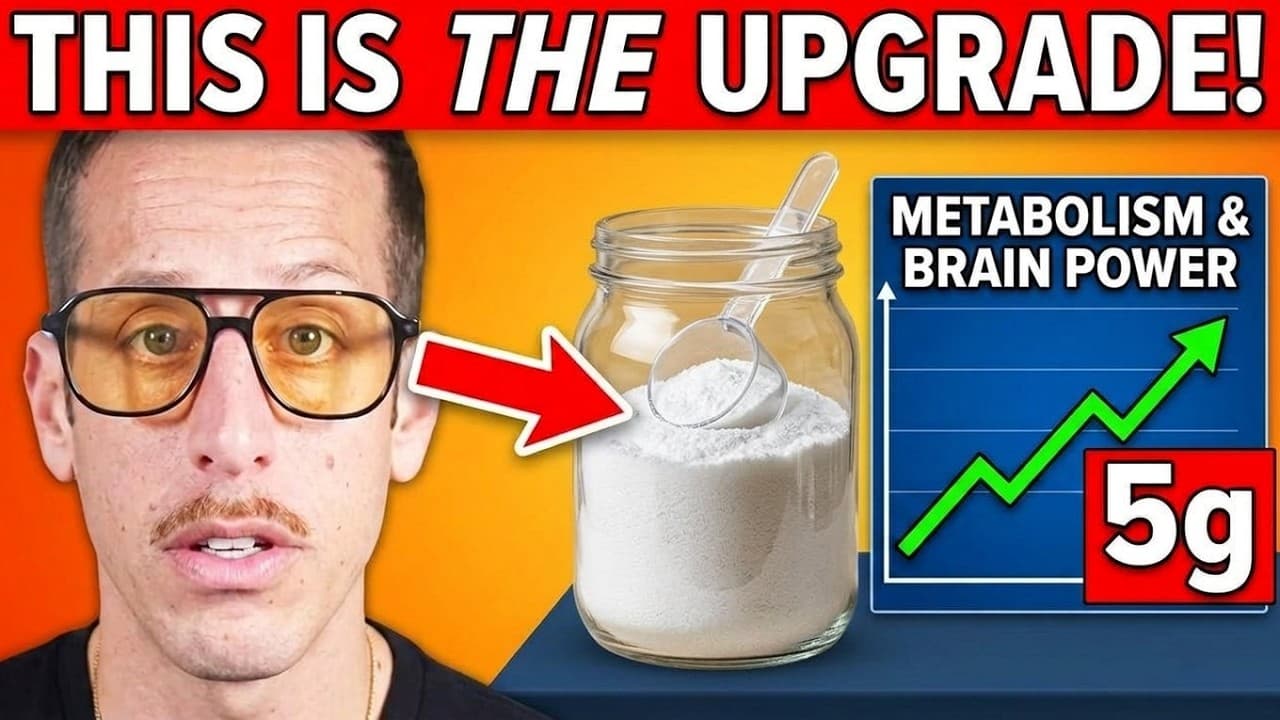
Taking 5 grams of creatine monohydrate daily can increase cellular energy reserves, support strength and lean mass, and potentially improve recovery and cognitive performance. The presented benefits for fat loss are indirect, mainly through better training and increased muscle, while many broader inflammation and health claims require careful interpretation because the presentation also promotes a specific creatine product.
Transcript
Five grams, one scoop. That's all it took to lower inflammation, shrink stubborn fat, and finally build lean muscle again. Look, I've tried every supplement under the sun. This one actually delivered. If you're tired of feeling stiff, soft, and inflamed, this is what your body's missing. Look, the supplement industry has lied to you. Most powders p... Read More
Key Insights
- Creatine is described as cellular energy support because it stores phosphate as phosphocreatine, which helps replenish ATP during periods of high demand. The presentation emphasizes that this energy system serves both muscles and the brain rather than benefiting athletes alone.
- Creatine does not directly burn body fat, according to the presentation. Its proposed fat-loss contribution comes from supporting harder training, improved recovery, greater lean mass, glucose handling, insulin sensitivity, and a metabolic environment that may make stored fat easier to use.
- Resistance training and creatine are presented as a complementary combination. The cited outcomes include increased lean mass, strength, training volume, muscle-fiber size, satellite-cell activity, glycogen storage, recovery, and protein-synthesis signaling, including benefits for older adults.
- Brain tissue stores creatine and uses it more rapidly during stress, demanding mental work, poor sleep, jet lag, hypoxia, and inflammation. The presentation associates supplementation with improvements in memory, attention, reaction time, mood, cognitive fatigue, and performance during sleep loss.
- Lower inflammation is attributed to better cellular energy availability and mitochondrial support. The presentation claims that creatine may reduce inflammatory markers, oxidative stress, and exercise-related muscle damage, while also associating energy deficiency with the activation of inflammatory pathways.
- Five grams daily is presented as the standard research-backed dose for most people. The recommended approach requires no loading phase or cycling, and the powder may be mixed with coffee, water, or electrolytes according to personal preference.
- Product quality is presented as important for purity, dissolution, absorption, and digestive comfort. The speaker recommends micronized creatine monohydrate produced from a specific German material, although these quality claims appear within a paid product promotion and discount offer.
- The presentation has a direct commercial component because the speaker endorses Myoscience Micronized Creatine Monohydrate, supplies a purchase link, and offers coupon-code discounts. Its product-specific purity, contamination, return, and gastrointestinal claims are promotional statements contained in the source.
Install to Summarize YouTube Videos and Get Transcripts
Explore YouTube Video Summarizer or Get YouTube Transcript Extractor
Questions & Answers
Q: How does creatine support cellular energy?
Creatine stores phosphate in the form of phosphocreatine, which acts as a reserve for replenishing ATP during moments of high energy demand. The presentation compares mitochondria with cellular battery packs and phosphocreatine with backup energy. This mechanism is offered as the reason creatine can support muscle performance, brain function, recovery, and resistance to cellular energy failure.
Q: Does creatine burn stubborn body fat directly?
Creatine is not presented as a direct fat burner and does not simply melt stored fat. Its proposed effect is indirect: it may help people train harder, recover faster, gain lean mass, and improve glucose handling and insulin sensitivity. The presentation argues that these changes can increase metabolic activity and create conditions that support reductions in body-fat percentage alongside resistance training.
Q: How can creatine help build muscle and strength?
Creatine increases phosphocreatine stores, which can support heavier lifting, additional training volume, and faster recovery. The presentation associates supplementation with greater lean mass, higher one-repetition maximum lifts, larger muscle fibers, increased satellite-cell activity, improved glycogen storage, and stronger protein-synthesis signaling. It also states that these effects can occur without changing a person's protein intake.
Q: Can creatine support memory and cognitive performance?
The presentation says the brain stores creatine and consumes it quickly during stress, deep thinking, poor sleep, jet lag, hypoxia, and inflammation. By increasing brain phosphocreatine, supplementation is described as supporting neuronal energy and potentially improving memory, attention, reaction time, mood, cognitive fatigue, and mental performance during sleep loss. It is also described as being studied for several neurological conditions.
Q: How might creatine affect inflammation and recovery?
Creatine is described as indirectly supporting lower inflammation by helping cells maintain adequate energy and protecting mitochondrial function. The presentation claims that energy-deficient cells activate inflammatory pathways, while greater energy availability reduces cellular stress. It associates creatine use with lower inflammatory markers, reduced oxidative stress, less exercise-related muscle damage, improved recovery, and better strength and mobility in people with inflammatory conditions.
Q: How much creatine should someone take each day?
The presentation recommends 5 grams, or one scoop, every day as the amount used in much of the research it discusses. It says no loading phase or cycling is required, with consistent daily use being the central instruction. The speaker sometimes takes two scoops during travel, heavy training, or elevated stress and separates them between morning and afternoon.
Q: When and how should creatine be taken?
Creatine can be taken in the morning by mixing one scoop into coffee, according to the speaker's routine. People who do not drink coffee can stir it into water, and electrolytes may also be added. The presentation places greater emphasis on daily consistency than on a narrow timing window, while claiming that creatine has no noticeable taste and does not break a fast.
Q: What type of creatine does the presentation recommend?
The presentation recommends micronized creatine monohydrate made with a specific German material described as highly pure, batch tested, finely micronized, and less likely to cause gastrointestinal problems. The speaker specifically promotes Myoscience Micronized Creatine Monohydrate and provides purchase discounts. These product-quality statements should be recognized as part of a commercial endorsement contained within the presentation.
Summary & Key Takeaways
-
Creatine helps replenish phosphocreatine, a stored source of phosphate that supports rapid ATP production during periods of high energy demand. The presentation describes this process as backup energy for muscle and brain cells, linking improved cellular energy availability with better exercise performance, recovery, mental sharpness, and resistance to fatigue.
-
The proposed body-composition benefits are mostly indirect. Creatine can support greater training volume, strength, recovery, and lean-mass development when paired with resistance training. More muscle may improve insulin sensitivity and metabolic rate, but the presentation explicitly acknowledges that creatine does not directly melt fat or function as a conventional fat burner.
-
The recommended routine is 5 grams, or one scoop, every day without loading or cycling. The powder can be mixed into coffee or water, with consistency presented as more important than timing. The presentation recommends micronized, highly tested creatine monohydrate but also contains a commercial endorsement and discount offer.
Read in Other Languages (beta)
Share This Summary 📚
Summarize YouTube Videos and Get Video Transcripts with 1-Click
Try YouTube Summary with ChatGPT & Claude or YouTube Transcript Generator
Explore More Summaries from Ben Azadi 📚


Summarize YouTube Videos and Get Video Transcripts with 1-Click
Try YouTube Summary with ChatGPT & Claude or YouTube Transcript Generator