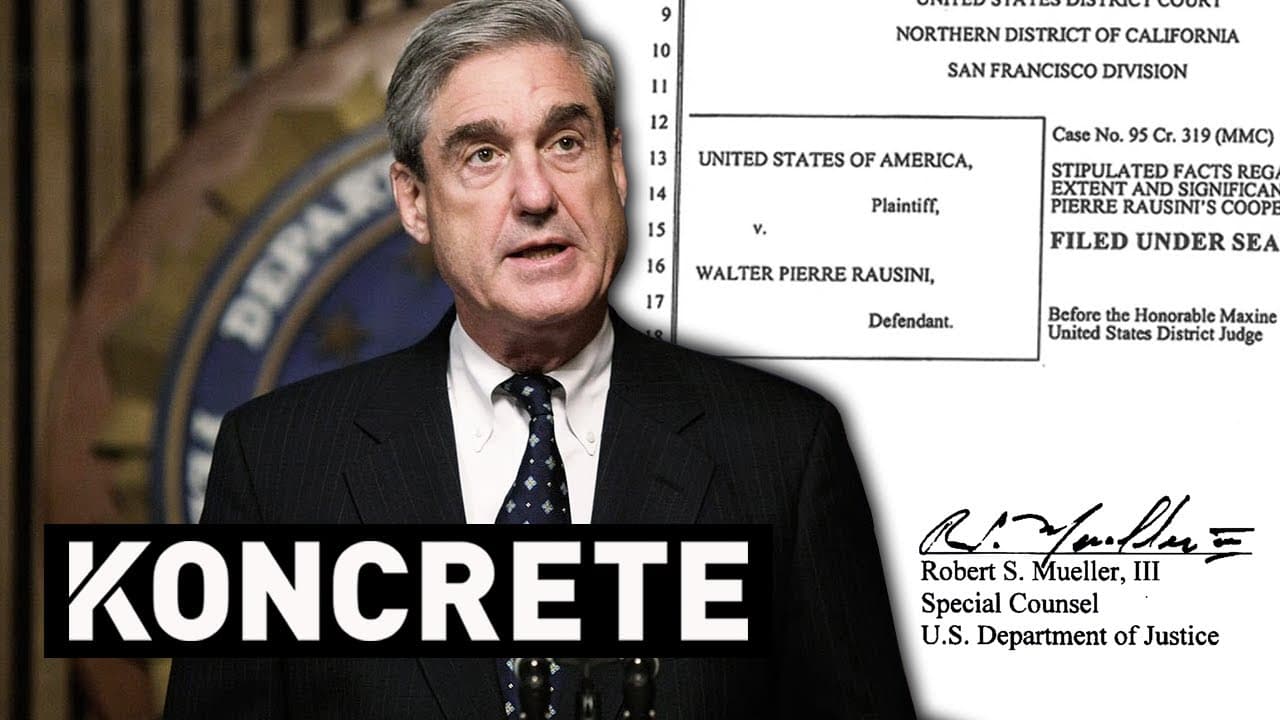
How Robert Mueller Buried the FBI’s Involvement In a Murder Conspiracy | Matthew Cox
TL;DR
An insider exposes a convoluted drug conspiracy involving police corruption and murder cover-ups.
Transcript
nason knows that Ellenberger is going is cooperating or his planning on cooperating hasn't done anything yet but he's planning on cooperating and he's gonna give up he's gonna get up Aria and several other people nascent feels really pissed off about that there's a lot of other stuff you know Ellenberger is kind of at this point just kind of a jerk... Read More
Key Insights
- ❓ The narrative highlights the complexities of loyalty and betrayal within criminal organizations, emphasizing that trust is often fleeting.
- 👨⚖️ Corruption within law enforcement significantly undermines the justice system, complicating legal proceedings and investigations.
- 😌 Many individuals involved in criminal activities often resort to self-preservation tactics, resulting in a web of lies that can hinder justice.
- 🛟 Phone records serve as crucial evidence that can unravel fabricated testimonies and establish timelines crucial for investigations.
- 🥺 The pursuit of personal gain often leads characters to make detrimental choices that ultimately place them in precarious situations.
- 🥺 The role of informants in drug investigations can lead to twisted alliances and backstabbing, complicating the legal landscape.
- 👮 The content serves as a critique of the failures in accountability when law enforcement oversteps ethical boundaries, showcasing the human cost of corruption.
Install to Summarize YouTube Videos and Get Transcripts
Explore YouTube Video Summarizer or Get YouTube Transcript Extractor
Questions & Answers
Q: What prompted Nason to call for help after finding Ellenberger dead?
Nason found Ellenberger’s body at his meth lab and, fearing the implications of calling the police due to his own illegal activities, decided to contact his associates instead to seek help in managing the situation. His immediate panic was fueled by the unnatural positioning of Ellenberger's body, which suggested foul play.
Q: How did the phone records play a crucial role in the investigation?
The phone records indicated extensive communication between Nason and his associates right after the discovery of Ellenberger’s body, contradicting their claims of not being in contact for months. These records became pivotal in establishing a timeline of events and highlighting possible collusion among the characters involved.
Q: What was the outcome for characters who initially claimed ignorance about the murders?
Several characters initially claimed they had no knowledge of the murders or their connection to Nason. However, as investigations progressed and pressure mounted, many retracted their statements or changed their narratives, leading to ultimately incriminating testimonies against each other.
Q: How did the involvement of dirty FBI agents complicate the situation?
The dirty FBI agents exploited their positions to cover up their involvement in the drug trade and murders. They manipulated testimony, coordinated with informants, and ultimately aimed to frame innocent individuals, creating a tangled mess of deception that made prosecution difficult.
Q: Why was Pete Rossini initially reluctant to cooperate with authorities?
Rossini was initially confident that his connections would secure his safety and freedom, believing he could navigate the legal landscape without implicating himself. However, as the legal circumstances intensified and his allies began to distance themselves, he came to realize that cooperation might be his only option for survival.
Q: What did Robert Mueller's involvement signify in the broader context of law enforcement?
Robert Mueller's involvement represented a potential shift in accountability within law enforcement, as he was tasked with reforming the FBI amid allegations of corruption. His actions during the case illustrated the tensions between maintaining the agency's reputation and pursuing justice against actual wrongdoing among agents.
Q: What legal strategies were employed by Nason and others to evade accountability?
Nason and other key players employed various legal strategies, including altering their narratives, obfuscating involvement, and mutually agreeing to point fingers at each other to shift blame, hoping to distance themselves from the acts of violence and drug-related activities to secure lighter sentences.
Q: What eventual fate did Rossini face after pleading guilty?
After pleading guilty to serious charges, Rossini faced a lengthy prison sentence. His cooperation with authorities regarding the conspiracies and corruption alleged against various law enforcement agents might lead to a potential reduction of his sentence, but the corruption and cover-ups by FBI agents left him in a precarious position.
Summary & Key Takeaways
-
The content details a narrative involving various characters entangled in a drug conspiracy, highlighting the manipulation and deceit present among law enforcement and criminals alike.
-
A key character, Nason, discovers his friend Ellenberger dead, leading to a series of frantic phone calls and cover-ups aimed at evading legal and personal repercussions.
-
The narrative reveals the role of corrupt FBI agents and the efforts to frame innocent parties while protecting guilty individuals, culminating in a convoluted legal battle.
Read in Other Languages (beta)
Share This Summary 📚
Summarize YouTube Videos and Get Video Transcripts with 1-Click
Try YouTube Summary with ChatGPT & Claude or YouTube Transcript Generator
Explore More Summaries from Danny Jones 📚



Summarize YouTube Videos and Get Video Transcripts with 1-Click
Try YouTube Summary with ChatGPT & Claude or YouTube Transcript Generator