What Are the Two Types of God According to Science?
TL;DR
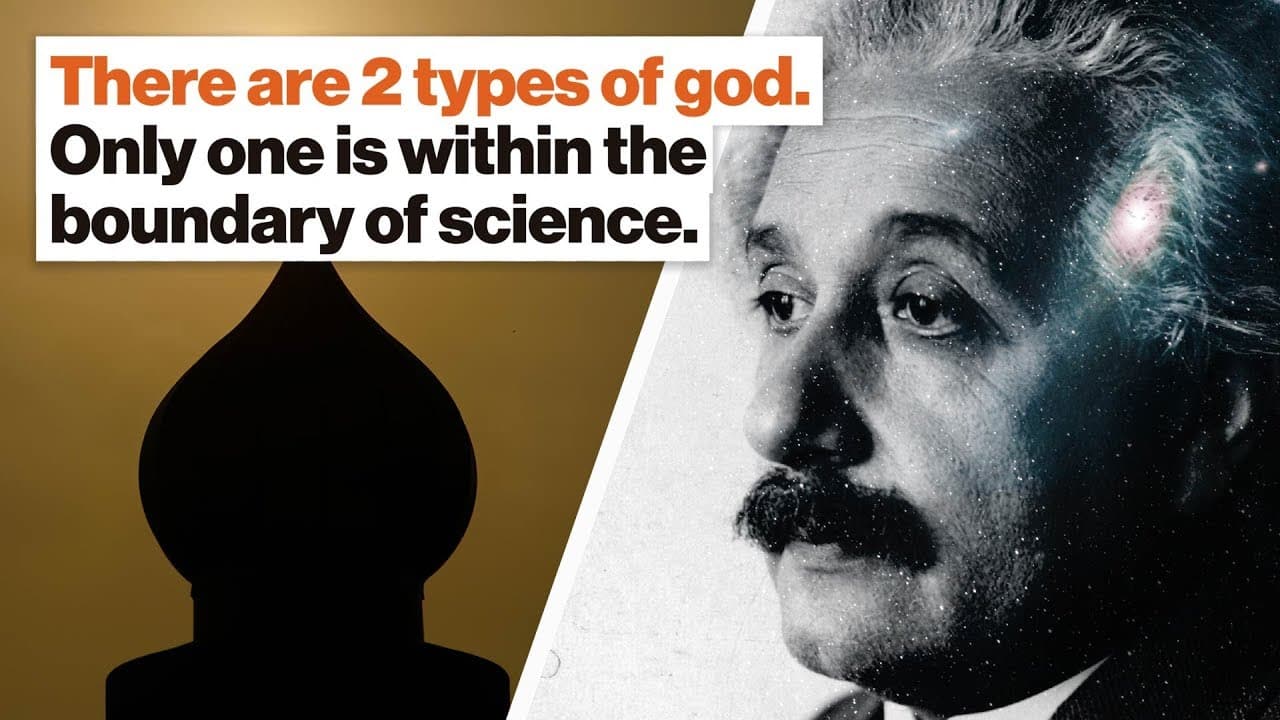
There are two types of God: the personal God, who is involved in individual lives, and the God of universal order, which reflects the elegance of the universe. Science cannot prove the existence of God because it deals with what is testable and reproducible, while God exists in the realm of faith. The distinctions between science and religion should be respected to avoid conflating ethics with natural laws.
Transcript
Well, when you talk about religion, I like to quote from Galileo. Galileo said, the purpose of science is to determine how the heavens go. The purpose of religion is to determine how to go to heaven. So in other words, science is about natural law. It's about the laws of nature. While religion is about ethics, about how to go to heaven, how to be a... Read More
Key Insights
- 👮 Science focuses on natural laws, while religion addresses ethics and spirituality.
- 🪈 Einstein identified two concepts of God: personal interventionist and universal order.
- ✋ The elegance and simplicity of the universe hint at a higher order.
- 🍂 The existence of God falls outside the realms of testability in science.
- 🫨 The Big Bang theory is akin to a detective story with clues from the past.
- 🔬 Science can explain the aftermath of events like the Big Bang but not the event itself.
- 🫡 The boundaries between science and religion should be respected to avoid conflicts.
- 🎙️ More videos with Michio Kaku:
Install to Summarize YouTube Videos and Get Transcripts
Explore YouTube Video Summarizer or Get YouTube Transcript Extractor
Questions & Answers
Q: What is the fundamental difference between science and religion according to Galileo?
Galileo believed that science focuses on natural laws, while religion deals with ethics, the afterlife, and divine favor.
Q: How did Einstein differentiate between two types of God?
Einstein distinguished between a personal God involved in human affairs and a universal God symbolizing order and elegance in the universe.
Q: Why is the existence of God considered beyond the scope of scientific inquiry?
Scientific methods rely on testable, reproducible, and falsifiable evidence, which do not apply to the concept of God that is based on faith and not observable phenomena.
Q: In what way does the study of the Big Bang resemble a detective story?
The study of the Big Bang is comparable to a detective story as scientists can only analyze clues from the past but cannot reproduce or directly test the event itself.
Summary & Key Takeaways
-
Galileo's distinction between science and religion: science for natural laws, religion for ethics and the afterlife.
-
Einstein's view on two types of God: personal and universal order.
-
The limits of scientific inquiry in proving the existence of God.
Read in Other Languages (beta)
Share This Summary 📚
Summarize YouTube Videos and Get Video Transcripts with 1-Click
Try YouTube Summary with ChatGPT & Claude or YouTube Transcript Generator
Explore More Summaries from Big Think 📚

Summarize YouTube Videos and Get Video Transcripts with 1-Click
Try YouTube Summary with ChatGPT & Claude or YouTube Transcript Generator