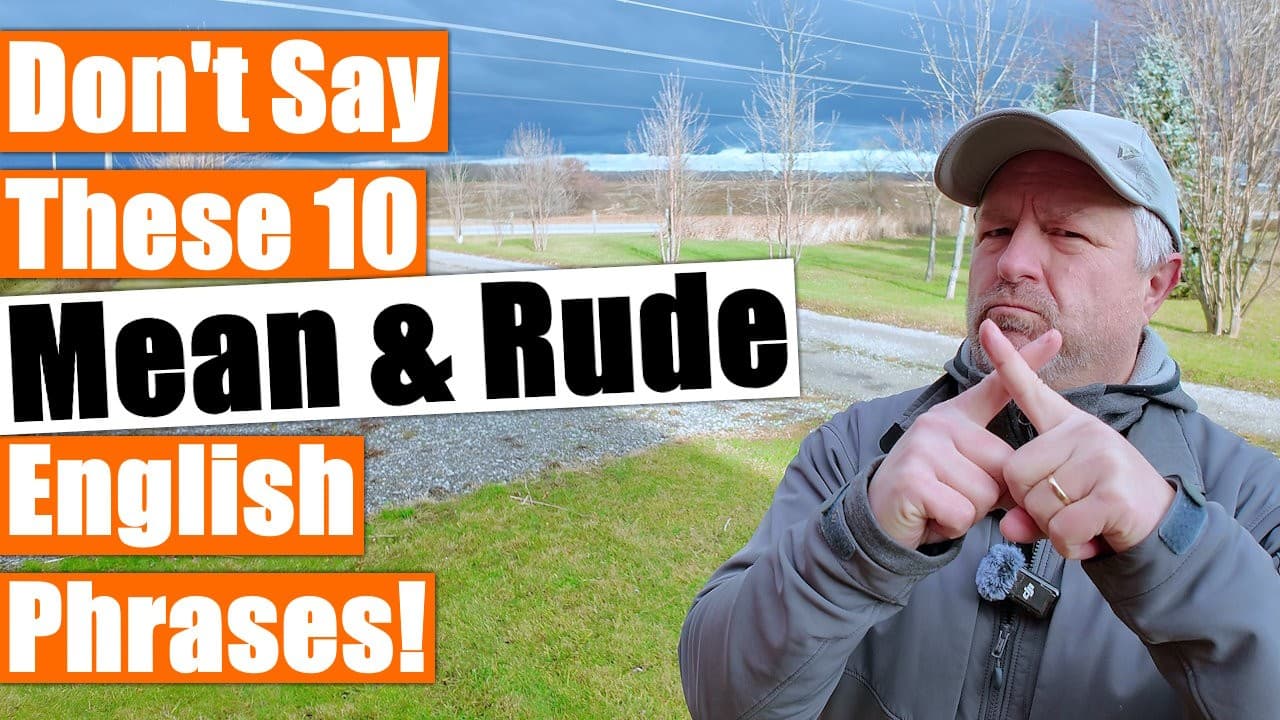
10 Mean and Rude English Phrases You Should Never Say!
TL;DR
Learn about eight mean phrases commonly used to insult or belittle others, which you should be aware of but not use.
Transcript
So, as many of you know, I work in a high school, and when you work with teenagers, sometimes you hear them say things to each other that aren't very nice. So in this English lesson, I'm going to teach you eight phrases, eight things that people say to each other that are kind of mean. You shouldn't learn these so that you could use them, but you s... Read More
Key Insights
- 💦 The lesson provides insights into mean phrases commonly used in different situations, including school, work, and everyday interactions.
- ☸️ These phrases have the potential to cause emotional harm and should be avoided when communicating with others.
- 🛀 Understanding mean phrases helps to comprehend dialogue in TV shows, movies, or real-life situations.
- 🔇 The speaker emphasizes the importance of using language that is respectful, kind, and considerate in our interactions.
- ❓ Mean phrases can be used to demean, belittle, or dismiss someone's actions, feelings, or abilities.
- 📁 While some phrases may be direct and not necessarily rude, they can still impact the recipient's emotions negatively.
- ❓ Recognizing mean phrases is essential to foster empathy and understanding towards others.
Install to Summarize YouTube Videos and Get Transcripts
Explore YouTube Video Summarizer or Get YouTube Transcript Extractor
Questions & Answers
Q: What does the phrase "I told you so" mean, and why is it considered mean?
"I told you so" is a phrase used to remind someone that their actions resulted in an undesirable outcome, emphasizing a sense of superiority. It can be mean because it unnecessarily rubs salt in the wound, making the person feel worse about their mistake.
Q: Why is the phrase "grow up" considered rude or mean?
"Grow up" is considered mean because it implies that the person is behaving immaturely and needs to act more like an adult. While some situations call for maturity, using this phrase can be hurtful and dismissive of someone's feelings or desire to have fun.
Q: What does it mean when someone is described as "good for nothing"?
Calling someone "good for nothing" implies that they lack any useful or valuable skills or qualities. It is a demeaning way to express that the person is not capable of contributing to a task or project.
Q: How is the word "whatever" used as a mean phrase?
When someone responds with "whatever," it indicates their disregard or disdain for what has been said to them. By dismissing the request or instruction, they express their discontent or defiance in a disrespectful manner.
Q: How does the word "useless" differ from "good for nothing"?
While both terms convey a lack of value or competence, "useless" specifically implies someone's absence of utility or helpfulness. It suggests that the person is incapable of fulfilling any meaningful or productive role.
Q: What is the purpose of saying "wake up" to someone?
Saying "wake up" can be a direct and sometimes rude way to tell someone to concentrate or focus on their task. It implies that the person is not performing well or is not fulfilling their responsibilities adequately.
Q: When can someone say "we don't have all day" to another person?
"We don't have all day" is used to express impatience with someone who is working slowly on a task or project with time constraints. It serves as a reminder to speed up and prioritize efficiency.
Q: Why is it impolite to say "this is disgusting" when referring to food?
Saying "this is disgusting" when referring to someone's cooking or a meal can be hurtful and disrespectful. It disregards the effort put into preparing the food and may result in hurting the person's feelings.
Summary & Key Takeaways
-
This English lesson highlights eight mean phrases often used to insult or degrade others, such as "I told you so" and "grow up."
-
The speaker emphasizes the importance of understanding these phrases for comprehension purposes, rather than encouraging their usage.
-
Topics covered include phrases like "good for nothing," "whatever," "useless," "wake up," "we don't have all day," "this is disgusting," "you snooze, you lose," and pointing out someone's bad mood.
Read in Other Languages (beta)
Share This Summary 📚
Summarize YouTube Videos and Get Video Transcripts with 1-Click
Try YouTube Summary with ChatGPT & Claude or YouTube Transcript Generator
Explore More Summaries from Learn English with Bob the Canadian 📚



Summarize YouTube Videos and Get Video Transcripts with 1-Click
Try YouTube Summary with ChatGPT & Claude or YouTube Transcript Generator