How to Build Self-Esteem by Doing the Impossible
TL;DR
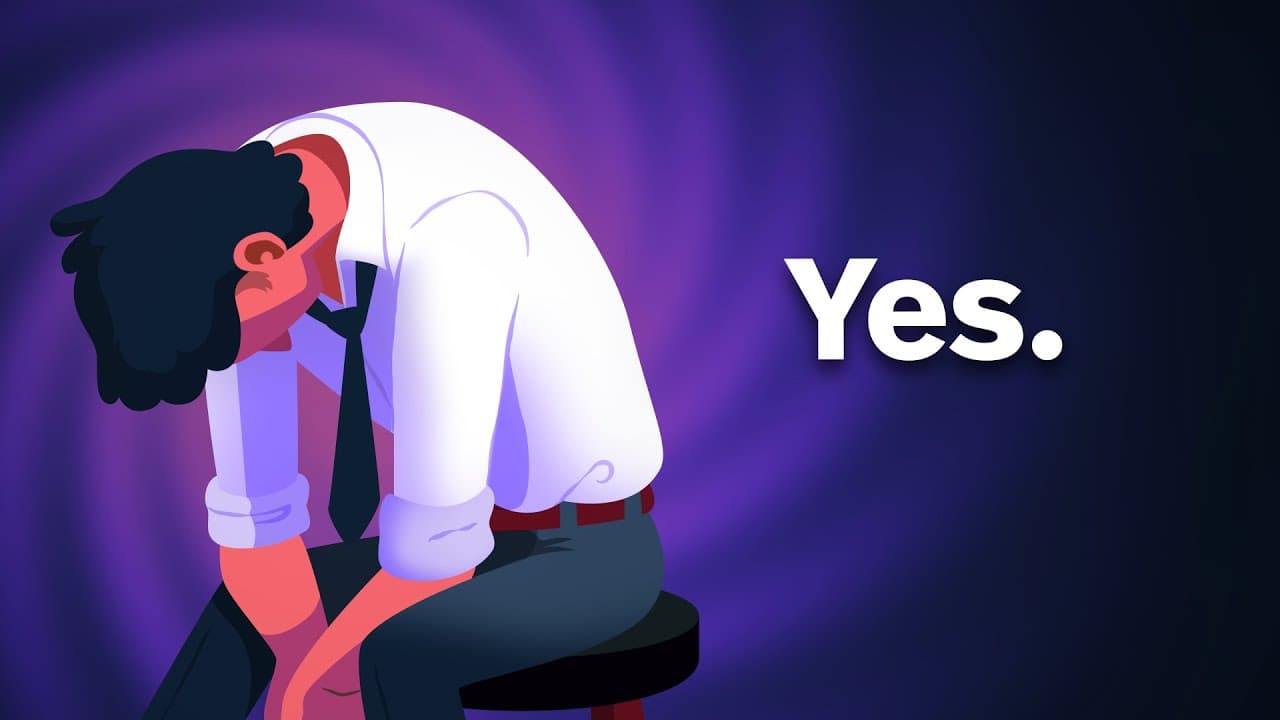
The fastest way to break out of low self-esteem is to do one thing that feels impossible for you personally, such as a single push-up if you believe you cannot do one. Identity works as a filter that shapes perception, actions and motivation, so a low sense of self becomes a self-fulfilling prophecy rather than a passing mood. Action, not reasoning, shatters that filter.
Transcript
right now your life is dictated by your sense of who you are we look around at our world and our brain automatically makes comparisons as it makes these comparisons it starts to damage our self-esteem because we are less than once we have a low self-esteem this becomes a destiny not a state of mind in this moment this actually creates our future to... Read More
Key Insights
- The human brain evolved for comparison within communities of about 200 to 300 people, which capped how many people anyone could measure themselves against. Social media removed that cap, so the basis of comparison grew, in Dr K's words, by exponents of exponents.
- Low self-esteem becomes a destiny rather than a state of mind. Once it forms, it does not merely describe how someone feels in the moment, it actively creates their future by shaping what they perceive and what they attempt.
- A sense of identity works as a filter on how the world is seen. Dr K describes sitting alone in his school library at 15, having been bullied, and interpreting a popular classmate sitting across from him as a trick rather than simple kindness.
- Rejecting compliments has a compounding cost. Turning down kind gestures, gifts and praise filters out the very information that would improve self-esteem, so the destiny of that self-esteem is to stay low rather than recover.
- Identity shapes actions, not just interpretation. Patients say things like 'I'm not graceful, therefore I can't dance,' or 'all I am is a gamer, and gamers don't eat healthy, don't get in shape, don't learn how to have healthy relationships.'
- Low self-esteem on a first date creates the outcome it fears. Someone who spends the date insisting they are not worth the other person's time turns it into a pity party, no second date follows, and the low self-esteem is reinforced.
- The nocebo effect is the mirror of the placebo effect: if a patient believes a medicine will not work for them, its efficacy actually drops. Applied to a job interview, disbelief changes the signals sent and reads as a lack of confidence.
- Faking confidence tends to fail. Unless someone is very good at it, interviewers detect that the person is faking and conclude they do not really have confidence in themselves, which is a reason not to want them.
Install to Summarize YouTube Videos and Get Transcripts
Explore YouTube Video Summarizer or Get YouTube Transcript Extractor
Questions & Answers
Q: How do you build confidence when you have low self-esteem?
Do something that is impossible for you. Dr K's prescription is to take a list of things other people can do that you cannot, and then do one of them. The point is not to fly to the top of Mount Everest or transmute lead into gold, those are impossible for everyone. It has to be a thing you personally have decided you are incapable of, because that decision is what functions as a self-fulfilling prophecy. Completing it breaks the sense of identity that constrains you, which is something you cannot hypothetically reason your way out of.
Q: Why is social media bad for self-esteem?
The brain is designed to make comparisons, and it evolved in communities of roughly 200 to 300 people, so there were only so many people available to compare yourself against. Social media expanded the mental social circle far past that limit, described in the video as exponents of exponents, even though you never interact with most of those people. The result is a stream of messages about what a 25-year-old should be: in shape, an entrepreneur starting a third business, married with kids, competing in the Olympics. The brain compares automatically and concludes you are less than, which damages self-esteem.
Q: What is the nocebo effect?
The nocebo effect is the opposite of the placebo effect. Placebo means that if you believe something will work, it does work. Nocebo is also true: if a patient believes a medicine will not work for them, the medicine actually has a lower efficacy. Dr K uses it as the model for how identity operates outside medicine. If you do not believe you will get the job, that disbelief changes the signals you send to the interviewer, you come across as less confident because you are, and the belief helps produce the outcome it predicted.
Q: Why does low self-esteem become a self-fulfilling prophecy?
Because identity does two things at once. It filters incoming information, so compliments, gifts and kind gestures get rejected as suspicious or undeserved and never register as evidence that you are worth something. It also shapes actions and motivations, so you avoid or sabotage the situations that could disprove the belief. The first-date example shows both: someone convinced they are not worthy spends the date telling their date so, the date is not attracted to that, there is no second date, and the absence of a second date is then taken as proof the original belief was correct.
Q: What does it mean to do the impossible?
It means doing one specific thing that you personally believe you are incapable of, not something impossible for all people. Dr K explicitly rules out flapping your arms to fly to the top of Mount Everest or traveling in time. The example he gives is Doug Bopst, host of the podcast Adversity Advantage and sober for 15 years, who was in jail for selling drugs and very overweight and did not believe he could do a single push-up. His turning point was doing one push-up. The value comes from the belief being broken, not from the difficulty of the act.
Q: How does identity change the way we see other people's kindness?
It reframes kindness as a threat or a trick. Dr K describes being 15, bullied, and believing he was an ugly duckling nobody would be interested in. When the most popular girl in his class sat across from him at an otherwise empty library table and started talking to him, alarm bells went off and he looked around for a hidden setup. In retrospect he thinks she was simply a genuinely nice person who saw a kid with no friends and wanted to be kind. The identity, not the event, produced the suspicion.
Q: Why do gamers say they cannot get in shape or have relationships?
Because the label becomes the boundary of what is permitted. Dr K reports patients saying that all they are is a gamer, and that gamers do not eat healthy, do not get in shape and do not learn how to have healthy relationships, they watch lol meme videos and anime IRL content. He notes he loves that culture too. The problem is not the culture but that a certain sense of identity will literally shape your actions, so the description of what gamers do turns into a rule about what this person can attempt.
Q: What is HG Coaching and what does it help with?
Healthy Gamer coaching addresses a basic problem: when you struggle with something in your life you see the problem from the inside, not the outside. A coach can look at your life from the outside, understand what is going on, and guide you to improve motivation, accomplish short-term goals and increase a sense of purpose in life, with longer-term improvements in feelings of depression and anxiety. Over 100,000 coaching sessions have been delivered, and that feedback is incorporated to keep improving the program. Note that Healthy Gamer coaches are peer coaches, not professionally trained experts, and the platform is not a substitute for professional medical care.
Summary & Key Takeaways
-
The human brain evolved to make comparisons inside communities of roughly 200 to 300 people, so there was a natural limit to the pool. Social media has expanded that mental social circle far beyond it, described as exponents of exponents, so people constantly measure themselves against 25-year-olds who are in shape, starting a third business, married with kids, or competing in the Olympics.
-
Once low self-esteem sets in, it stops being a state of mind and becomes a destiny that creates the future. Identity acts as a filter on incoming information: kind gestures, gifts and compliments get treated as suspicious or undeserved and are rejected, which screens out exactly the information that would raise self-esteem and keeps it low.
-
Identity also shapes actions and motivations, producing self-fulfilling prophecies like the nocebo effect, where disbelief in a medicine lowers its efficacy. The way out is to do something impossible for you specifically, not impossible for all people. Doug Bopst, sober for 15 years and host of the podcast Adversity Advantage, turned his life around starting from one push-up in jail.
Read in Other Languages (beta)
Share This Summary 📚
Summarize YouTube Videos and Get Video Transcripts with 1-Click
Try YouTube Summary with ChatGPT & Claude or YouTube Transcript Generator
Explore More Summaries from HealthyGamerGG 📚
Summarize YouTube Videos and Get Video Transcripts with 1-Click
Try YouTube Summary with ChatGPT & Claude or YouTube Transcript Generator