How Do David Sacks, Larry Summers, and Ezra Klein Assess Trump’s Tariffs?
TL;DR
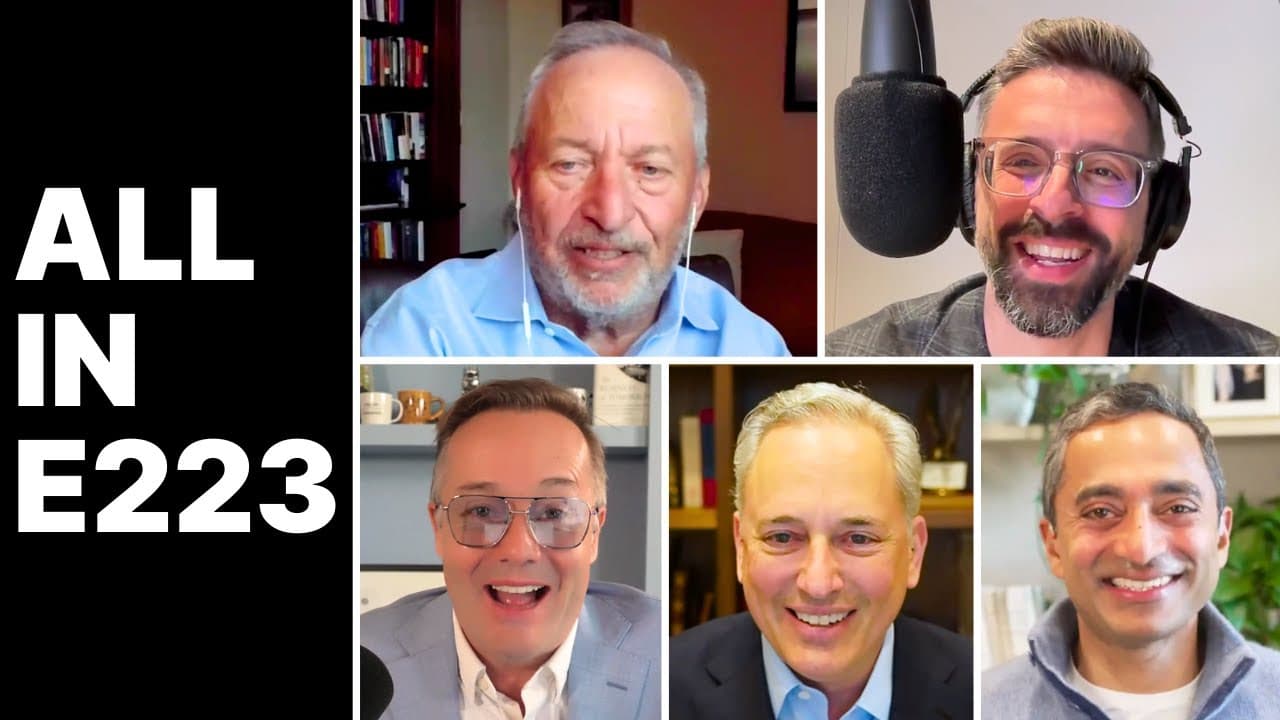
Trump’s tariffs could reshape global trade by creating negotiating leverage, but the debate warns that they also risk economic damage, market volatility, and strained alliances. The policy raised China’s tariff rate to 125%, paused reciprocal tariffs on other countries for 90 days, and retained a 10% across-the-board tariff. Read on to compare David Sacks’s strategic case with Larry Summers’s and Ezra Klein’s concerns.
Transcript
Looking forward to our thing in a few weeks. Yeah. I don't know if I'll end up being there, but I'm hoping to. I'm hoping to. It's been What do you guys You guys have like a liberal cuddle party or what are you doing? Yeah. Yeah. Larry Larry takes a bunch of MDMA and we all sort of go into the the corner and hang out together. God, that sounds incr... Read More
Key Insights
- Trump's tariffs target China with a 125% increase, while pausing tariffs for other countries for 90 days.
- Markets reacted with volatility, showing both significant selloffs and recoveries.
- Larry Summers criticizes the tariffs as a blunt tool with potentially negative economic impacts.
- David Sacks argues that the tariffs establish U.S. leverage in trade negotiations.
- Ezra Klein questions the clarity and consistency of Trump's tariff strategy.
- The video discusses the historical context of China's entry into the WTO and its effects on U.S. manufacturing.
- Chamath Palihapitiya emphasizes the need for U.S. resilience in critical industries like AI and energy.
- The debate touches on the broader implications of tariffs on global alliances and economic stability.
Install to Summarize YouTube Videos and Get Transcripts
Explore YouTube Video Summarizer or Get YouTube Transcript Extractor
Questions & Answers
Q: How do tariffs impact global trade dynamics?
Tariffs can give the United States leverage in trade negotiations, but they can also disrupt supply chains, strain alliances, and increase economic uncertainty. The debate contrasts David Sacks’s view of tariffs as strategic leverage with Larry Summers’s warning that they are a sledgehammer applied to the sensitive machinery of the global economy.
Q: What changes did Trump make to his tariff policy?
Trump raised tariffs against China to 125% while pausing reciprocal tariffs on other countries for 90 days. Larry Summers noted that a 10% across-the-board tariff, structural tariffs on steel and automobiles, and threats involving pharmaceuticals still remained.
Q: How did financial markets react to Trump’s tariff announcements?
Markets rose roughly 10% after Trump announced the pause, including a 9.5% recovery that ranked as the third-largest rebound cited in the discussion. By the following day, the S&P was down 5% and about 9% below its pre-Liberation Day level of 5,700.
Q: Why does Larry Summers consider the tariff policy dangerous?
Summers describes the policy as using a sledgehammer on the sensitive machinery of the global economy. He estimates conservatively that the policies removed $6 trillion from the stock market and stresses that stock prices do not capture additional harm to workers and consumers.
Q: Why does David Sacks defend Trump’s tariffs?
David Sacks argues that the tariffs establish leverage for the United States in trade negotiations. His position is that pressure on trading partners, particularly China, can help address trade imbalances and dependence on foreign supply chains.
Q: What concern does Ezra Klein raise about Trump’s tariff strategy?
Ezra Klein questions whether the tariff policy has clear objectives and a consistent strategy. His concern is that an unpredictable approach can create disruption without showing how individual tariff actions advance long-term economic and geopolitical goals.
Q: What are the arguments about China’s entry into the WTO?
Supporters say China’s WTO entry opened markets for U.S. exports and brought China into the global trade system. Critics argue that it contributed to lost U.S. manufacturing jobs, trade deficits, and excessive dependence on Chinese supply chains.
Q: Which industries does Chamath Palihapitiya identify as critical to U.S. resilience?
Chamath Palihapitiya identifies technology and AI, energy, critical materials and rare earths, and pharmaceuticals as four priority areas. He argues that strengthening domestic capacity in these industries would reduce dependence on foreign supply chains and improve economic and national resilience.
Summary & Key Takeaways
-
The video features a debate on Trump's tariff policy, particularly its impact on China and global trade. Larry Summers critiques the approach as potentially harmful to the U.S. economy, while David Sacks defends it as a strategic move to gain leverage in trade negotiations. Ezra Klein raises concerns about the lack of clear objectives and consistency in the policy.
-
The discussion includes the historical context of China's entry into the WTO, with differing views on its impact on U.S. manufacturing and trade deficits. Chamath Palihapitiya highlights the importance of building U.S. resilience in critical industries like AI and energy, amid concerns about global supply chain dependencies.
-
The conversation also explores the future of the Democratic Party and the need for reform in government processes to achieve strategic goals. The participants debate whether the current approach to tariffs and trade aligns with long-term economic and geopolitical objectives, amid concerns about market volatility and potential recession risks.
Read in Other Languages (beta)
Share This Summary 📚
Summarize YouTube Videos and Get Video Transcripts with 1-Click
Try YouTube Summary with ChatGPT & Claude or YouTube Transcript Generator
Explore More Summaries from All-In Podcast 📚



Summarize YouTube Videos and Get Video Transcripts with 1-Click
Try YouTube Summary with ChatGPT & Claude or YouTube Transcript Generator