How The Channel Tunnel Works
TL;DR
Exploring the Channel Tunnel's engineering challenges and achievements.
Transcript
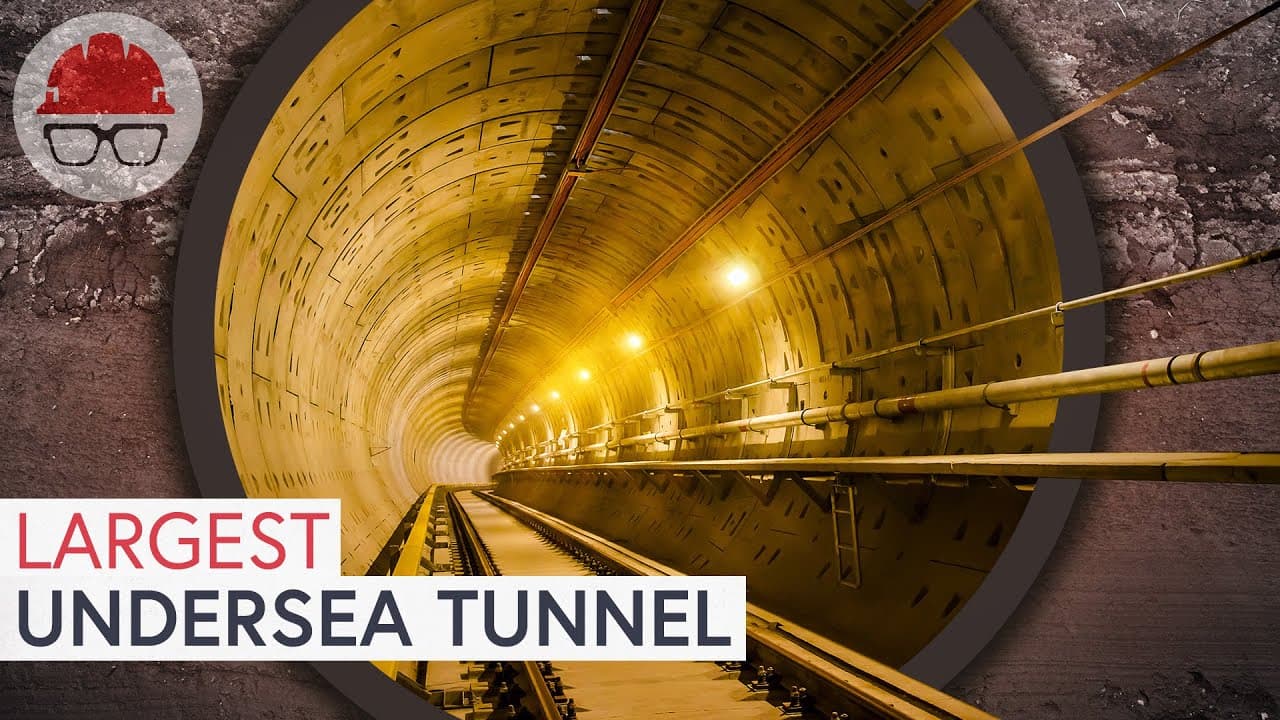
2024 marks thirty years since the opening of the channel tunnel, or chunnel, or as they say in Calais, Le tunnel sous la Manche. This underground/undersea railroad tunnel connects England with France, crossing the narrowest, but still not that narrow, section of the English Channel. The tunnel allows passengers (and, in many cases, their cars, ... Read More
Key Insights
- The Channel Tunnel, opened in 1994, connects England and France, allowing quick, efficient travel across the English Channel.
- Initially proposed in the 1800s, the Channel Tunnel faced numerous failed attempts before construction began in the 1980s.
- The tunnel comprises three separate tunnels: two for rail traffic and one service tunnel, ensuring safety and maintenance access.
- Tunnel Boring Machines (TBMs) played a crucial role, with 11 machines used to tackle the complex geology of the Channel.
- The project faced significant challenges, including water pressure, geological instability, and financial pressures, leading to budget overruns.
- The service tunnel was pivotal in guiding the main tunnels' construction, providing a pilot for geological exploration.
- Ventilation and cooling systems were critical to manage air pressure, heat, and passenger comfort within the tunnels.
- Despite being a remarkable engineering feat, the Channel Tunnel's financial returns have been less lucrative than initially predicted.
Install to Summarize YouTube Videos and Get Transcripts
Explore YouTube Video Summarizer or Get YouTube Transcript Extractor
Questions & Answers
Q: What was the primary purpose of the Channel Tunnel?
The primary purpose of the Channel Tunnel was to create a permanent, efficient rail link between England and France, facilitating quick and convenient travel across the English Channel. It aimed to enhance connectivity between the two countries, allowing passengers and freight to move seamlessly between the UK and mainland Europe.
Q: What were some of the main engineering challenges faced during the tunnel's construction?
The construction of the Channel Tunnel faced numerous engineering challenges, including complex geological conditions, water pressure, and the need for precise alignment. Navigating the marly chalk layer required advanced Tunnel Boring Machines (TBMs) and innovative solutions for ventilation and cooling. Financial pressures and budget overruns added to the complexity of the project.
Q: How did the service tunnel contribute to the tunnel's construction?
The service tunnel played a crucial role in the Channel Tunnel's construction by acting as a pilot for the main tunnels. It allowed engineers to explore geological conditions with less risk, ensuring proper alignment and guidance. The service tunnel also provided access for maintenance and served as an emergency evacuation route, enhancing the overall safety and functionality of the tunnel.
Q: What role did Tunnel Boring Machines (TBMs) play in constructing the Channel Tunnel?
Tunnel Boring Machines (TBMs) were essential in constructing the Channel Tunnel, enabling efficient excavation through complex geological formations. A total of 11 TBMs were used, each equipped to handle different soil and rock conditions. These machines combined multiple tunneling tasks, supporting tunnel walls, and maintaining pressure balance, ensuring safe and precise drilling under the English Channel.
Q: Why was the Channel Tunnel considered a financial challenge?
The Channel Tunnel was considered a financial challenge due to its significant budget overruns and high construction costs. Initially proposed as the most expensive construction project in history, it faced financial pressures from private investors and banks. Although it eventually turned a profit, the returns were less lucrative than anticipated, partly due to competition from other transportation methods like discount airlines and ferries.
Q: How did engineers address the 'piston effect' in the tunnel?
Engineers addressed the 'piston effect' in the Channel Tunnel by implementing a series of piston relief ducts. These ducts allowed for controlled air passage between the two main rail tunnels, reducing air pressure buildup in front of the trains. This solution minimized drag, improved passenger comfort, and ensured efficient ventilation, preventing rapid fluctuations in air pressure that could affect train operations.
Q: What safety measures are in place within the Channel Tunnel?
The Channel Tunnel incorporates several safety measures, including a service tunnel that provides an emergency evacuation route and cross passages every 375 meters for escape. The air pressure in the service tunnel is higher than in the rail tunnels to prevent smoke intrusion. Special vehicles, known as the Service Tunnel Transport System (STTS), facilitate staff movement and passenger evacuation if necessary.
Q: What impact has the Channel Tunnel had on transportation between the UK and France?
The Channel Tunnel has significantly impacted transportation between the UK and France by providing a fast, efficient rail link that enhances connectivity. It allows passengers and freight to move seamlessly between the two countries, integrating with broader European rail networks. Despite competition from airlines and ferries, the tunnel remains a vital infrastructure component, offering a unique travel experience and supporting economic and cultural exchange.
Summary & Key Takeaways
-
The Channel Tunnel, opened in 1994, is a monumental engineering project connecting England and France. It consists of three tunnels, allowing efficient rail travel under the English Channel. Despite facing significant geological and financial challenges, it remains a remarkable feat of modern engineering.
-
The tunnel's construction involved advanced Tunnel Boring Machines (TBMs) to navigate complex geology. A service tunnel played a vital role in guiding the main tunnels, ensuring alignment and safety. The project required innovative solutions for ventilation, cooling, and pressure management.
-
Privately funded, the Channel Tunnel faced budget overruns and financial challenges but eventually turned a profit. It remains a significant achievement in civil engineering, offering insights into large-scale infrastructure projects and their impact on society and transportation.
Read in Other Languages (beta)
Share This Summary 📚
Summarize YouTube Videos and Get Video Transcripts with 1-Click
Try YouTube Summary with ChatGPT & Claude or YouTube Transcript Generator
Explore More Summaries from Practical Engineering 📚




Summarize YouTube Videos and Get Video Transcripts with 1-Click
Try YouTube Summary with ChatGPT & Claude or YouTube Transcript Generator