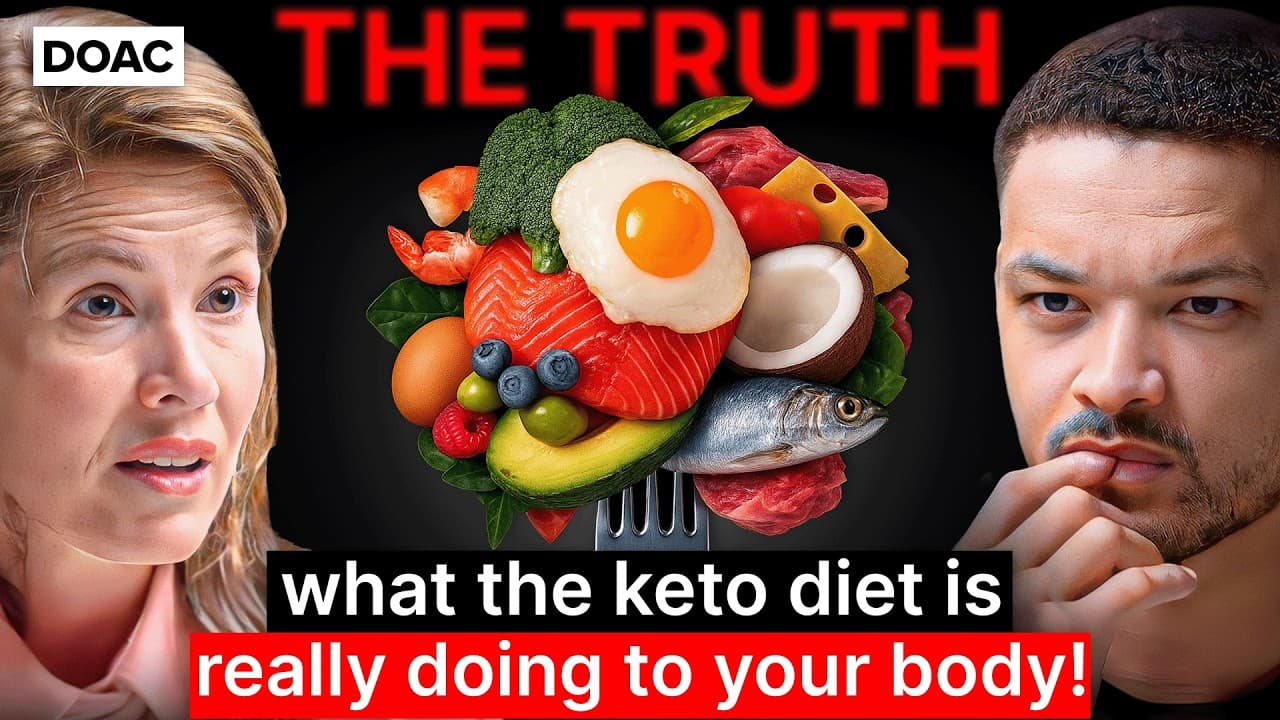
Insulin Doctor Dr. Annette Bosworth: Can Keto Reverse Insulin Resistance and Prevent Brain Decline and Dementia?
TL;DR
Dr. Annette Bosworth says reversing high insulin starts with making ketones regularly: stop eating late at night, keep carbohydrates low, and increase fat intake. She links excess insulin with high blood pressure, brain fog, depression, Alzheimer’s, and Parkinson’s, and presents a 12-step “keto for life” continuum plus a 3-day sardine challenge. Read on for her practical ketosis strategies and warning signs of insulin resistance.
Transcript
Welcome to the sardine challenge. So, the only thing on the menu for the next 3 days is sardines. I challenge you to try and eat three of those cans in a day because that's a hell of a tool to help you get into a ketogenic state. And when you're in a ketogenic state, it helps burn fat, muscle mass gets higher, preserved. I've seen patients that hav... Read More
Key Insights
- Insulin resistance is a major contributor to chronic diseases like high blood pressure, cancer, and cognitive decline.
- A ketogenic diet, characterized by low carbohydrate and high fat intake, can help reverse insulin resistance.
- High insulin levels can lead to the accumulation of 'trash' in the brain, contributing to conditions like Alzheimer's and Parkinson's.
- The 'Dr. Boz Ratio' is a method to measure the balance between glucose and ketones, indicating the body's state of ketosis and healing potential.
- Eating late at night spikes insulin levels, contributing to weight gain and metabolic issues.
- Consuming sardines is suggested as a simple, nutrient-dense way to enter a ketogenic state quickly.
- Methylene blue and creatine are recommended supplements for enhancing brain health and mitochondrial function.
- Exogenous ketones can be used to jumpstart ketosis, especially in individuals with high insulin resistance.
Install to Summarize YouTube Videos and Get Transcripts
Explore YouTube Video Summarizer or Get YouTube Transcript Extractor
Questions & Answers
Q: How can you reverse insulin resistance and improve brain health?
Dr. Annette Bosworth recommends making ketones regularly through a ketogenic diet to reverse a high-insulin state. Her starting steps are to stop eating late at night, keep carbohydrates low, and increase dietary fat with foods such as eggs, beef, brisket, ribs, and pork belly.
Q: What signs may indicate high insulin levels or insulin resistance?
The listed signs include increased abdominal girth, skin tags, hair loss on the toes, and dark, velvety patches of skin. Dr. Bosworth also describes extra weight around the middle and brain fog as signals that the body is producing more metabolic “trash” than it clears.
Q: How does excess insulin affect the brain?
Dr. Bosworth says excess insulin contributes to debris or “trash” accumulating in the brain. She links this state with brain fog, depression, Alzheimer’s, Parkinson’s, and declining brain performance.
Q: Why does Dr. Bosworth recommend avoiding late-night eating?
She says eating late stimulates excessive insulin production. Her first practical step for reversing a high-insulin state is therefore to stop eating so late at night.
Q: What is the 3-day sardine challenge?
For three days, sardines are the only food on the menu, with a challenge to eat three cans per day. Dr. Bosworth presents this as a tool for entering a ketogenic state, which she says supports fat burning, muscle preservation, concentration, energy, and brain performance.
Q: What is the Dr. Boz Ratio?
The Dr. Boz Ratio assesses the balance between blood glucose and ketones to indicate ketosis and healing potential. A lower ratio represents a deeper ketogenic state associated with better metabolic health and reduced inflammation.
Q: Can a ketogenic diet be sustainable long term?
Dr. Bosworth describes her approach as a consistent “keto for life” continuum rather than a temporary intervention. She says she has followed a ketogenic diet for 10 years and organizes the approach into 12 steps.
Q: What role can exogenous ketones play in ketosis?
Exogenous ketones can provide ketones directly and help jump-start ketosis, especially for people struggling with high insulin resistance. They may supply energy while the body transitions toward burning fat for fuel.
Q: What does Dr. Annette Bosworth mean by “medicine 2.0”?
Dr. Bosworth describes medicine 2.0 as managing chronic disease by matching symptoms with prescriptions, monitoring side effects, and refilling medications. She says this approach can support the body without fixing the underlying chemistry problems.
Q: What early warning signs does Dr. Bosworth associate with declining brain performance?
Dr. Bosworth points to reduced focus, brain fog, loss of joy, and a brain that does not want to engage as warning signs. She also connects poor brain function with arthritis, weight around the middle, and high blood pressure.
Q: What kind of doctor is Dr. Annette Bosworth?
Dr. Annette Bosworth is an internist who specializes in complex medical problems and long-term chronic disease management. She says internists care for difficult cases, manage prescriptions, and monitor treatment side effects over time.
Summary & Key Takeaways
-
Dr. Annette Bosworth discusses the link between insulin resistance and chronic diseases, emphasizing the role of a ketogenic diet in reversing these conditions. She explains that high insulin levels contribute to brain 'trash' and cognitive decline, while a keto diet helps reduce inflammation and improve brain function.
-
The video covers practical dietary changes, such as reducing carbohydrate intake and increasing healthy fats, to achieve ketosis. Dr. Bosworth also highlights the importance of meal timing, recommending earlier eating to prevent insulin spikes.
-
Supplements like methylene blue and creatine are suggested for brain health, and exogenous ketones are recommended for those struggling with insulin resistance. The video also introduces the 'Dr. Boz Ratio' for measuring ketosis and healing potential.
Read in Other Languages (beta)
Share This Summary 📚
Summarize YouTube Videos and Get Video Transcripts with 1-Click
Try YouTube Summary with ChatGPT & Claude or YouTube Transcript Generator
Explore More Summaries from The Diary Of A CEO 📚


Summarize YouTube Videos and Get Video Transcripts with 1-Click
Try YouTube Summary with ChatGPT & Claude or YouTube Transcript Generator