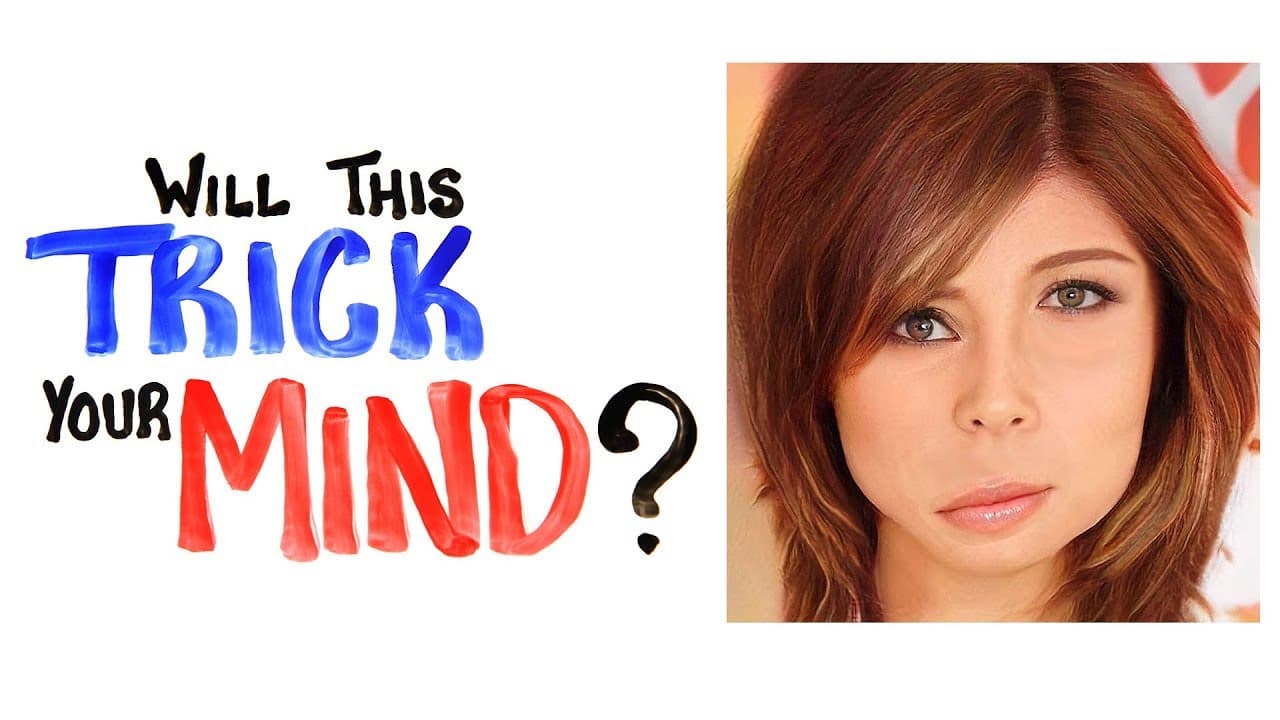
Will This Trick Your Mind? (Artificial Intelligence TEST)
TL;DR
AI can trick the mind with highly believable faces, paintings, music, videos, and synthetic voices, although clues such as a flawed signature can reveal the deception. The examples include an AI painting auctioned for $432,500, music composed by Emily Howell, and a deepfake modeled from over 14 hours of Barack Obama footage. Read on to see how each illusion was made and which test examples were fake.
Transcript
This episode is supported by SimpliSafe. Which of these three faces do you think is the oldest? A, B, or C? The answer is actually none of them, because none of these people were ever born. These faces were all generated by artificial intelligence. Now, thinking about artificial intelligence, look carefully at these two paintings. Which of these do... Read More
Key Insights
- 😀 AI-generated faces, music, and videos can be incredibly realistic, but they still have limitations and can sometimes be identified as fake.
- 🔁 AI systems continuously improve through feedback loops, evolving their abilities to create more convincing content.
- 🌥️ Larger libraries of data can enhance the performance of AI systems when generating content.
- 🤨 Deepfake videos have raised concerns about the potential for misinformation and the need for effective detection methods.
- 😒 AI has the potential to revolutionize various creative fields, but ethical considerations and responsible use are important.
- 👪 SimpliSafe, a home security system, sponsored the video, highlighting the increasing reliance on technology in our lives.
- 😄 SimpliSafe's design, ease of use, and features like distinguishing between pets and intruders make it an attractive option for home security.
Install to Summarize YouTube Videos and Get Transcripts
Explore YouTube Video Summarizer or Get YouTube Transcript Extractor
Questions & Answers
Q: Can artificial intelligence trick your mind with realistic content?
Yes. The tests show believable AI-generated faces, a painting, an original musical composition, a deepfake video, and a synthetic caller, although defects such as a flawed signature can expose the illusion.
Q: How are realistic AI-generated images created?
A system is fed hundreds of images to learn from and then split into two systems. One creates a convincing image while the other tries to identify the fake, producing a feedback loop in which both systems improve.
Q: What is a generative adversarial network?
It is the two-system method used in the fruit-image example. System 1 tries to create convincing apples, while system 2 determines which apple images are fake; each improves when it fails.
Q: Which painting in the AI test was created by artificial intelligence?
The transcript indicates that the AI-created painting could be identified by a problem with its signature. Despite that flaw, someone bought the painting at auction for $432,500.
Q: Which musical composition was generated by AI?
Composition A was generated by Emily Howell, a machine learning system created in the 90's. It learned from a library of music to produce original pieces, while composition B was by Johann Sebastian Bach.
Q: How was the Barack Obama deepfake created?
Video B was the deepfake. Using over 14 hours of footage from Barack Obama's weekly addresses, neural network AI modeled the shape of his mouth and paired it with audio from one of his previous addresses.
Q: Can AI generate convincing synthetic audio?
Yes. In the phone-call test, Voice B, the caller asking about the business's opening hours, was fake, demonstrating that synthetic speech could be presented as one side of an ordinary conversation.
Q: Why does having a larger content library help machine learning systems?
A larger music library gives machine learning networks more data to learn from. The same principle applies to video, and the huge amount of video uploaded online has helped neural networks create convincing fake videos.
Summary & Key Takeaways
-
AI-generated faces, like the ones shown, are created using generative adversarial networks that continuously improve their ability to create believable images.
-
AI systems, like Emily Howell, can compose original music by learning from a library of existing music.
-
Deepfake videos, such as the one featuring Barack Obama, are created using neural networks that model facial movements and use audio from previous speeches.
-
AI can also generate synthetic audio, as shown in the fake phone call example.
Read in Other Languages (beta)
Share This Summary 📚
Summarize YouTube Videos and Get Video Transcripts with 1-Click
Try YouTube Summary with ChatGPT & Claude or YouTube Transcript Generator
Explore More Summaries from AsapSCIENCE 📚


Summarize YouTube Videos and Get Video Transcripts with 1-Click
Try YouTube Summary with ChatGPT & Claude or YouTube Transcript Generator