What Are the Key Points in the Israel-Palestine Debate?
TL;DR
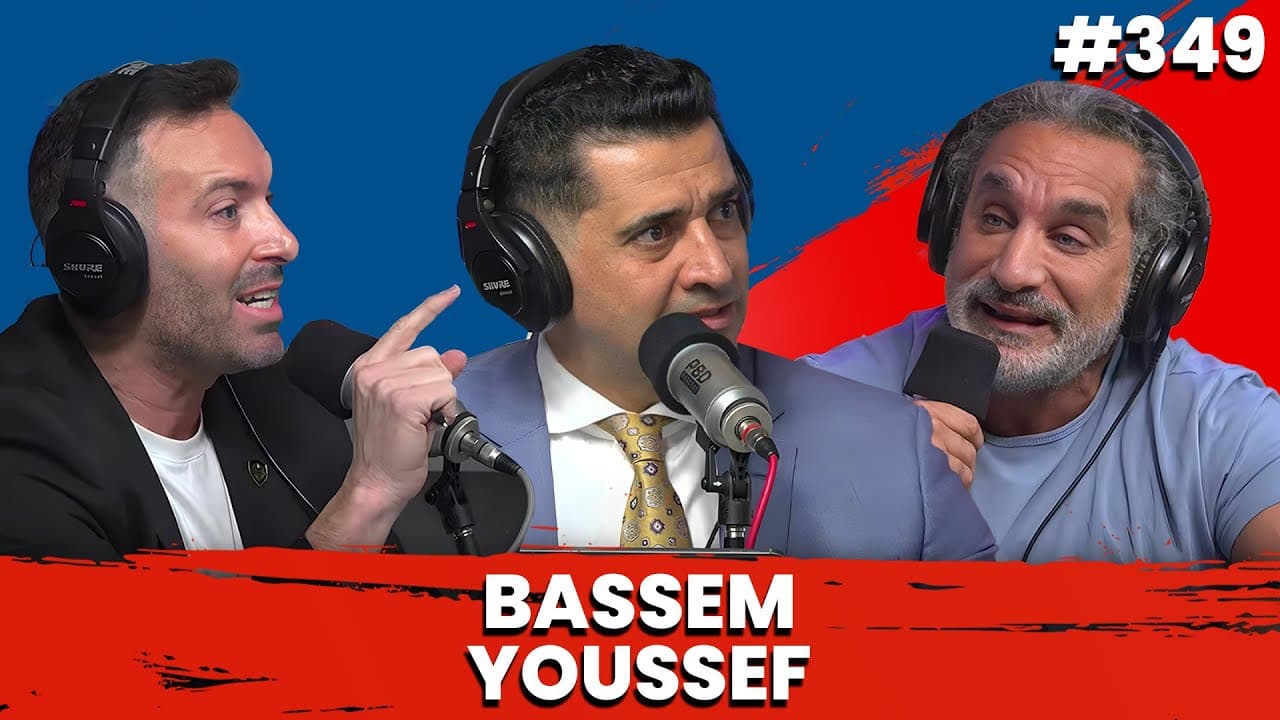
The debate explores the complexities of the Israeli-Palestinian conflict, emphasizing the role of socioeconomic factors, the transition of comedian Bassam Youssef from medicine to comedy, and the significance of humor in political discourse. It highlights the challenges and perceptions surrounding Israel and Hamas while underscoring the need for nuanced discussions about these sensitive issues.
Transcript
seconds did you ever think you would make it I feel I'm so I tet Victory I know this life for me why would you bet on Goliath when we got bet David value taming giving values this world of entrepreneurs we get no value to ha run homie look what I become I'm I'm the one so uh folks we're learning uh different languages today uh uh from a very uh ren... Read More
Key Insights
- 😑 Humor acts as a critical vehicle for expressing complex political ideas and encouraging dialogue.
- ✊ Bassam Youssef’s transition from medicine to comedy illustrates the transformative power of personal experiences in shaping a public voice.
- ✌️ Understanding the historical context is essential for comprehending the ongoing Israeli-Palestinian conflict and negotiating peace.
- 🧑🏭 Socioeconomic factors significantly influence the dynamics of conflict and can serve as a deterrent to radicalization if addressed effectively.
- ❓ Criticism of state policies should not be conflated with antisemitism; distinguishing between the two is crucial for constructive discourse.
- 🤑 There exists a rich tapestry of cultural experiences within the Middle East that influences perceptions of governance and conflict.
- 🧍 Political representation and equitable dialogues are vital for reconciliation in long-standing conflicts.
- 🎙️ More videos with Bassem Youssef:
Install to Summarize YouTube Videos and Get Transcripts
Explore YouTube Video Summarizer or Get YouTube Transcript Extractor
Questions & Answers
Q: What inspired Bassam Youssef to transition from being a heart surgeon to a comedian?
Bassam Youssef was inspired to pursue comedy after witnessing the political changes during the Arab Spring in 2011, where he started creating satirical content that resonated with many. His desire to communicate complex ideas through humor was influenced by the political climate and his admiration for comedians like Jon Stewart.
Q: How does Bassam view the impact of humor on political discourse?
Bassam believes that humor serves as a powerful tool in political discourse, allowing people to confront uncomfortable truths and encourage deeper thinking. He emphasizes that while some jokes may seem trivial, they can convey significant commentary on societal issues when used thoughtfully.
Q: What does Bassam think about the role of socioeconomic factors in the Israeli-Palestinian conflict?
He argues that socioeconomic factors play a crucial role in perpetuating the conflict, claiming that poverty and lack of opportunities can lead to radicalization. Bassam emphasizes the need for investment in sustainable economies and education as a way to foster peace.
Q: How does Bassam respond to accusations of anti-Semitism in discussions about Israel?
Bassam asserts that critiquing Israel's policies does not equate to anti-Semitism; he stresses the importance of distinguishing between criticism of a state and prejudice against a religion or ethnicity. He believes that open dialogue is essential for progress.
Q: What parallels does the dialogue draw between different cultures in the Middle East?
The conversation highlights the varying experiences within Middle Eastern societies, focusing on the differences in governance, economic stability, and cultural expressions of humor. Bassam points out that solutions often require an understanding of these unique contexts.
Q: What are some of the political conditions Bassam believes hinder peace in the region?
Bassam identifies the lack of genuine political representation, ongoing military actions, and historical grievances as key obstacles to peace. He advocates for a mutual recognition of rights and historical claims as vital for reconciliation.
Q: How does Bassam's background as a medical professional influence his comedic style?
His medical background informs his comedic storytelling, allowing him to incorporate narratives from his life experiences and cultural observations, thus creating a unique blend of humor that resonates with diverse audiences.
Q: What is Bassam’s stance on the future of Palestine and Israel?
He expresses skepticism about the current trajectory but calls for solutions based on justice and equality. Bassam emphasizes the need for dialogues that address the historical context and accept diverse narratives to move forward.
Summary & Key Takeaways
-
The content features a dialogue between two individuals discussing the complexities of the Israeli-Palestinian conflict, focusing on real-time implications and historical contexts.
-
The conversation shifts to the comedian Bassam Youssef's transition from medicine to comedy, highlighting his experiences and the challenges faced in a politically charged environment.
-
Key discussions include the role of socioeconomic factors in conflict, the importance of humor, and the contentious views surrounding Israel and Hamas.
Read in Other Languages (beta)
Share This Summary 📚
Summarize YouTube Videos and Get Video Transcripts with 1-Click
Try YouTube Summary with ChatGPT & Claude or YouTube Transcript Generator